Peec AI Built the Dashboard That Tells You Whether ChatGPT Recommends Your Brand. It Just Hit $10 Million ARR.
Editorial Team

A year ago, the question "does your brand show up in ChatGPT results?" did not have a commercial answer. There was no platform that monitored AI‑generated search responses the way Google Search Console tracks web rankings. Brands either anecdotally knew they were being mentioned by AI chatbots, or they did not, and there was no systematic way to change the outcome either way.
Peec AI changed that. The Berlin‑based startup helps brands track and improve their visibility in AI‑generated search results, offering the first commercially mature platform for what the industry is beginning to call generative engine optimisation, or GEO. Where traditional SEO dashboards show how a brand ranks on Google's ten blue links, Peec's platform visualises whether a brand appears when users type a given set of prompts into ChatGPT, Claude, Gemini, Perplexity, or any other AI chatbot that is increasingly replacing the search bar.
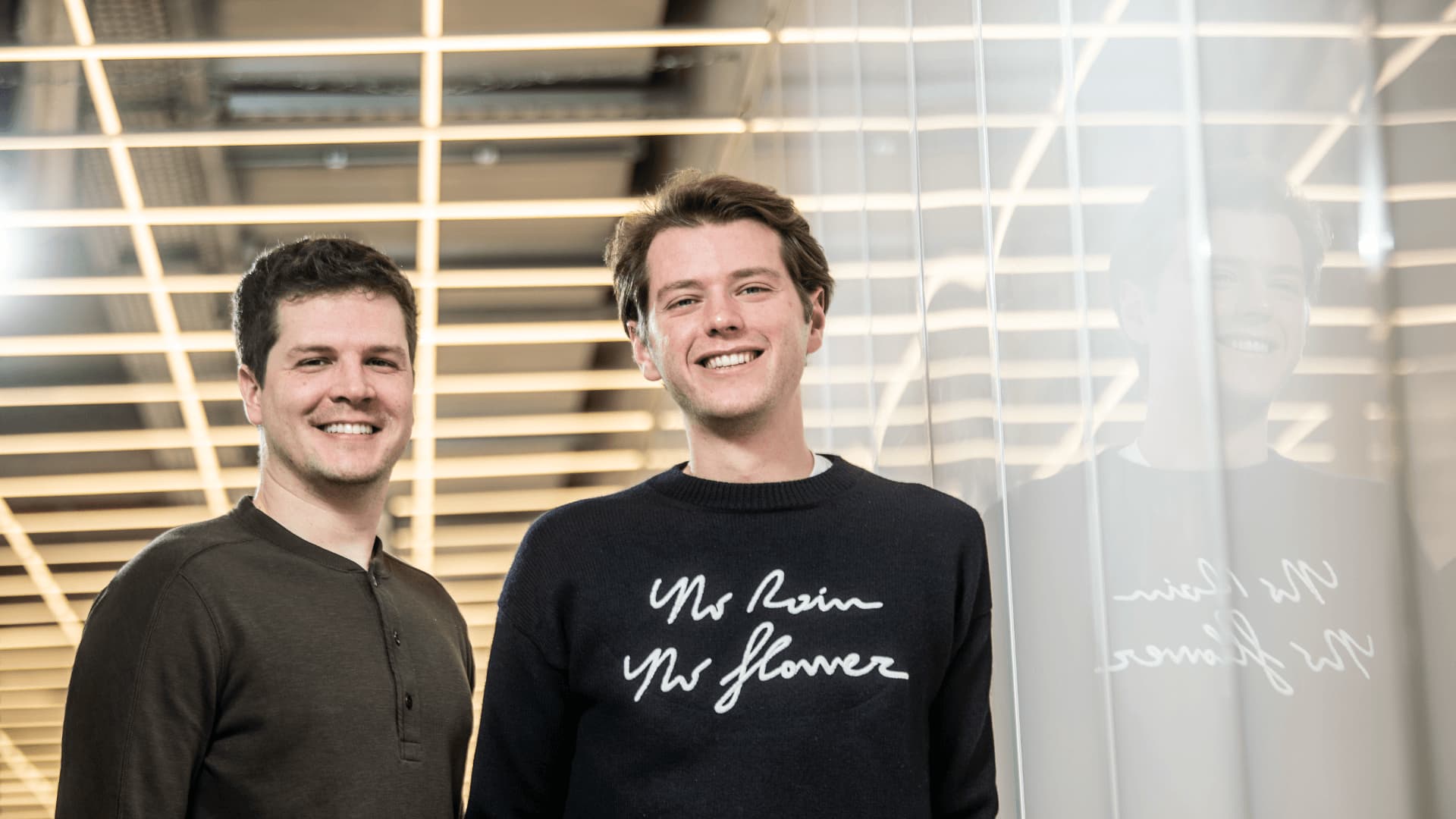
On May 22, 2026, it is reported that Peec AI just crossed $10 million in annualized revenue, according to internal dashboard data seen and verified. Peec AI raised its $21 million Series A six months ago. While CEO Marius Meiners wouldn't disclose its valuation to me at that time (only revealing that it was above $100 million), he did say the startup had grown its revenue to more than $4 million in the 10 months since its launch. So, it has more than doubled its revenue trajectory, and at a faster pace.
That doubling, from $4 million to $10 million ARR in six months, is not simply a pleasant milestone. It is a signal about the commercial urgency brands are attaching to the GEO question. Every major consumer brand that has spent years optimising for Google search now faces a similar problem with a fundamentally new search surface: AI chatbots are directing users toward product recommendations, service comparisons, and brand evaluations, and those recommendations are generated by models with no equivalent of the PageRank signal that traditional SEO practitioners spent two decades learning to influence.
The Product and the Market It Created
Peec's commercial proposition addresses three distinct needs. Brands use the platform to audit their current standing in AI‑generated responses, discovering whether they are being recommended, ignored, or mischaracterised across the major AI interfaces their potential customers are using. They use it to test the effect of content changes on their AI visibility, running experiments comparable to A/B testing for SEO. And they use it to benchmark against competitors, understanding not just whether they appear in AI responses but whether they appear more or less frequently than the brands they compete with for the same customer consideration.
The category Peec occupies did not meaningfully exist eighteen months ago. The transition that created it happened when a critical mass of consumer queries shifted from search engine boxes to AI chatbot interfaces. When someone asks ChatGPT to recommend a project management tool, the answer Peec's platform monitors determines whether that user discovers the client or goes somewhere else. For categories where AI chatbot recommendations are already influencing purchase decisions at scale, having no visibility into how AI models represent your brand is the equivalent of having no idea whether your website appears on page one or page ten of Google.
The Culture Behind the Transparency
One detail in reporting on Peec's milestone is worth noting specifically: the company's live ARR dashboard is visible to all employees. This is not a standard operational choice. Most startups protect revenue data closely and share it only with leadership and investors. Startups now tend to keep running dashboards on revenue progress, sometimes as is the case at Peec visible to all employees.
Antler partner Christoph Klink, whose portfolio includes Peec alongside vibe‑coding platform Lovable, discussed this openly. He understands why portfolio companies like Peec AI and Lovable not only closely track ARR, but also sometimes publicly disclose revenue milestones despite having absolutely no obligation to do so. "That's a way to show it's working," Klink said. "It also shows a focus on growth that sets the culture."
The broader market signal Klink is pointing to reflects something real about how European startups have recalibrated after the 2021 valuation cycle. Compared to six years ago, he said, the big change is that success is now defined by growth, not valuation. Peec AI embodies that shift. The company has not announced a new funding round alongside this milestone. It disclosed a revenue number, internally verifiable and externally meaningful, as the signal it wanted the market to see.
Peec is expanding its operations into the United States with a new office in New York, signalling its commitment to the US market where the largest concentration of enterprise brands with the biggest GEO blind spots is located.
More at peec.ai
Stay informed
Startup news in your inbox
Get important funding rounds, founder stories, and startup updates.
No spam - only important startup updates.