Pivot Raises $40M Oversubscribed Series B to Build the AI Operating System for Enterprise Procurement
Editorial Team

Pivot, the AI‑native procurement platform founded in 2023, has closed a $40 million Series B round in a deal co‑led by Forestay Capital and Notion Capital. The oversubscribed round also drew participation from Greyhound, the former Global VP of Sales at Ariba, the founder of EcoVadis, and existing investors Hedosophia, Visionaries Club, and Emblem. Total funding raised since founding now stands at $70 million.
The round was announced on May 21, 2026 and represents the company's third funding event in three years, following a €5 million pre‑seed and a €20 million Series A. The deal was confirmed exclusively to Axios Pro by co‑founder Marc‑Antoine Lacroix.
Pivot currently processes more than $3 billion in invoices annually and operates across more than 25 countries, serving enterprise clients including DoorDash, Lemonade, and Flix.
The Problem With Enterprise Procurement Today
Procurement is one of the last major enterprise functions that has not been materially transformed by software. Finance has had modern tooling for decades. HR adopted cloud platforms across most large organizations years ago. Legal is now receiving serious AI investment. Procurement, by contrast, still runs largely on email threads, spreadsheets, and approval chains managed through human coordination rather than automated systems.
That is not a small problem. Notion Capital partner Jessica Thomas put the market scale clearly in the firm's investment announcement: the software market for procurement tools alone is approximately $16 billion, and when the labor cost of the humans doing procurement work is included, the total addressable market is closer to ten times that figure.
The reason the category has remained undisrupted is structural. Procurement workflows are deeply embedded in enterprise operations. They connect to ERP systems, financial reporting, supplier relationship management, compliance obligations, and budget management across every major business function. Building a tool that genuinely replaces the fragmented legacy stack rather than layering on top of it requires controlling the data layer end to end, not just automating one step of the process.
That is exactly what Pivot was built to do.
What Pivot Has Built
Pivot positions itself as an AI operating system for procurement, managing the complete procurement and finance operations lifecycle inside a single platform. That lifecycle runs from initial sourcing through approvals, purchasing, invoicing, payments, budgets, expenses, and financial reporting, all unified so that data flows between stages without manual re‑entry or reconciliation.
The platform's AI agents do not act as assistants that help humans do procurement manually faster. They automate the process itself, handling the operational load and surfacing only the decisions that genuinely require human judgment. The goal is to shift the repetitive, manual coordination work from people to machines, freeing finance and procurement teams to focus on spend strategy and supplier relationships rather than administrative throughput.
Lacroix has described the core demand signal from customers directly: finance and procurement leaders are not asking for another workflow layer. What they need is visibility into what the business is committing to spend before it becomes a problem at close, reinforced by AI that makes the manual coordination burden a machine problem rather than a human one.
Pivot's platform integrates deeply with ERP systems and existing financial infrastructure rather than requiring customers to replace the systems they already use. That integration‑first architecture lowers the switching cost for enterprise buyers who are evaluating the product against a fragmented stack of legacy tools they have already invested in.
The Founding Team
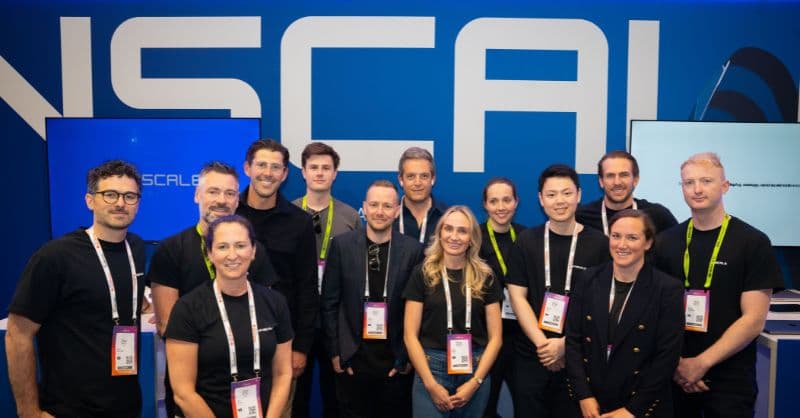
Pivot was co‑founded by Marc‑Antoine Lacroix, now CEO, Romain Libeau, now COO, and Estelle Giuly, who serves as CTO.
Lacroix is not new to building enterprise software at scale. He previously co‑founded Qonto, the French business banking platform, and served as its CTO through the company's growth to unicorn status. That background is directly relevant to what Pivot is building: Qonto operates at the intersection of financial data, business payments, and enterprise workflow, the same stack Pivot is targeting from the procurement entry point.
Giuly's technical leadership on the CTO side reflects Notion Capital's read on the team when they made the investment decision. The investors described the founding team as product builders first, with Lacroix's Qonto pedigree and Giuly's engineering depth combining to produce a team capable of building the full‑stack procurement operating system the market is waiting for, not just a lightweight workflow tool.
Investor Thesis and What the Capital Is For
Forestay Capital and Notion Capital co‑leading a round is a combination that carries specific geographic and thematic weight. Forestay is a Swiss growth‑stage investor with a focus on enterprise software across European markets. Notion Capital backs B2B SaaS companies operating at the intersection of Europe and the United States. Together, they provide Pivot with both the European enterprise network it needs to scale its existing footprint and the cross‑Atlantic relationships relevant to its US customer base, which already includes DoorDash.
The participation of the former Global VP of Sales at Ariba, one of the oldest and most entrenched procurement software companies in the world, and the founder of EcoVadis, the supply chain sustainability ratings platform, adds operator‑level credibility alongside the financial capital. Both individuals have spent careers inside the procurement ecosystem and understand where the legacy tools break down for enterprise customers.
The $40 million will be deployed across three priorities:
- Accelerating the development of agentic AI capabilities inside the platform, deepening automation of end‑to‑end procurement workflows
- Expanding into new enterprise markets, building on the company's existing 25‑country footprint
- Deepening integrations with ERP systems and financial infrastructure to reduce implementation friction for large enterprise customers
The global procurement software market is projected to grow from approximately $6.5 billion in 2024 to $9 billion by 2028, with agentic AI adoption expected to accelerate that trajectory as enterprises move beyond static workflow automation toward systems that can operate independently inside complex operational environments.
Pivot is competing in this space against legacy platforms including SAP Ariba, Coupa, and Jaggaer, alongside newer entrants like Zip and Pactum. Its differentiation lies in the end‑to‑end data ownership model, the agentic‑first architecture, and a founding team that has already demonstrated the ability to build and scale enterprise financial software at a category‑defining level.
Stay informed
Startup news in your inbox
Get important funding rounds, founder stories, and startup updates.
No spam - only important startup updates.