Two Women Just Closed Israel's Largest Dedicated Defense Tech Fund At 125 Million Dollars

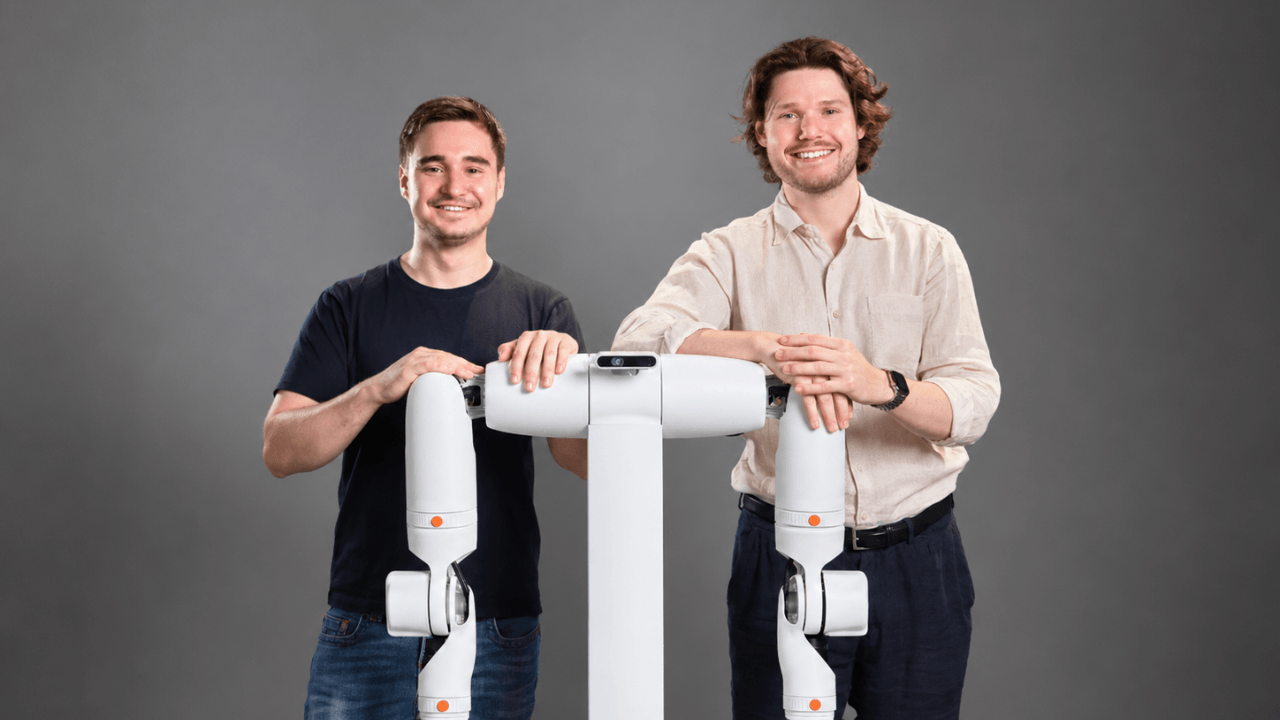
Lital Leshem and Lee Moser
Image credit: Protego Ventures
Protego Ventures, a two year old Israeli venture capital firm dedicated entirely to defense technology, has closed its debut fund with 125 million dollars in capital commitments, positioning itself as the first and largest fund of its kind in the country.
The final close came in below the firm's original 150 million dollar target. Protego is backed by Ares Management, and its fund size allows it to write checks between 5 million and 50 million dollars per company, aimed at startups the firm describes as addressing the critical defense and security needs of Israel and the global community. Rather than treating the shortfall against target as a setback, the founders have framed it as a deliberate choice: a smaller fund concentrates the impact of any single major win on overall returns, and with one portfolio company already looking like a standout performer, raising additional capital would only dilute that upside across a larger pool of investors.
The firm was founded by Lital Leshem and Lee Moser, making Protego notable as a fund in a historically male dominated defense investment sector led by two women. Moser brings experience as a seasoned venture capitalist and remains a managing partner at generalist firm AnD Ventures alongside her role at Protego. Leshem previously co‑founded emergency communications technology company Carbyne, which was acquired by Axon for 625 million dollars in 2025, and she brings 11 years of experience in Israeli military and intelligence roles, continuing to serve as a reservist.
Leshem has described the origin of the fund in personal terms tied directly to the Hamas attack on October 7, 2023. She has said everything changed that day, recalling that she was deployed as a reservist while pregnant and remained engaged with the unfolding military response almost until she gave birth, watching firsthand how differently the battlefield was operating compared with what she had known over the previous decade. That experience shaped the firm's conviction that a new generation of defense technology, built by founders and engineers with direct operational experience, would play an outsized role in how future conflicts are fought.
Protego's portfolio reflects that thesis. Its first investment, drone maker XTEND, provides human guided autonomous machine systems designed to let operators carry out precise actions in a wide range of environments with minimal training. XTEND went public on the New York Stock Exchange earlier this month, a milestone that has strengthened Protego's argument that its fund could deliver outsized returns from a small number of concentrated bets, since Leshem has suggested XTEND alone could return the entire fund. The portfolio also includes ASIO, a developer of situational awareness systems that partners with US defense technology company Anduril, another sign of Protego's strategy of backing Israeli startups capable of integrating into larger international defense supply chains rather than competing only for domestic contracts.
The fund's investment focus spans artificial intelligence, unmanned systems, robotics and advanced sensing, areas that have moved from experimental to operationally central across recent conflicts. In Ukraine, drones, satellite imagery and AI driven analytics have become core tools for intelligence gathering and battlefield operations, while fighting in the Middle East has sharpened demand for faster decision making systems, autonomous platforms and stronger protective technology. Protego is positioning itself to capture Israeli innovation responding directly to those pressures, drawing on what the firm describes as deep ties across the country's defense ecosystem to gain privileged access to companies and technologies before they attract wider international attention.
Protego will not have the dedicated Israeli defense tech investing space to itself for long. Israeli authorities have taken notice of the sector's growth, and a wave of new entrants focused specifically on defense and dual use technology has been emerging as global demand for modern security solutions accelerates. That demand is also reshaping how founders build companies in the category, with a growing emphasis on dual use products, meaning technology that can serve both civilian and military markets, such as advanced drone systems and situational awareness software that can be sold into commercial as well as defense contracts.
Looking ahead, Protego is already preparing its next move. The firm plans to launch a second, larger fund in the first quarter of 2027, with an expanded scope that will include early growth stage American defense technology companies alongside its continued focus on Israel. That planned expansion signals an ambition to become a bridge between Israeli defense innovation and the much larger American defense technology market, a strategy that will test whether the operational networks and battlefield credibility that have defined Protego's Israeli portfolio translate into an unfamiliar and more competitive investment landscape.
Topics
Stay informed
Startup news in your inbox
Get important funding rounds, founder stories, and startup updates.
No spam - only important startup updates.