Ahron Raises 2.2 Million Euros To Put AI Agents In Charge Of HR Paperwork
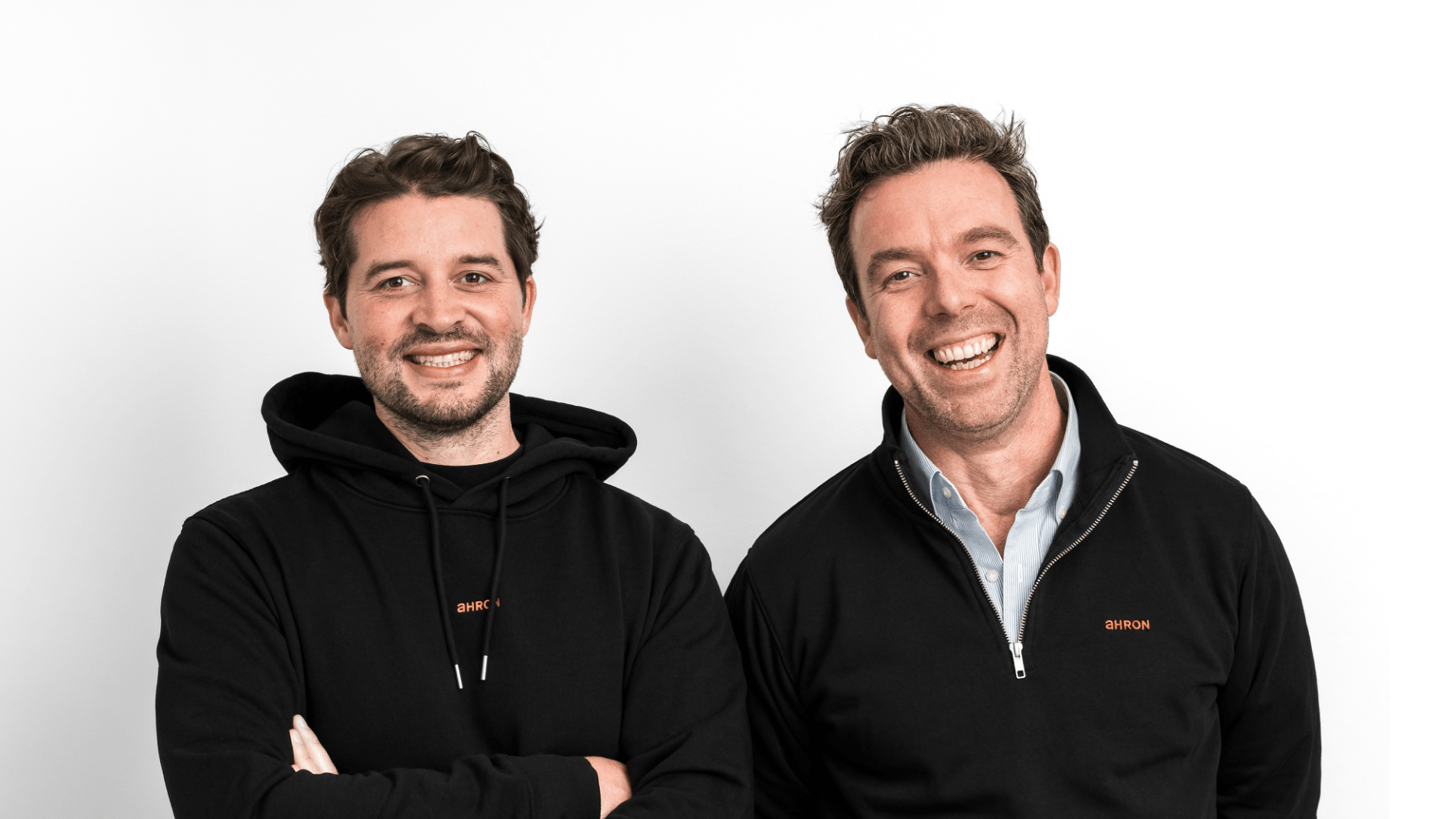
Carl Hoffmann (CEO) and Rado Pavlov (COO)
Image credit: Ahron
Ahron, a Munich based HR technology startup, has raised 2.2 million euros to develop an AI agent platform designed to automate HR processes across the patchwork of systems most companies already use rather than asking them to switch tools.
The round was led by Cusp Capital, with participation from a group of superangels and business angels drawn from the HR sector, including Sabine Kohleisen, former board member for human resources at Mercedes‑Benz Group. That mix of specialist HR backers alongside financial investors points to a deal built as much on domain credibility as on capital.
Ahron was founded at the end of 2025 by chief executive Carl Hoffmann and chief operating officer Rado Pavlov. Pavlov has previously built several software startups with a focus on secure AI systems and platform technologies, background that shapes Ahron's emphasis on control and governance alongside automation. The company already counts DHL and Celonis among its users, notable early validation for a startup that is less than a year old.
The problem Ahron is targeting stems from how fragmented HR software has become inside large organisations. Bigger companies often run well over 100 different HR tools spanning recruiting, payroll, onboarding, performance management and more, with limited integration of data and processes between them. Individual AI add‑ons bolted onto single tools can automate isolated tasks, but Ahron argues that approach only goes so far, because an agent handling one task in isolation does not automatically understand the broader business process that task belongs to.
To address that, Ahron uses Celonis's process intelligence technology to build what the company calls a digital twin of a company's HR processes, drawing on data pulled directly from its existing systems. That digital map makes the actual, as opposed to intended, structure of HR workflows visible, which then gives Ahron's AI agents the operational context to work within rather than acting on individual tasks blind to how they connect to the rest of the process.
On top of that mapping layer, Ahron is building what it describes as a central governance layer, letting companies define and manage policies and guardrails that determine how AI agents behave across HR processes. Pavlov has framed why that matters bluntly: HR is a particularly sensitive area, and when AI agents operate independently within it, they need clear guardrails to make sure they consistently act within the rules a company sets, applied consistently across every process and every agent.
According to Ahron, the practical tasks its agents can take on include collecting feedback from hiring managers, checking payroll processes for errors, and managing steps within employee onboarding, work that is repetitive, procedural and currently absorbs meaningful HR staff time without requiring the kind of judgment that should stay with a person. The company has said its own customers do not measure success by how many AI agents they have deployed, but by what actually counts: faster processes, meaningfully lower costs, and HR teams whose freed up capacity gets redirected toward leadership, development and culture work that software cannot do.
That framing positions Ahron deliberately apart from a crowded field of point solution HR chatbots and single task automation tools. Rather than building the next standalone HR tool, the company is positioning its product as a control and context layer that sits across a company's existing HR stack, a more ambitious but also more technically demanding proposition, since it requires reliable integration with systems Ahron did not build and cannot fully control.
With the new funding, Ahron plans to continue developing its product, with particular emphasis on building out the central control layer that supplies context to its AI agents, while also pursuing international expansion beyond its current base. The governance layer is likely to be the harder technical and commercial challenge of the two, since it requires Ahron to earn the trust of HR and compliance teams that are, by the nature of the function, typically the most cautious adopters of autonomous software inside any large organisation.
Topics
Stay informed
Startup news in your inbox
Get important funding rounds, founder stories, and startup updates.
No spam - only important startup updates.