
Two European Founders In Tokyo Raise 1.2 Million Dollars To Build Humanoid Robots You Can Repair In Minutes
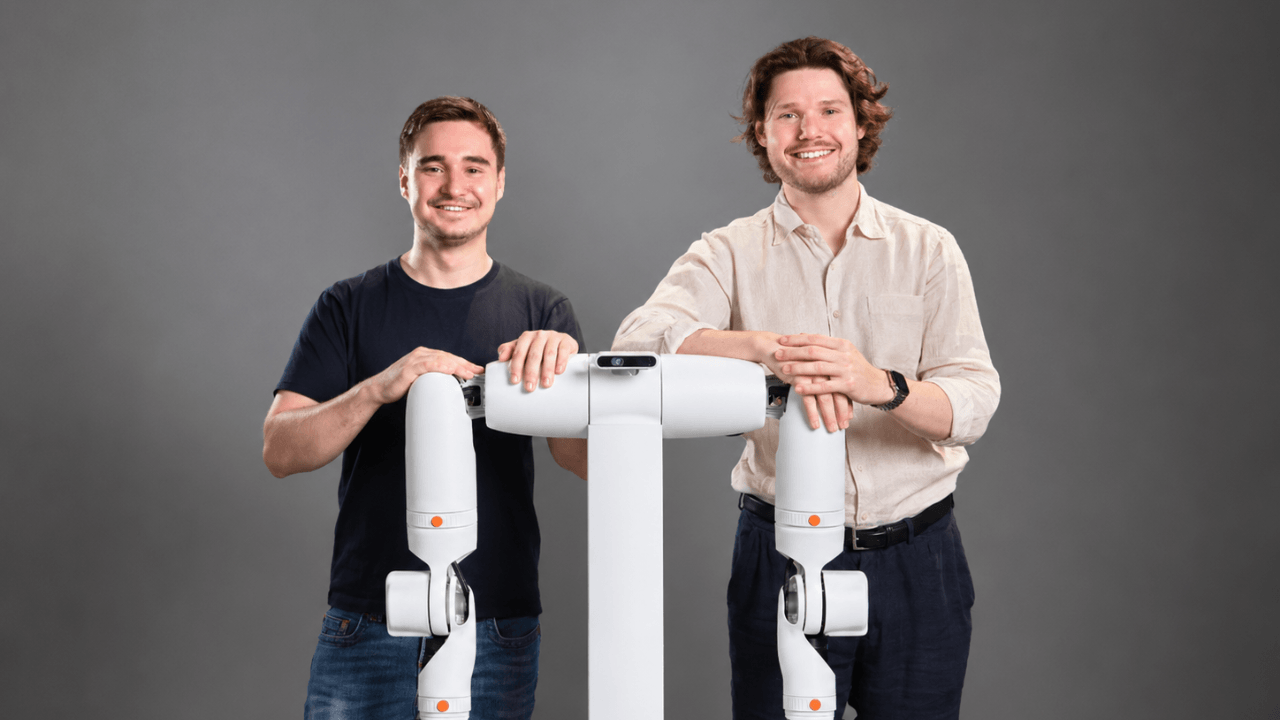
Stian Jakobsen (CEO) and Simon Gormuzov (CTO)
Image credit: o-id
O‑ID, a Tokyo based startup building what it describes as one of the world's first fully modular humanoid robots, has raised 1.2 million dollars in pre‑seed funding to move its first robot from prototype into production ahead of planned factory pilots in 2027.
The round was led by Chicago based TAWANI Ventures, with participation from Hustle Fund, Techstars, and a group of angel investors that includes the founders of Humanoid Guide, who were early investors in robotics company 1X. William Pritzker, a partner at TAWANI Ventures, said Japan and Chicago share a long history as anchors of the global manufacturing ecosystem, and that O‑ID's founders had impressed the firm with their ability to both work and innovate inside that space.
O‑ID was founded in Tokyo in 2025 by chief executive Stian Jakobsen, who is Norwegian, and chief technology officer Simon Gormuzov, who is Dutch. The two met as students at Waseda University. Jakobsen previously worked in cyber defence, while Gormuzov, a mechanical robotics engineer by training, spent years in industrial robotics before the pair decided to build a humanoid robot company together, betting that Japan's specific labour and manufacturing dynamics created an opening that larger, better funded humanoid robotics companies elsewhere were not addressing.
The core problem O‑ID is trying to solve is one of maintenance economics rather than raw robot capability. Gormuzov has explained the issue using a simple comparison: when a car tyre fails, it gets replaced and the vehicle keeps running, but when a humanoid robot's arm breaks today, the entire robot is typically sent back to the manufacturer and can remain out of service for months. For a factory relying on robots to fill genuine labour gaps, that kind of downtime defeats much of the purpose of deploying the robot in the first place. O‑ID's answer is a robot built from interchangeable, hot swappable joints, limbs, and compute units that can reportedly be replaced directly on a factory floor in minutes rather than requiring the robot to be shipped back to a manufacturing facility, alongside onboard AI sensors designed to flag component wear before it causes an outright failure.
Rather than building an entirely new supply chain to manufacture its robots, O‑ID's strategy leans on Japan's existing automotive manufacturing base. According to Gormuzov, the company is adapting the same supply chain used to build cars for use in building robots, an approach intended to let O‑ID compete on production speed and scale with far less capital than rivals building bespoke robotics supply chains from scratch. The company is already partnering with Japanese manufacturers, including automotive Tier 1 suppliers, while working with US and European component developers to bring additional technologies into local production. O‑ID has signed a letter of intent with Sumitomo Electric Industries to explore applying Sumitomo's wire harness technology to humanoid robots, a sign of how directly the company is trying to plug into established automotive component expertise.
The demand case O‑ID is targeting is grounded in Japan's demographic trajectory. The country's workforce is projected to shrink by more than 11 million workers by 2040 as its population ages and factory workers retire without being replaced. Jakobsen has framed the stakes in blunt terms, saying that when enough factory roles go unfilled at once, entire supply chains are put at risk, and that O‑ID's robots are designed to work alongside the people still on the floor, closing labour gaps before they escalate into a crisis for individual factories and the wider industries Japan depends on. That shortage sits inside a much larger national push: Japan announced in June 2026 that it is targeting 10.5 trillion yen, or roughly 65.1 billion dollars, in combined public and private investment in physical AI, the term covering AI systems that control robots and machinery, with an ambition to deploy 10 million AI equipped robots by 2040.
O‑ID's initial commercial focus is automotive manufacturing and logistics inside Japan, with plans to expand into additional industries and eventually the US market over time. The company has filed a provisional US patent covering its modular connector technology, and says the robots it builds in Japan are being designed from the outset to meet requirements under the US National Defense Authorization Act, a step that would position the company to sell into US government and defence adjacent supply chains without needing to redesign its hardware later.
The size of O‑ID's raise stands out against the backdrop of a capital intensive humanoid robotics sector, where the median disclosed funding round sits around 145 million dollars and leading companies have raised hundreds of millions or billions of dollars, including Figure AI's 2.34 billion dollars at a 39 billion dollar valuation, London based Humanoid's 152 million dollar round at a 1.35 billion dollar valuation, and Germany's Neura Robotics closing a 1.4 billion dollar Series C. Jakobsen has argued that Japan's market looks structurally different, with only a handful of local humanoid robotics startups competing for a labour gap measured in the millions, giving O‑ID room to establish itself domestically before the capital requirements of the category start to resemble those facing its far larger international peers.
Topics
Sources
Stay informed
Startup news in your inbox
Get important funding rounds, founder stories, and startup updates.
No spam - only important startup updates.