Creator Fund Closes $56 Million Pan-European Fund Backed by Germany and Denmark to Back Scientific Founders Before They Have a Pitch Deck
Editorial Team
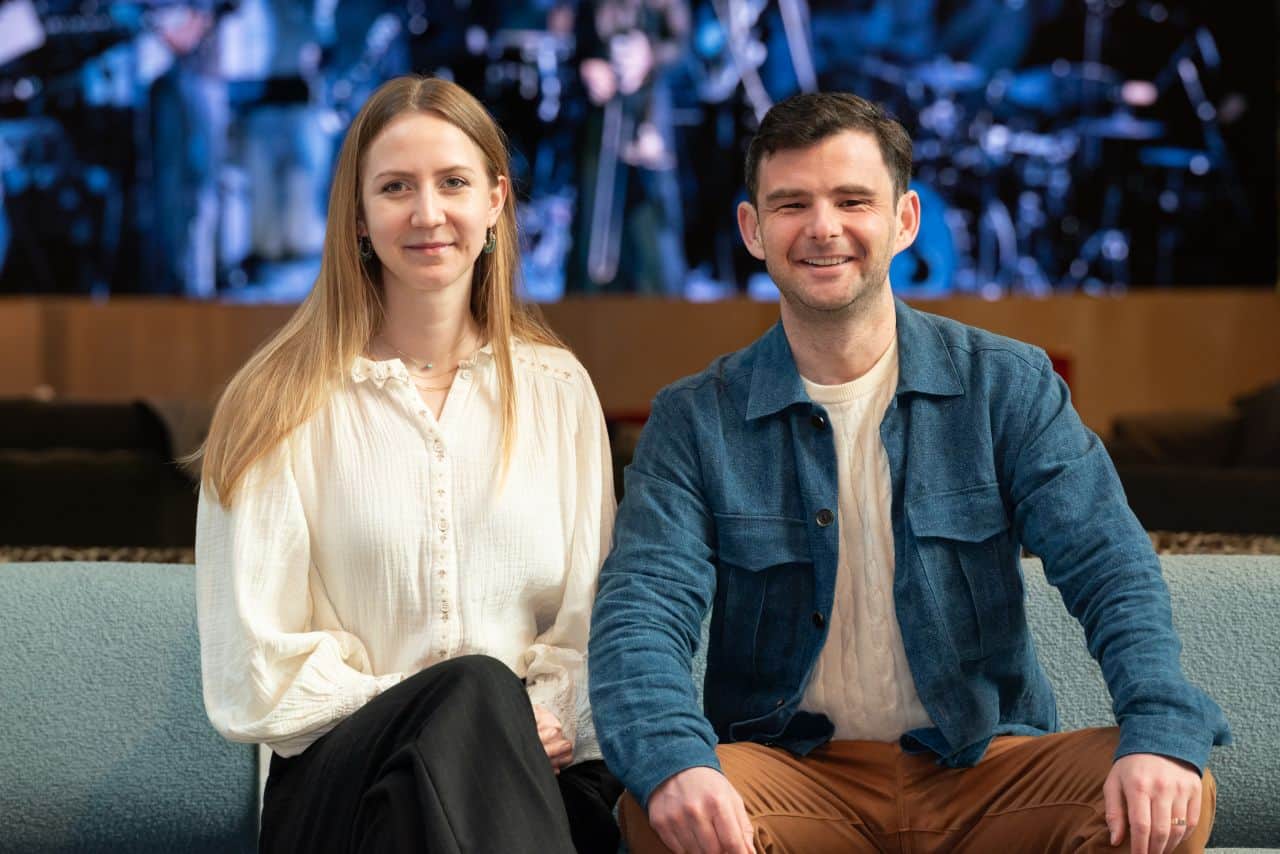
London‑based pre‑seed venture capital firm Creator Fund has closed its first pan‑European fund at $56 million (€48.6 million), with KfW Capital, the investment arm of Germany's state‑owned promotional bank KfW, joining as its largest investor at the final close. The Export and Investment Fund of Denmark (EIFO) committed as the fund's second‑largest backer, with further participation from Equation Capital, Basecamp (Phoenix Court), JIMCO, and Allocator One. In total, 71 limited partners from 21 countries committed to the vehicle, making it what the firm describes as the largest student‑backed venture capital fund in the world.
The close arrives on June 8, 2026, following an initial announcement of a $41 million first close in October 2025 that had already drawn Equation Capital and EIFO as anchors. The addition of KfW Capital, one of Europe's most significant institutional investors in the innovation economy, extended the final figure to $56 million and brought a notable degree of sovereign capital into a fund whose entire thesis is built around Europe's ability to turn its world‑class university research into globally competitive companies.
A Model Built Around the Campus, Not the Cap Table
Creator Fund was founded in 2019 by Jamie Macfarlane, who spent years running election campaigns across more than 12 countries before transitioning into venture capital. At Raine Ventures in San Francisco, and then during his MBA at Stanford Business School, Macfarlane encountered the Dorm Room Fund, a student‑run investment model that had become a distinctive feature of the Silicon Valley ecosystem. His conclusion was that the same model could work in Europe, where universities were producing research of equivalent quality but lacked a comparable mechanism for converting that talent into companies.
The core insight driving Creator Fund is structural. Most venture capital firms wait for founders to arrive with a product, a deck, or at least a company registered. Creator Fund enters far earlier than that, identifying PhD researchers inside university labs before they have considered building a company, and supporting them through the formation process from the beginning.
To execute this, the firm runs a programme called the Scientific Founder pipeline. Each year, roughly 40 Venture Fellows are selected from approximately 450 applicants and embedded across 30 universities in 10 countries. These student investors, who receive carried interest in the fund, are trained through a 20‑part curriculum designed to teach them how to identify scientific researchers with founder potential and how to support early‑stage company formation at the lab level. Over 250 students have completed the programme since it launched. The result is that Creator Fund is often the first investor a PhD student ever speaks to, a positional advantage that no cold‑outreach firm can replicate.
What the Capital Will Fund
The new European vehicle has already deployed into 11 companies, with current portfolio names including Ovo Labs, Latent Worlds, Anzen Industries, and SPhotonix. The fund targets between 40 and 45 investments in total, with a first cheque of up to €1 million per company. Since its founding, Creator Fund has backed 62 companies across the UK and Europe.
The track record is beginning to take shape. Creator Fund returned its first fund after portfolio company Loci, a neural rendering startup originally identified when a scout found a Cambridge computer science student's thesis online, was acquired by Epic Games. Two additional portfolio companies have surpassed $100 million in cumulative follow‑on funding in the past six months.
The $56 million vehicle will fund three interconnected priorities: continued deployment into pre‑seed scientific founders across Europe's leading research universities, expansion of the Venture Fellow programme into additional university campuses and countries, and development of operational infrastructure that allows Creator Fund to support founders more systematically through the earliest and most uncertain phase of company building. The fund focuses on deep tech sectors including artificial intelligence, biotechnology, robotics, advanced materials, and computing infrastructure.
The European Science Funding Gap
The case for Creator Fund's model rests on a persistent structural gap in European venture capital. Europe's universities rank among the finest research institutions in the world. Cambridge, ETH Zurich, the Technical University of Munich, and a constellation of leading engineering and science faculties produce research across AI, physics, chemistry, and biology that stands at the global frontier. What has historically been missing is not the research itself but the ecosystem that converts PhD researchers into founders.
In the US, the path from a Stanford or MIT lab to a funded startup is well‑trodden, supported by alumni networks, campus accelerators, angel investors with scientific backgrounds, and the institutional knowledge that accumulates in a mature startup ecosystem. In Europe, that path has been longer, more uncertain, and more dependent on individual initiative rather than systemic support.
Creator Fund's model is a direct response to this gap. By embedding itself at the university level rather than waiting for founders to arrive post‑graduation, it changes when in the pipeline engagement begins. Macfarlane has argued consistently that European universities should be treated less like museums and more like foundries, places where companies are built by the people who invented the underlying science, rather than institutions whose primary output is academic papers and trained employees for existing corporations.
The firm has also pointed to a demographic opportunity. A significant share of Europe's top PhD researchers come from outside the continent. In the UK, 71 percent of Creator Fund's startup founders were originally students from other countries. As US immigration policy has tightened for international students, Europe's openness to global scientific talent has become a structural advantage, provided there is an ecosystem capable of converting that talent into companies rather than simply training it and sending it elsewhere.
Institutional Endorsement from KfW Capital
The involvement of KfW Capital carries significance beyond the capital itself. KfW is one of the world's largest development banks, and KfW Capital operates as its venture and growth investment arm, deploying capital on behalf of the German federal government and German states into funds that support the country's innovation ecosystem. Its participation as the largest investor in a London‑based, pan‑European pre‑seed fund is a signal that sovereign institutional capital in Europe is becoming increasingly willing to back early‑stage deep tech infrastructure, not just established growth‑stage companies.
Christian Röhle, co‑Head of Investment Management at KfW Capital, described the fund's approach as directly addressing a key gap in the European innovation system, translating academic progress into high‑growth startups by leveraging a university network that reaches founders at the moment of formation rather than after the fact.
With $56 million now committed, 71 institutional and individual backers from 21 countries, and a model that has already demonstrated both portfolio company formation and fund return, Creator Fund enters its next chapter as the most systematically constructed vehicle for early‑stage scientific company building in Europe. Whether the continent can close the gap with the US in turning world‑class research into world‑class companies may depend substantially on whether models like this one can operate at scale.
Stay informed
Startup news in your inbox
Get important funding rounds, founder stories, and startup updates.
No spam - only important startup updates.