Israeli Networking Startup DriveNets Raises $410 Million Series D at $8.5 Billion Valuation as AI Fabric Demand Surges
Editorial Team
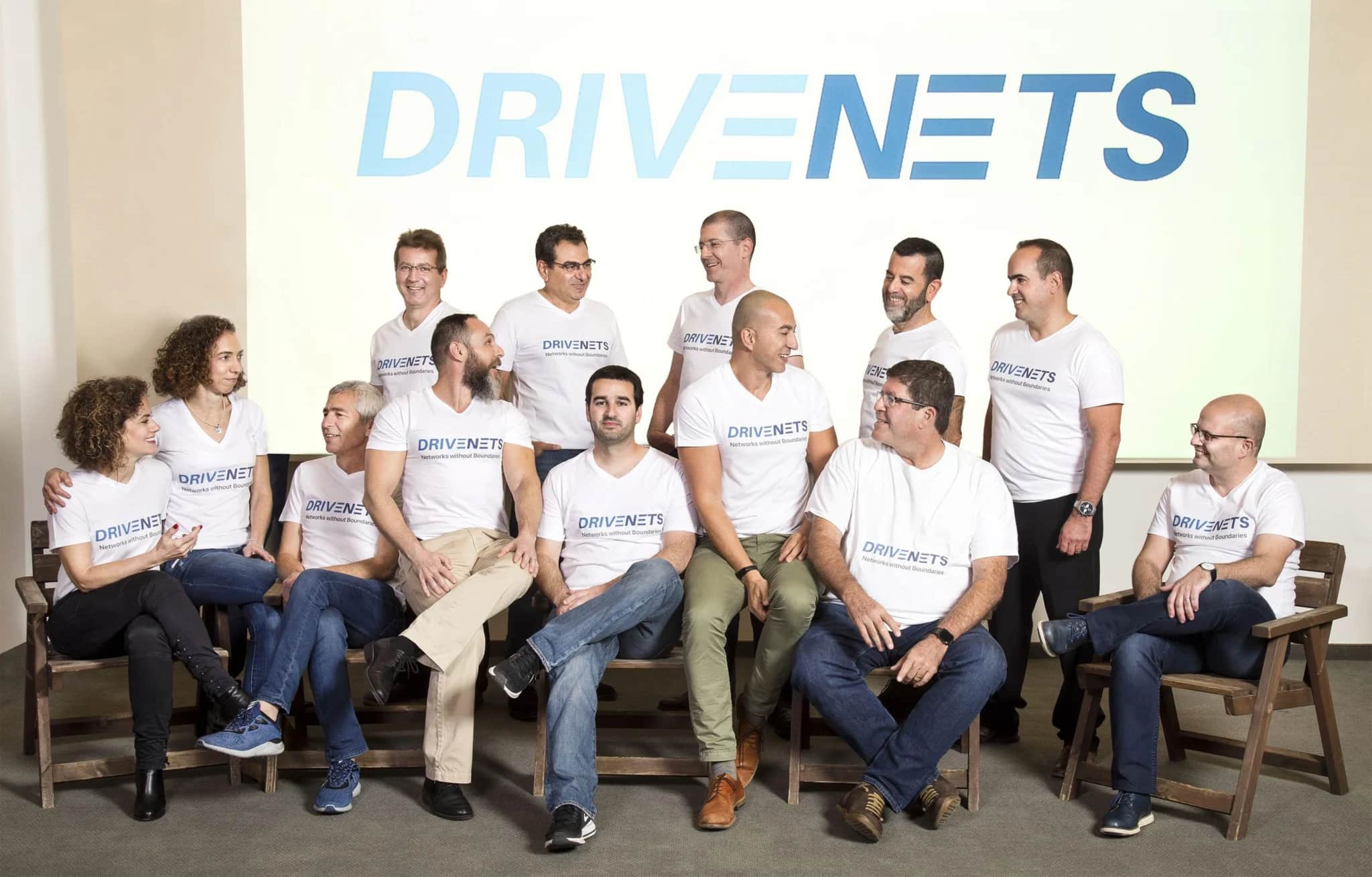
DriveNets, the Ra'anana‑based networking software company, has closed a $410 million Series D funding round, pushing its valuation to $8.5 billion and bringing total capital raised since founding to approximately $1 billion. The announcement, made on June 1, 2026, confirms the company's position as Israel's second most valuable privately‑held technology company and one of the most significant enterprise infrastructure businesses to emerge from the country's startup ecosystem in the current decade.
The round was led by Bessemer Venture Partners and Atreides Management, two investors with deep and longstanding commitments to DriveNets. Bessemer, whose Israel partner Adam Fisher has backed the company since its Series A in 2019, led the round alongside Atreides, represented on the board by Gavin Baker, one of the most visible investors in Israeli AI and deep tech. Existing investors Pitango and D1 Capital Partners also participated in the Series D alongside new institutional investor Red Dot Capital Partners and a strategically significant addition: AMD, the chip manufacturer, which has begun collaborating directly with DriveNets on next‑generation AI infrastructure.
A Decade to Reach This Moment
Founded ten years ago by Ido Susan and Hillel Kobrinsky, DriveNets spent its early years building what it calls Network Cloud, a disaggregated networking architecture that allows telecommunications operators to deploy large‑scale networks using standard, commodity hardware rather than expensive proprietary equipment. The vision was to do for networking what software‑defined infrastructure had done for compute: separate the software intelligence from the physical hardware and drive down the cost of building at scale.
That model worked. DriveNets' Network Cloud became the network of record for many of the world's largest telecommunications companies, building a recurring revenue base and the engineering credibility that would later prove essential when the company pivoted to address the AI infrastructure market.
The founders bring complementary track records from before DriveNets. Susan previously co‑founded Intucell, which was acquired by Cisco for $475 million in 2013. Kobrinsky co‑founded Interwise, acquired by AT&T for $121 million. Those exits gave both founders not just capital but the operational and go‑to‑market experience needed to build enterprise infrastructure businesses that reach global scale.
From Telecom to AI Fabric
The pivot to AI infrastructure, which DriveNets initiated as GPU cluster deployments began accelerating in 2023 and 2024, has proven to be extraordinarily well‑timed. As foundation model labs, hyperscalers, and neocloud providers race to build increasingly large AI training and inference clusters, the networking layer connecting tens of thousands of GPUs has emerged as a critical bottleneck.
DriveNets' Ethernet‑based AI fabric addresses two fundamental constraints that affect large GPU cluster performance. The first is network‑induced inefficiency: large clusters frequently operate below their theoretical peak performance because networking bottlenecks prevent GPUs from exchanging data fast enough during distributed training runs. The second is slow cluster bring‑up time, what DriveNets calls idle Capex, particularly acute in multi‑vendor environments where hardware from different suppliers must be integrated and validated before a cluster can begin productive work.
DriveNets' high‑performance AI Fabric performs end‑to‑end optimisations across the entire AI stack, spanning collective communication libraries, transport protocols, network interface cards, the fabric itself, and system‑level components. The result is a networking solution that supports scale‑up, scale‑out, and scale‑across architectures, along with front‑end and storage connectivity for large clusters. The Ethernet‑based approach, built on open standards rather than proprietary interconnects, gives customers the flexibility to source hardware from multiple vendors without being locked into a single ecosystem.
Cash Flow Positive With $1 Billion in Backlog
What makes the DriveNets fundraise unusual in the current venture environment is the company's financial position at the time of the raise. Since entering the AI market, DriveNets has been cash‑flow positive, and the company entered the Series D with more than $1 billion in signed business and project backlog. That combination of profitability and pipeline visibility is rare for a growth‑stage infrastructure company, and it fundamentally changes the purpose of the fundraise.
The $410 million is not being raised to fund operations or cover losses. It is being raised to scale inventory ahead of committed customer demand, a distinction that changes the risk profile of the investment considerably. As demand for AI fabric deployments accelerates through 2026 and into 2027, the constraint for DriveNets is not market development but production capacity.
AMD's participation as a new investor reflects the growing strategic alignment between chip manufacturers and networking software providers in the AI infrastructure market. As AMD competes with Nvidia for a larger share of AI accelerator deployments, partnering with a networking company that operates independently of any single chip vendor gives both parties a route to joint go‑to‑market in multi‑vendor AI clusters.
The networking market for AI server farms is projected to reach $200 billion by 2030. DriveNets, now valued at $8.5 billion with $1 billion in backlog and cash‑flow positive operations, is positioning itself to capture a meaningful share of that growth. The company is also exploring a potential secondary transaction later in 2026, which would provide liquidity to employees and early investors while keeping the company private ahead of any eventual public offering.
AT&T's acquisition of a significant stake for $650 million in July 2025, which provided a major payout to founders, employees, and early backers, established a public anchor valuation for the business. The Series D at $8.5 billion represents a meaningful step‑up from that anchor and reflects both the acceleration in AI fabric demand and the company's demonstrated ability to operate profitably at scale. More details on DriveNets' networking platform and its AI infrastructure solutions are available at drivenets.com.
Stay informed
Startup news in your inbox
Get important funding rounds, founder stories, and startup updates.
No spam - only important startup updates.