Startup Funding Roundup: July 23, 2026, Six Fresh Rounds Across Design, Robotics, Security and Insurance
Startup funding roundup 23 July 2026
Venture capital kept flowing into a wide spread of applied AI categories this week, with smaller rounds landing everywhere from design software and robotics data infrastructure to cybersecurity, machine sensing, healthcare and commercial insurance. Below is a roundup of six notable rounds announced on July 23, 2026, each pointing to a different corner of where investors currently see durable value in AI‑driven businesses.
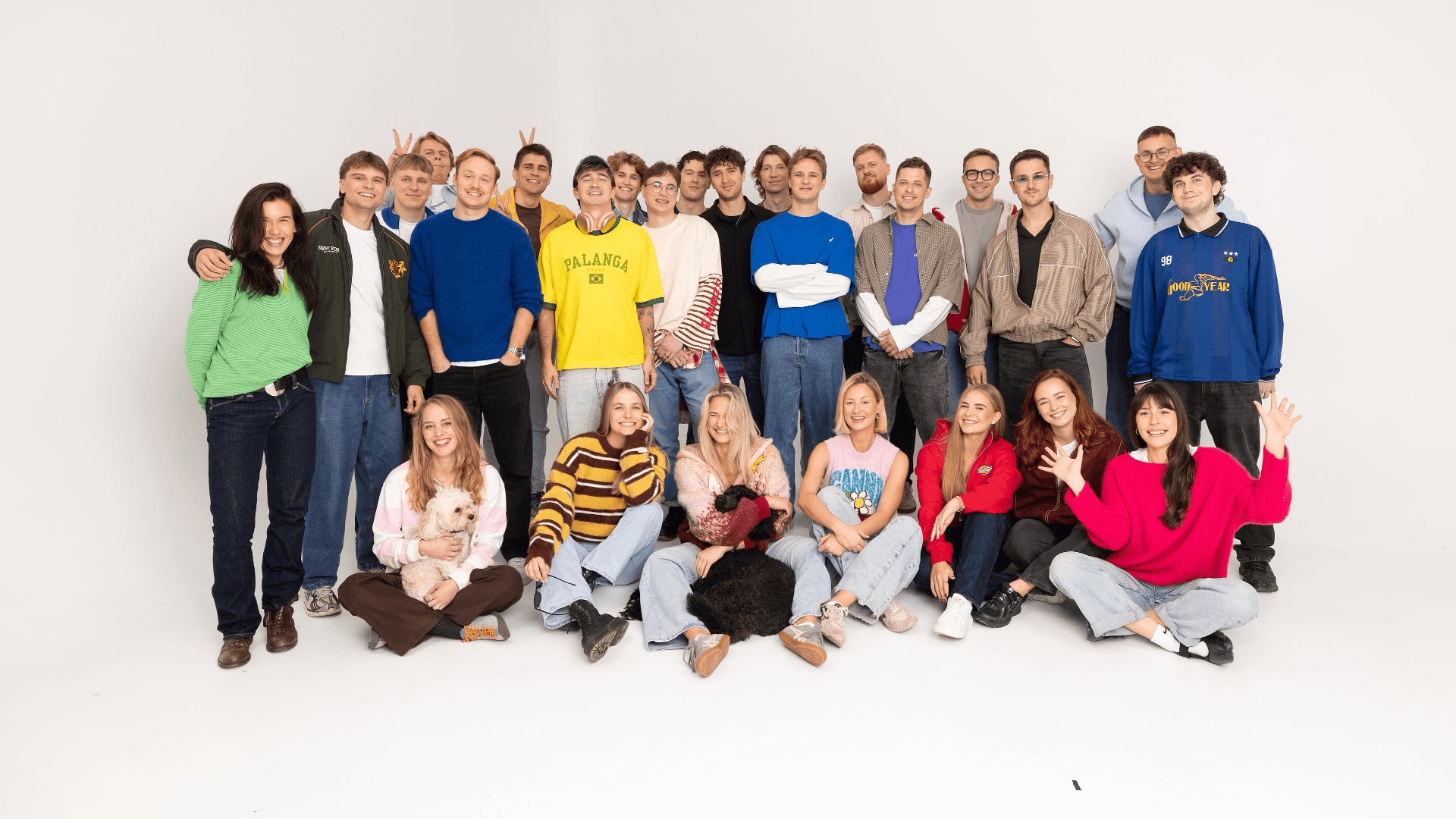
Design software startup Paper raised 34 million dollars in a Series A round led by Accel and ICONIQ, with participation from Designer Fund, WorkOS co‑founder Michael Grinich, Lovable co‑founder Anton Osika, and individual engineers and designers from Anthropic and OpenAI. Paper's customer base already includes Ramp, Lovable, Vercel, PostHog, Quartr and Y Combinator, and the company says its annual recurring revenue has grown 25 times since the early 2026 launch of Paper Desktop. Rather than positioning itself as another AI feature bolted onto a conventional design canvas, Paper is betting that the line between design and engineering is being redrawn by AI coding agents, and that products should render directly in HTML and CSS so design work integrates naturally into agentic engineering workflows instead of requiring a separate handoff between mockups and production code. That framing matters because as AI‑assisted code generation becomes commonplace, product differentiation increasingly shifts toward taste, systems thinking and workflow coordination rather than raw technical execution, making design infrastructure a more strategic layer of the software stack than it was in previous cycles.
Singapore‑based Ropedia raised 30 million dollars across two pre‑A funding rounds to expand its data infrastructure platform built for robotics and embodied AI systems. The company's HOMIE wearable system captures synchronized first‑person video, audio, depth, gaze, motion and pose data, feeding all of it into a closed‑loop processing pipeline. Ropedia says it has already assembled one of the industry's largest human‑experience datasets, with 10 million interaction episodes and more than 10,000 hours of multimodal recordings. The underlying thesis is that physical AI systems do not just need smarter models, they need much richer examples of how humans move through and interact with the real world, in the same way that internet‑scale text corpora powered the current generation of language models. That makes Ropedia a training‑data play sitting between the compute layer and the deployment layer of the broader robotics stack, addressing one of the hardest unsolved problems in the field: gathering enough varied, synchronized, action‑relevant data without depending entirely on expensive physical robot fleets to generate it.
Cybersecurity startup Abstract raised 25 million dollars in a round co‑led by Cheyenne Ventures and AVP, with Olive Hill Ventures participating and Crosslink Capital and Rally Ventures following on from earlier rounds. The financing brings Abstract's total funding to nearly 50 million dollars, arriving at triple its prior valuation after the company posted 380 percent annual recurring revenue growth, 264 percent net revenue retention, and a tripling of its customer base. Abstract's core argument is that enterprises are moving away from routing every security log into a single monolithic platform with escalating storage costs and heavy vendor lock‑in, shifting instead toward a streaming‑first, modular architecture that separates data sources from destinations and layers AI across detection, triage, investigation and response. That positioning lets Abstract appeal to both cost‑conscious technology leaders looking to reduce platform lock‑in and security leaders looking to speed up detection and response, a combination that has historically been difficult to satisfy with a single product in traditional security operations tooling.
Sensor technology startup Elio raised 21 million dollars in a round led by Innovation Endeavors and Xora, with participation from Kevin Weil and Scribble VC alongside returning investors UpWest and Resolute Ventures. Elio builds sensors designed specifically for AI systems rather than for human vision, using dynamic optical layers combined with AI correction to extract signals that conventional camera lenses tend to flatten or miss entirely. The company is already positioning its technology across microscopy, semiconductor inspection, robotics and defense applications. The bet underlying Elio's round is that machine perception remains a genuinely unsolved problem even as AI models themselves grow more capable, since a downstream model can only reason as well as the upstream sensor allows it to see. Elio's pitch treats sensing as something that should behave more like software, improving in capability over time rather than being fixed permanently at the point of manufacture, an idea with real commercial appeal across several distinct high‑value verticals at once.
Healthcare startup Prosper Medical announced 16 million dollars in financing led by FUSE, with participation from Aurum Partners, Better.vc, Cal Innovation Fund, Fluent, Latitude Capital, Knoll Ventures and WTI, to scale its AI‑powered concierge primary care platform. The company's founders previously built PlushCare, which was sold to Accolade in a 450 million dollar deal, giving Prosper Medical a founding team with direct prior experience navigating the operational complexity of digital primary care. Rather than pursuing the older telehealth playbook centered mainly on convenience, Prosper Medical is using AI to extend physician continuity, coordinate care across patient interactions, and preserve clinical context over time, all while remaining in‑network with major insurance plans rather than operating as a premium, cash‑pay service limited to a small affluent customer base. That in‑network positioning is a meaningfully harder path commercially, but it also opens a much larger addressable market than concierge medicine has traditionally been able to reach.
Insurtech startup Coverwatch raised 4.5 million dollars in a pre‑seed round led by CoFound and Restive, with additional participation from KFund, liquid2 ventures and other investors. Coverwatch is building an AI‑native commercial insurance platform that evaluates business risk, identifies coverage gaps, and works to reduce premiums, while charging clients a flat fee rather than the commission structure tied to premium size that has traditionally defined the insurance brokerage industry. That fee structure sits at the center of the company's pitch, since traditional brokers are often incentivized to see premiums rise rather than fall. Coverwatch instead uses AI to benchmark risk, solicit competing bids from more than 50 carriers, and keep coverage current as a business changes over time. With US companies spending more than 400 billion dollars on commercial insurance premiums in 2025, and broker commissions alone representing more than 40 billion dollars of that figure, Coverwatch does not need to capture the entire market to build a substantial business, it only needs to prove that better data and better‑aligned incentives can carve out a defensible, high‑retention segment of an industry that has been slow to change.
Taken together, this week's smaller rounds point to a consistent pattern in how investors are approaching applied AI right now. Rather than funding broad, interchangeable AI features, capital is concentrating around companies that can point to a specific, well‑defined bottleneck, whether that is the handoff between design and engineering, the scarcity of usable training data for physical AI, architectural lock‑in inside security operations, the limits of conventional machine sensing, continuity gaps in primary care, or misaligned incentives in commercial insurance. For founders building in adjacent categories, the clearest signal from this batch of rounds is that a sharp, one‑sentence explanation of the economic problem being solved continues to matter more than broad claims about being AI‑first.
Topics
Stay informed
Startup news in your inbox
Get important funding rounds, founder stories, and startup updates.
No spam - only important startup updates.
Comments
Text only. No links or images.
No comments yet.