Anthropic Just Acquired the Infrastructure That Generates SDKs for OpenAI and Google. Then It Shut It Down.
Editorial Team
Anthropic confirmed on Monday that it has acquired Stainless, the New York‑based developer tools startup that has been quietly generating software development kits for some of the most important companies in artificial intelligence including OpenAI and Google. Financial terms were not disclosed by either company, but The Information reported last week that Anthropic was in talks to acquire Stainless for more than $300 million.
Anthropic didn't disclose terms of the deal. However, The Information reported last week that the company was in talks to acquire Stainless, which is backed by Sequoia Capital and Andreessen Horowitz, for more than $300 million. The acquisition will take a key infrastructure supplier out of the hands of Anthropic's competitors.
The first thing Anthropic is doing with the acquisition is shutting down the product that made Stainless valuable to everyone else. The company told TechCrunch it will wind down all hosted Stainless products, including its SDK generator. An Anthropic spokesperson said Stainless customers will still own the SDKs they've generated to date and have full rights to modify and extend them however they wish.
That combination acquiring a widely used infrastructure tool and immediately closing access to external users describes a competitive infrastructure play rather than a product acquisition. Anthropic has taken a key supplier out of the hands of its main competitors.
What Stainless Built and Why It Mattered
To understand the strategic significance, it helps to understand what an SDK generator does and why the AI industry came to depend on one company for it.
Stainless turns an API spec into SDKs across TypeScript, Python, Go, Java, Kotlin, and more. Each one is fast, reliable, and built to feel native in its language. When an AI company releases a new model or updates its API, developers building on that API need client libraries in every programming language they work in. Building and maintaining those libraries by hand is expensive, time‑consuming, and error‑prone. Stainless automated the process using an AI‑powered compiler that reads an OpenAPI specification and generates production‑ready client libraries.
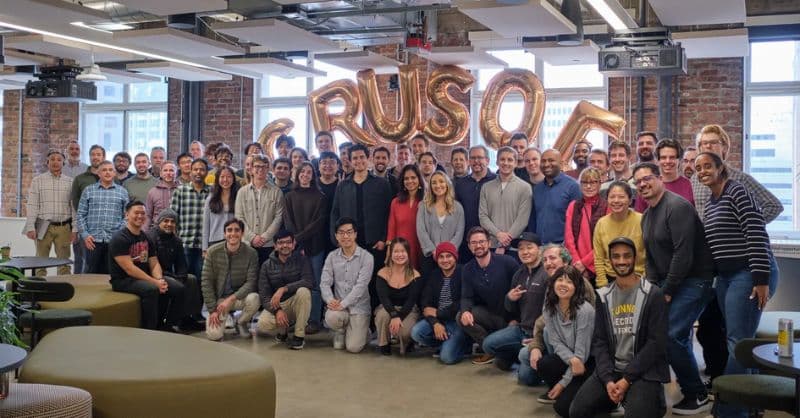
Millions of AI developers download Stainless‑generated SDKs every week. The company was founded by Alex Rattray, who previously built Stripe's API client library code generation system. That background Stripe's developer experience is considered among the best in the API economy gave Rattray the specific institutional knowledge to build the right tool for the right market at the right time.
Top AI platforms including OpenAI, Anthropic, Runway, and Meta's Llama Stack trust Stainless to power their SDKs and beyond model providers, Groq, Cerebras, LangChain, Braintrust, Writer and many other fast‑growing platforms also use Stainless, with millions of AI developers downloading Stainless‑built SDKs every single week.
Beyond SDK generation, Stainless had expanded into a second product category that is increasingly central to how AI agents work. Today, Anthropic is acquiring Stainless, a leader in SDKs and MCP server tooling, to extend that reach even further. MCP, or Model Context Protocol, is the open standard that Anthropic created to allow AI agents to connect with external APIs and data sources in a standardized way. Stainless had built tooling that makes it easier for API providers to create MCP servers, essentially enabling their APIs to be natively accessible to AI agents. Acquiring the leading builder of MCP infrastructure directly advances Claude's ability to connect to the broader software ecosystem.
The Competitive Calculus
By internalizing this capability, Anthropic strengthens its developer offering for Claude and future AI agents that must integrate with external software, while simultaneously depriving major rivals of a tool they have relied on to maintain their own SDKs.
OpenAI and Google both used Stainless to maintain their developer‑facing SDK libraries. Those libraries are how millions of developers interact with GPT‑5.5, Gemini, and related models every day. The quality and reliability of those SDKs directly affects developer satisfaction and retention. With Stainless shut down, OpenAI and Google must now either rebuild the SDK generation infrastructure internally or migrate to alternative tools neither of which is quick or inexpensive.
Anthropic has completed three acquisitions to date, all within approximately six months. It acquired Bun (a JavaScript runtime) in December 2025, Vercept (an AI computer‑use startup) in February 2026, and Coefficient Bio (a stealth biotech AI startup) in April 2026 for just over $400 million in stock. The Stainless acquisition is the fourth in that sequence and the one with the most direct competitive implications.
Katelyn Lesse, Head of Platform Engineering at Anthropic, said: "Agents are only as useful as what they can connect to. We're excited to bring the Stainless team into Anthropic to advance Claude's ability to connect to data and tools."
Alex Rattray, founder of Stainless, said in the official announcement: "I started Stainless because SDKs deserve as much care as the APIs they wrap. Anthropic was one of the first teams to bet on this with us. We have been watching what developers have built on Claude over the last few years, which made bringing our teams together an easy decision. The team gets to keep doing the work we love, on the platform where it matters most."
For existing Stainless customers, the shutdown of hosted products means they need to find alternatives for new SDK generation going forward. The SDKs already generated remain fully in their ownership and can be modified without any dependency on Stainless's servers. The practical impact depends on how actively those customers were using Stainless for ongoing maintenance of rapidly evolving APIs.
Stay informed
Startup news in your inbox
Get important funding rounds, founder stories, and startup updates.
No spam - only important startup updates.