Munich's Arcos Raises €5.5M To Watch Europe's Infrastructure Around The Clock

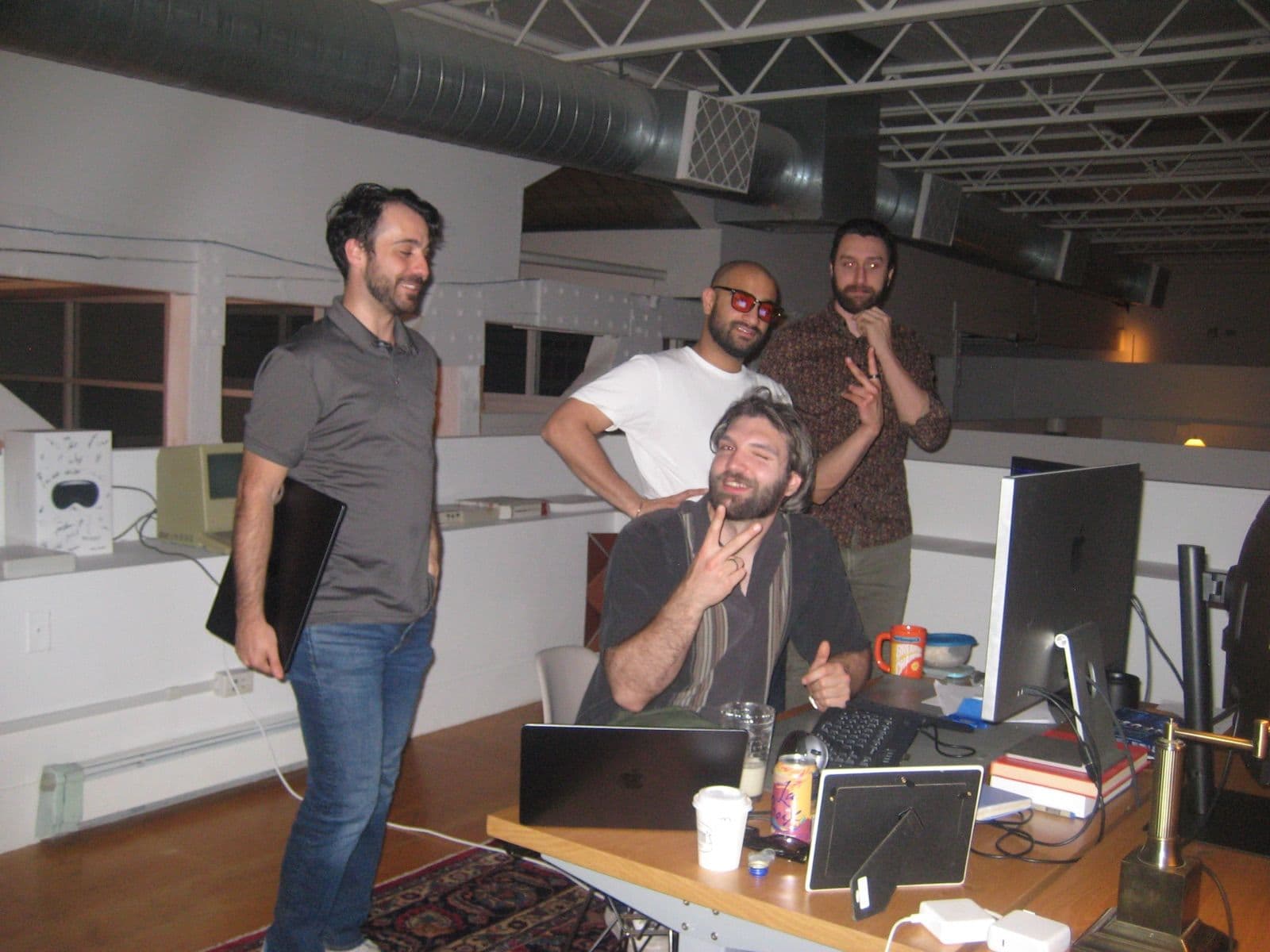
Arcos founder Louis Wübben and Moritz Steigerwald
Image credit: Arcos
Arcos, a Munich based security technology company, has raised 5.5 million euros in seed funding to expand a platform built to watch over critical infrastructure and other physical sites around the clock, at a moment when European operators are managing more connected sensors with fewer people to monitor them.
The round was led by High‑Tech Gründerfonds, whose own investors include the German Federal Ministry for Economic Affairs and Energy and KfW Capital, with participation from Bayern Kapital, Pact, Haufe, Robin Capital and strategic business angels. According to Dealroom, the 5.5 million euro raise ranks in the top 10 percent of all‑time seed deals in the security sector, a signal of how much investor appetite has grown for physical infrastructure protection as threats to European critical infrastructure have become more visible.
Arcos was founded roughly a year ago by Moritz Steigerwald and Louis Wübben. The company positions itself as a civil security provider rather than a pure software vendor, combining its own alarm receiving control centre with a platform that merges signals from connected sensors into a single operational system for managing security incidents. That combination matters to how the founders describe their approach, since running an actual control centre alongside the software gives Arcos direct feedback from live security operations, rather than relying entirely on customers to translate real‑world incidents back into product requirements after the fact.
The problem Arcos is built around stems from a structural shift the company argues is already well underway across the security industry. Sensors are being deployed at a scale never seen before, across homes, commercial properties, railway stations, substations and data centres, while the number of staff available to actually watch and respond to what those sensors detect keeps shrinking. Steigerwald has framed the resulting gap in blunt terms, arguing that attacks on infrastructure that nobody watches around the clock succeed precisely because no one is watching continuously, pointing to recent attacks on substations, burning cable ducts along railway lines, and drone incursions over airports and industrial sites as evidence that this gap has already had real consequences rather than remaining a theoretical risk.
Arcos's platform is designed to close that gap by applying the same control centre, the same software and the same operational processes across every type of site it protects, whether that is a private home, a commercial property, a construction site or a piece of critical infrastructure. Steigerwald has described that consistency as central to how the platform improves over time, arguing that because the same underlying system serves every site type, it gets better with each new sensor added rather than becoming more complicated, an architecture built for breadth rather than requiring a special, bespoke configuration for every individual customer or sector.
That focus on operational breadth also shapes how Arcos frames its own market opportunity. Rather than treating critical infrastructure protection as an entirely separate product line from residential or commercial security, the company argues that solving monitoring and incident response well at smaller scale, in homes and commercial buildings, builds the same underlying capability needed to protect higher‑stakes sites such as substations and data centres, letting Arcos move up into critical infrastructure work with an already‑proven operational base rather than starting from scratch in a sector with famously long sales cycles and demanding certification requirements. The company has said it has already completed several certification processes and built out a qualified team ahead of this raise, positioning itself as operationally ready to take on critical infrastructure contracts rather than still working through the compliance requirements that sector typically demands.
The new funding will go toward expanding Arcos's team in Germany, further developing its platform, and preparing specifically for growth in the critical infrastructure market, according to the company. Beyond that, Arcos plans to expand into additional European markets, extending the same combined control centre and software model beyond its home country. The company is also set to appear at Security Essen, the security industry's leading international trade fair, running from 22 to 25 September, a venue likely to bring it in front of exactly the kind of infrastructure operators and public sector buyers the company is now targeting with this fresh capital.
Arcos's raise arrives amid a broader European reassessment of infrastructure resilience, as rail, electricity, telecommunications and data centre operators face rising concern around sabotage, theft and physical intrusion even as many of the same organisations continue operating with leaner security staffing than in previous years. Whether Arcos can convert its early residential and commercial security base into meaningful traction inside the more demanding, longer sales‑cycle world of critical infrastructure contracts, without its unified platform becoming just another source of alerts for already stretched operators to manage, will likely determine how much of that structural gap the company is ultimately able to fill.
Topics
Stay informed
Startup news in your inbox
Get important funding rounds, founder stories, and startup updates.
No spam - only important startup updates.