Magentic Banks $18M To Turn AI Agents Into Full-Time Procurement Staff
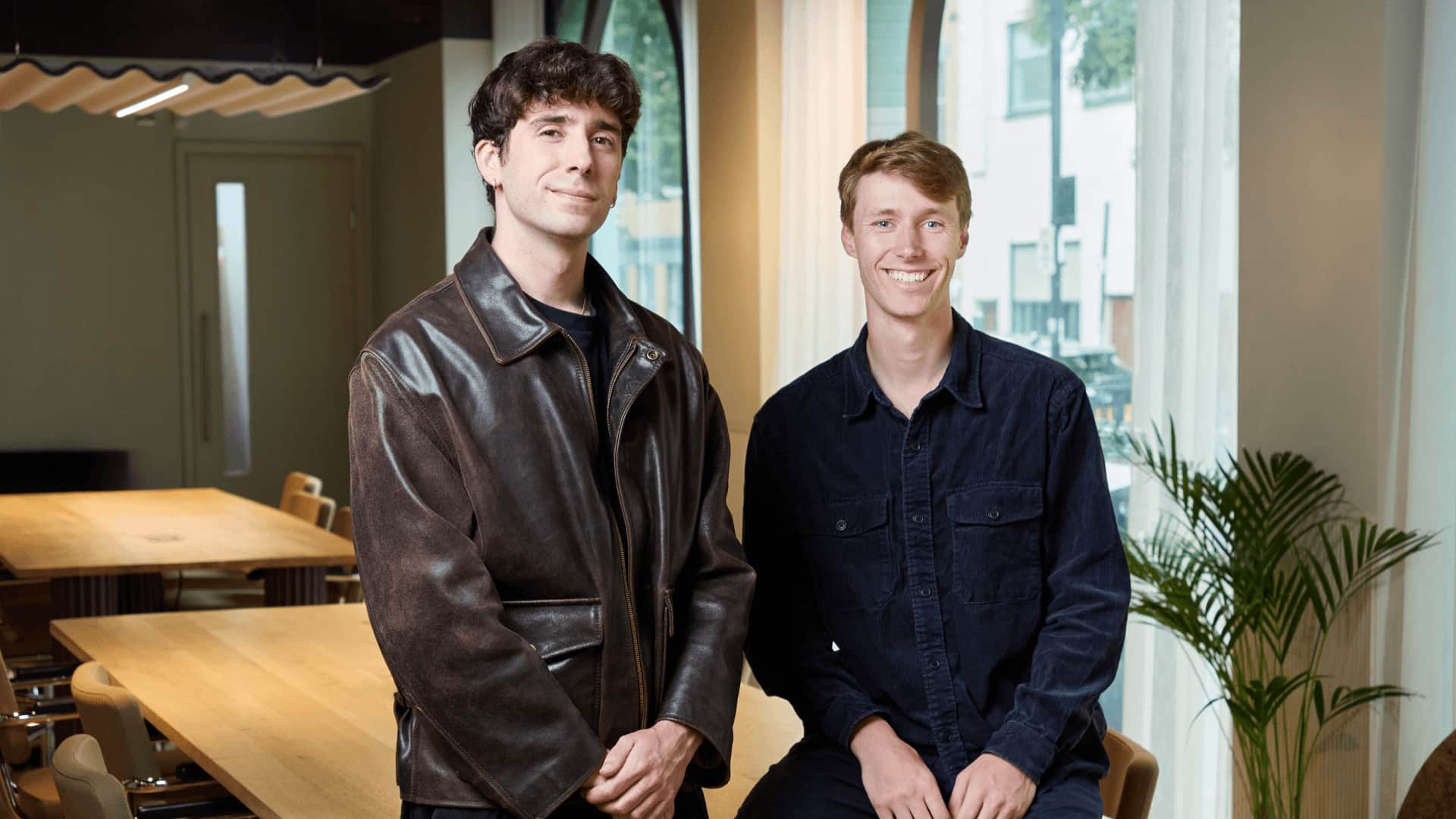
Magentic founder Robin Van Aeken (CEO) and Odhran O'Donoghue, PhD (CTO)
Image credit: Magentic
Magentic, a London and New York based AI company, has raised an 18 million dollar Series A round to grow what it calls a full AI workforce for global manufacturers, extending its agents further into the buying, negotiating and order management work that has traditionally required dedicated procurement staff.
The round was led by Feyza Haskaraman and Sundeep Peechu at Felicis, joined by Julien Bek at existing investor Sequoia Capital, Jason Kalira and Shaun Chaudhuri at The Westly Group, and Christian Neumann and Andreas Fischer at First Momentum Ventures. The round arrives roughly a year after Magentic's public launch and brings the company's total funding to 23.5 million dollars, following a 5.5 million dollar seed round in mid‑2025 that was itself an increase on the company's original 4.7 million dollar seed announced that same July.
Magentic was founded by chief executive Robin Van Aeken and chief technology officer Odhran O'Donoghue, who first met while both were winning hackathons as students at Oxford. Van Aeken, an Economics and Management graduate, went on to spend years at McKinsey & Company leading supply chain and procurement transformation work for large industrial clients, giving him a close view of exactly where those processes tend to break down at scale. O'Donoghue holds a PhD in machine learning from Oxford and worked on advanced AI research at OpenAI, NASA and the Francis Crick Institute before the pair reconnected roughly seven years after their student hackathon wins to start the company together in July 2025.
The problem Magentic is built around sits inside one of the least visible but most consequential parts of any large manufacturer's operations. Van Aeken has pointed to McKinsey research showing that supplier compliance failures alone cause the average large company to waste roughly 2 percent of its total spending, a figure that translates to around 40 million dollars in leakage for every 2 billion dollars a procurement organisation manages. That waste persists despite years of software investment because much of it stems from decades‑old, fragmented systems, often still held together by spreadsheets and ageing enterprise resource planning software, spread across billions of rows of data that no manual review process can realistically keep pace with.
Magentic's answer is what the company calls AI digital workers, multi‑agent systems designed to operate the way a human employee would rather than functioning as another dashboard layered on top of existing software. Its agents work inside the same tools a procurement team already uses, including Microsoft Teams, email and a company's internal systems, and are built to take on work end to end rather than simply surfacing recommendations for a person to act on. That includes deciding whether to buy or build a given input, choosing the right supplier, negotiating contract terms, processing purchase orders and clearing invoices, spanning both indirect spend and the more complex direct spend tied to raw materials that go directly into a manufacturer's own products.
The company's customer base already includes three of the world's ten largest beverage companies among a broader roster drawn from the Global 500. According to Magentic, one customer now routes more than a million orders a year through its AI agents, while another has identified 4 million dollars in savings since deployment. Across its customer base more broadly, the company reports typical savings in the 2 to 5 percent range, a 60 percent improvement in underlying data quality, and reductions running into tens of thousands of hours of manual work, freeing procurement staff to focus on supplier relationships, new product development and strategic work rather than repetitive processing tasks. Van Aeken has framed that shift as one where human procurement teams grow in value per person even as routine execution work moves to Magentic's agents, rather than a story about headcount reduction.
Feyza Haskaraman of Felicis has pointed to the technical difficulty of that work as central to the firm's decision to lead the round, describing supply chains as among the least visible parts of the economy despite deciding what ultimately gets built at all, and arguing that getting an AI agent to understand a manufacturer's complex, often inconsistent systems well enough to take real action inside them is a genuinely hard problem, one she said Felicis has not seen any other company solve at the same depth.
Given how much autonomy Magentic's agents are given inside sensitive enterprise systems, the company has built its platform around a correspondingly demanding security posture, including zero‑data‑retention agreements with the major AI model providers it works with, support for deployment inside any cloud environment a customer requires, and isolated deployments available within any specific data region, controls aimed squarely at winning over security and compliance teams wary of letting autonomous software act inside core operational systems.
The new funding will go toward accelerating Magentic's product roadmap, extending its agents across a broader set of procurement and supply chain workflows, and deepening what the company describes as long‑horizon AI research aimed at handling the most complex optimisation problems in procurement, work O'Donoghue has said requires pushing beyond AI systems constrained by limited context windows toward agents that can diagnose a problem, plan a fix, take action, and see that work through across terabytes of multimodal operational data at once.
Magentic's raise lands against a backdrop its own funding announcement leans on directly, with Goldman Sachs projecting roughly 8 trillion dollars in AI‑related capital spending between 2026 and 2031, much of it flowing into physical infrastructure that still has to be sourced, procured and built, even as procurement workloads have grown roughly 10 percent year over year against budget increases of only around 1 percent, according to research from The Hackett Group. That widening gap between what procurement teams are being asked to do and the resources they have to do it with is the specific opening Magentic is betting its AI digital workers are positioned to fill, though the company's own framing of that opportunity, that better‑informed decisions compound into lasting competitive advantage, will only be tested properly as more of the Global 500 either adopt agentic procurement tools like Magentic's or build similar capabilities of their own.
Topics
Sources
Stay informed
Startup news in your inbox
Get important funding rounds, founder stories, and startup updates.
No spam - only important startup updates.