AIUC Banks $55M To Build An Insurance Layer For Frontier AI Agents

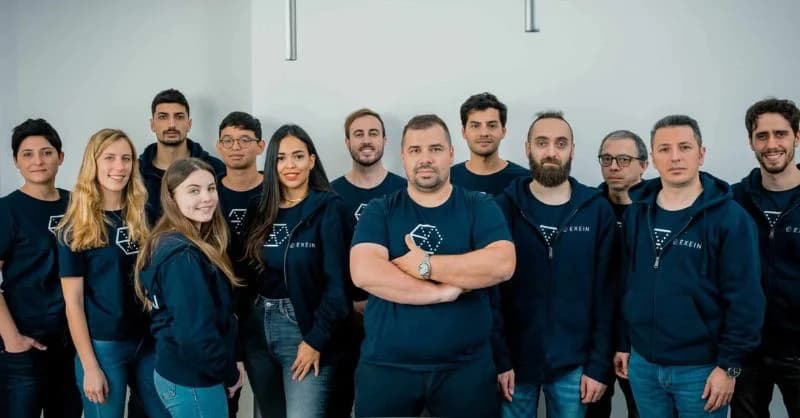
AIUC founder Rune Kvist and Rajiv Dattani,
Image credit: AIUC
AIUC, the Artificial Intelligence Underwriting Company, has raised a 40 million dollar Series A round to build out a certification and insurance system for AI agents, arguing that liability and trust, not raw capability, are now the biggest obstacles standing between enterprises and wider AI adoption.
The round was led by Ribbit Capital, with participation from First Harmonic. It follows an earlier 15 million dollar seed round led by Nat Friedman's investment vehicle NFDG, with additional seed backing from Emergence, Terrain and Anthropic co‑founder Ben Mann. Combined, the two rounds bring AIUC's total funding to 55 million dollars.
AIUC was founded by chief executive Rune Kvist, an early product hire at Anthropic, and chief operating officer Rajiv Dattani, who previously served as chief operating officer at METR, the AI safety research organisation known for evaluating frontier models ahead of major releases. That background shapes the company's central argument, that AI adoption inside large enterprises is increasingly limited not by what models and agents can technically do, but by how much organisations and the public can actually trust those systems once deployed, particularly as agents take on more autonomous, consequential actions without a human reviewing every step.
The company's core product is AIUC‑1, a certification standard built specifically for AI agents and modelled loosely on SOC 2, the compliance framework cloud companies use to demonstrate responsible handling of customer data. Rather than leaving AI builders to select and pay their own auditors, a structure AIUC argues creates an inherent conflict of interest and has contributed to public distrust of self‑reported AI safety claims, the company positions independent audits as the foundation insurers can rely on to price risk accurately, mirroring how insurers have historically driven safety standards in other industries. AIUC has drawn a direct comparison to the history of auto insurers funding crash tests that eventually led to airbags becoming standard, and to how early fire insurers funded the lightbulb and electrical safety testing that became Underwriters Laboratories.
In practice, AIUC‑1 certification puts an AI agent through roughly 5,000 automated adversarial tests covering categories including jailbreaks, prompt injection, hallucinations, anomalous behaviour and data leaks. AI tools are used to run and analyse much of that testing at scale, but human reviewers verify the final results before AIUC issues a detailed audit report, typically running to around 100 pages, that documents how an agent performed against each category. The standard itself was developed in consultation with a group of roughly 250 security and risk leaders, an approach intended to ensure the thresholds it sets reflect what enterprise buyers and insurers actually consider acceptable rather than criteria set unilaterally by AIUC itself.
That certification work has already translated into real insurance coverage. AIUC has said that ElevenLabs became the first company to obtain agent insurance coverage from a Lloyd's of London insurer, a deal that required quarterly technical audits carried out by an auditor of the insurer's own choosing rather than one selected by ElevenLabs. AIUC has built infrastructure to support that kind of recurring, insurer‑driven audit relationship at scale, working alongside partner firms including Gray Swan for technical evaluations and Schellman for formal audit work. Companies that currently carry the AIUC‑1 trust mark include Cursor, ElevenLabs, Harvey, Lovable, UiPath, KPMG and Fin.
Nick Shalek, general partner at Ribbit Capital, has pointed to the difficulty of what AIUC has managed to pull off as central to the firm's decision to lead the round, describing the challenge of aligning AI builders, enterprise buyers, security leaders, independent auditors and insurers around a single shared standard as a genuine cold‑start problem that required exactly the combination of insurance rigor and frontier AI experience the founding team brought to it.
The new capital will support three main areas of work, expanding AIUC‑1 certification and audit capacity to a growing set of AI builders, extending the company's assessment framework from application layer agents toward frontier AI models themselves, and continued hiring across all functions at the company's San Francisco base. AIUC has also said it plans to open source what it describes as the world's first actuarial model for frontier AI catastrophic risk in the coming weeks, a move intended to make the underlying risk methodology behind its certification and insurance work available for scrutiny and adoption beyond AIUC's own commercial relationships.
The company's bet reflects a broader argument taking shape across AI policy circles, that market mechanisms, specifically insurance pricing tied to independent audits, could complement or in some cases substitute for slower moving regulatory processes in governing increasingly capable AI systems. Kvist and Dattani have framed AI risk as a variation on a problem markets have solved before in boiler safety, electrical products, cars and nuclear power, though they have also acknowledged that AI carries higher stakes and a murkier liability landscape than any of those historical precedents. Whether an insurance driven trust layer can scale fast enough to keep pace with how quickly agentic AI systems are being deployed across the economy, rather than simply documenting risks that have already caused harm by the time an audit catches them, is likely to be the central test of AIUC's approach as it moves from its early customer base of AI‑native companies toward broader adoption across more risk‑averse, regulated industries.
Topics
Sources
Stay informed
Startup news in your inbox
Get important funding rounds, founder stories, and startup updates.
No spam - only important startup updates.