Dodge AI Raises 2.65 Million Dollars To Take On The 600 Billion Dollar Job Of Keeping SAP Running
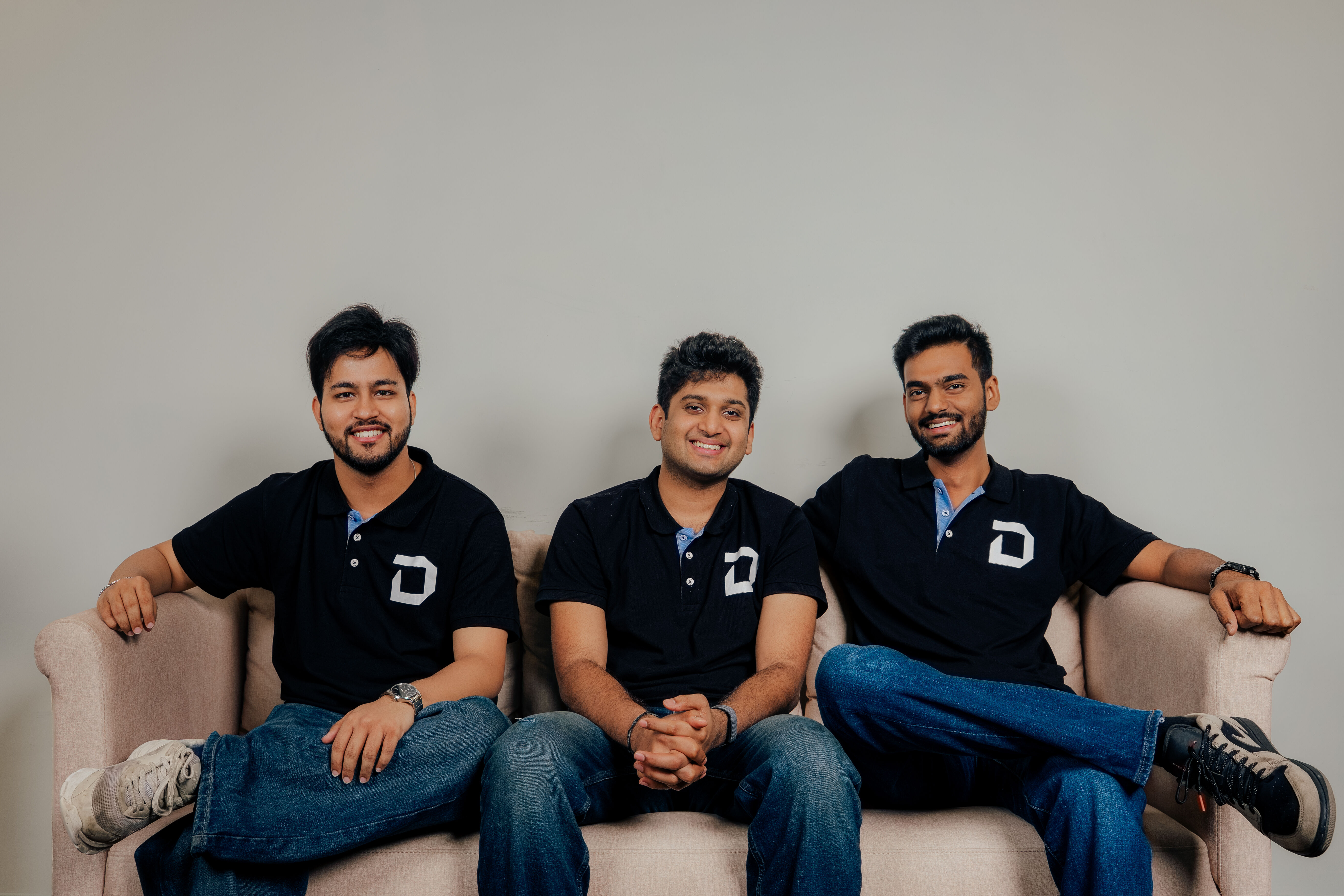
AdityaThakur, Rebhav Bharadwaj and Aditya Patil.
Image credit: Dodge AI
Dodge AI, a San Francisco startup building software to automate the maintenance of enterprise systems such as SAP, has raised 2.65 million dollars to expand a control layer designed to reduce companies' dependence on outside consultants for everyday system upkeep.
The round was led by Accel and Google's AI Futures Fund, with participation from New Build Venture Capital, Antler, Schema Ventures and a group of angel investors from the SAP ecosystem. The company was one of five startups selected out of more than 4,000 applicants for the 2026 Atoms AI cohort, a joint programme run by Accel and Google's AI Futures Fund, which gave Dodge AI early access to Google DeepMind models ahead of this funding round.
Dodge AI was founded in 2026 by Aditya Thakur, chief executive Rebhav Bharadwaj and Aditya Patil. The company's platform is built as a control layer across major enterprise applications, including SAP, Salesforce, Microsoft Dynamics, Kinaxis and Oracle JDE, positioning it inside the operational core of the large corporate software stacks that most sizable companies depend on to run.
The problem Dodge AI is targeting has persisted largely unchanged for decades. Enterprise application maintenance has traditionally run through large system integrators such as Accenture, TCS and IBM, following a standard playbook of putting 20 to 50 people offshore to handle incidents, change requests, background jobs and the everyday operational fires that keep enterprise systems running. That model keeps systems alive, but it creates a deeper structural problem: fixes go undocumented, customisations accumulate, and technical debt compounds quietly inside systems of record. Over time, enterprises grow increasingly dependent on their maintenance partner, because the actual knowledge of how a system works ends up scattered across support tickets, individual consultants, configuration layers and institutional memory that no single document captures.
Dodge AI's platform is designed to capture that operational knowledge directly rather than leaving it trapped in people and tickets. According to the company, its software documents the custom logic that makes each client's system unique, building a persistent record of configurations and exceptions that can be queried and acted on automatically rather than rediscovered by a new consultant each time an issue arises.
The company points to a specific customer example to illustrate the approach. One client had been forced to run its inventory planning process overnight because its SAP system kept crashing whenever the job ran during the day. Dodge AI says it modernised that process, making it 132 times faster, freeing a team of ten people who had previously been dedicated to maintaining the workaround, and improving order allocation time by eight hours. In a separate incident, the company says its software traced a fault across SAP, supply chain planning tool Kinaxis, and internal warehouse software, and delivered a fix within minutes, a diagnostic task that would typically require a specialist familiar with all three systems working in coordination.
Dodge AI estimates the enterprise application maintenance market it is targeting exceeds 600 billion dollars annually, a figure that reflects both the scale of ongoing spending on keeping legacy enterprise software running and the extent to which that spending has so far resisted meaningful automation. Prayank Swaroop, an investor at Accel, said application maintenance is one of the largest and least modernised categories in enterprise technology, a gap the firm is betting Dodge AI is positioned to close.
The company frames maintenance as a deliberate entry point rather than an end goal. Bharadwaj has said Dodge AI's ambition is to give enterprises the ability to continuously improve and heal their mission critical systems, so that incidents resolve faster, technical debt becomes visible and understood, and the operational knowledge trapped inside routine maintenance work becomes the foundation for broader modernisation efforts down the line.
That staged ambition puts Dodge AI in a category of enterprise AI startups betting that reliability and trust, built by solving a narrow, high frequency problem well, create the credibility needed to later take on larger transformation projects. Winning that trust inside systems as consequential as SAP, where an unsupervised error can halt a warehouse or a supply chain, is likely to be the central test of whether Dodge AI's current traction with a dozen enterprise customers can scale into a business large enough to justify its backers' broader modernisation thesis.
Topics
Stay informed
Startup news in your inbox
Get important funding rounds, founder stories, and startup updates.
No spam - only important startup updates.