Dust Raises $40M Series B Led by Sequoia to Build the Multiplayer AI Operating System for Enterprise
Editorial Team

Dust, the enterprise AI platform built around shared agent workspaces, has closed a $40 million Series B round led by Abstract and Sequoia Capital, with strategic participation from Snowflake Ventures and Datadog. The raise brings the company's total funding to more than $60 million. Sequoia has now led every Dust fundraising round: a $5.5 million seed in June 2023, a $16 million Series A in June 2024, and now this Series B.
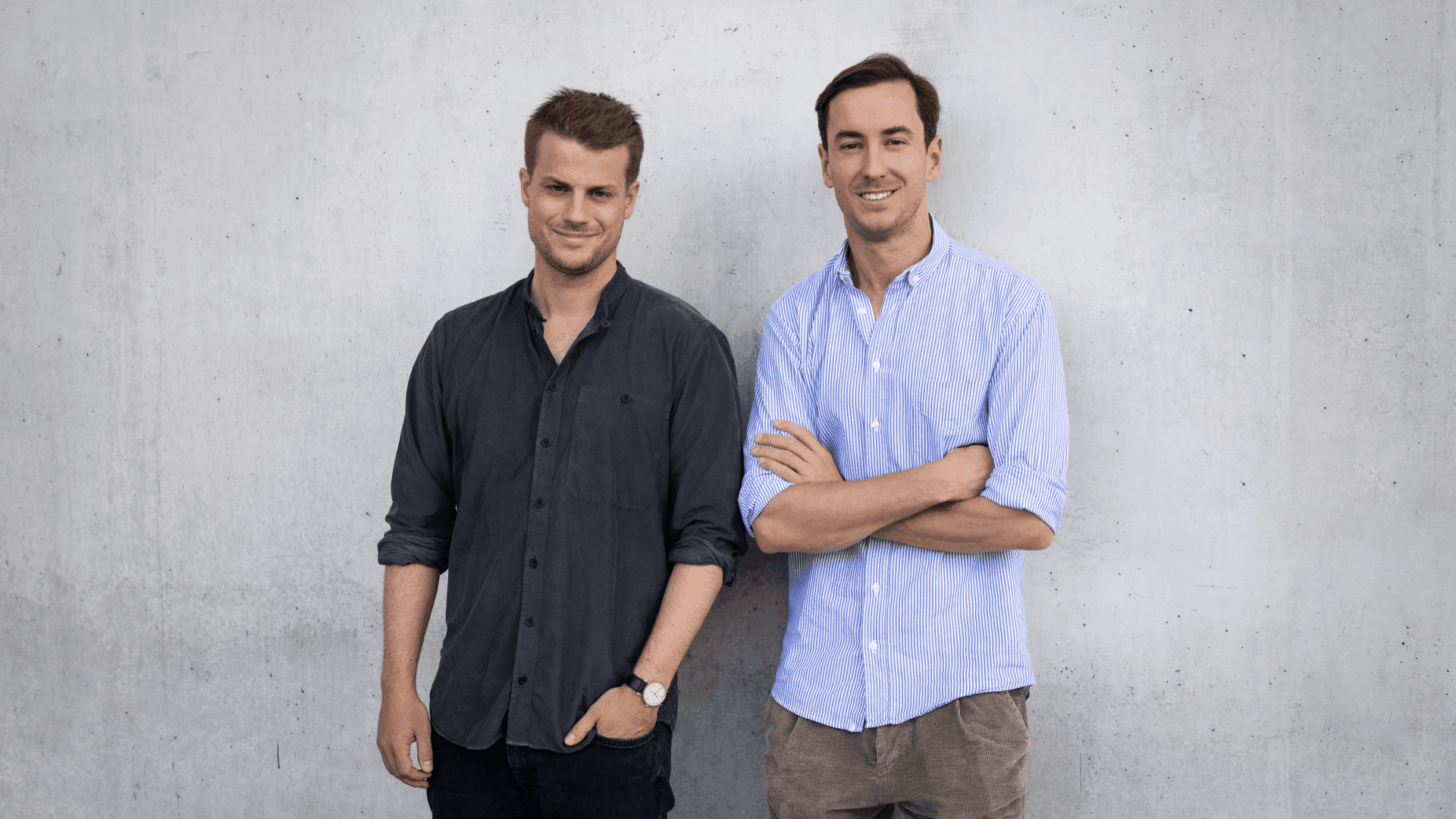
The company was founded in February 2023 by Gabriel Hubert and Stanislas Polu, who met at Stanford in 2007 and previously sold data analytics company TOTEMS to Stripe in 2014. Polu went on to work as a research engineer at OpenAI under Ilya Sutskever, focusing on mathematical reasoning. Hubert served as Chief Product Officer at French health‑tech company Alan before co‑founding Dust.
Dust now has approximately 98 employees across Paris and San Francisco and serves more than 3,000 organizations globally.
The Problem Dust Is Solving
The dominant pattern in enterprise AI adoption so far follows a predictable shape: individual employees gain access to an AI assistant, use it for their own tasks, and generate outputs that stay inside a private chat window. When the session ends, the context disappears. The next employee who needs related information starts from scratch. A salesperson spends an hour using AI to research an account, and the next day a solutions engineer runs the same research through their own assistant, with no awareness that the work was already done.
Dust calls this single‑player AI and frames it as the central reason that most organizations have adopted AI without becoming meaningfully more intelligent as organizations. The productivity gains are real at the individual level. The organizational compounding that enterprise software investment is supposed to create is not happening.
The platform Dust has built to address this is what the company calls multiplayer AI: a shared workspace where human employees and AI agents operate with access to the same projects, context, notifications, files, and organizational knowledge. An agent's output in one function is immediately available to agents and people in another. Work done once compounds across the organization rather than disappearing back into an individual's session history.
Dust describes the category it is defining as an AI Operating System, a horizontal layer that sits on top of the frontier AI models organizations choose to use and provides the shared infrastructure for deployment, governance, and collaboration. The platform is model‑agnostic by design, supporting models from Anthropic, OpenAI, Google, and others, which means customers are not locked into a specific AI vendor's infrastructure.
Traction That Validates the Thesis
The business metrics behind this round are the strongest argument for the platform's market fit.
- More than 3,000 organizations are using Dust globally, spanning high‑growth AI‑native companies and established enterprises
- 41,000 monthly active users were recorded in April 2026
- Over 300,000 AI agents have been deployed across the platform to date
- Monthly active adoption is above 90 percent across customers
- Weekly active usage is above 70 percent, a retention rate that would be considered strong in any enterprise software category
- Net Revenue Retention reached 240 percent in 2025, with zero customer churn across the full year
- Revenue has grown nine‑fold since 2024
The zero‑churn figure covering the entirety of 2025 is the data point that Sequoia partner Konstantine Buhler pointed to directly in his statement on the investment. His framing was precise: weekly active usage above 70 percent across an enterprise customer base signals that Dust has become embedded in how those teams actually work, not merely adopted as an experiment.
Customers include Vanta, with CRO Stevie Case publicly describing Dust as the platform his team runs on. The platform has also been adopted within functions at companies including Datadog and 1Password, according to statements from Abstract General Partner Ramtin Naimi.
Dust was ranked second on the 2026 Enterprise Tech 30, early stage, a recognition from a list that evaluates pre‑IPO enterprise software companies by revenue growth, retention, and category importance.
The Founders and the Founding Thesis
Polu left OpenAI in September 2022 with a specific conviction that became Dust's founding thesis: the underlying AI models were already powerful enough to be economically transformative across enterprises, but the product layer required to deploy them usefully at organizational scale did not exist. Generic assistants generate individual productivity. What organizations actually need is infrastructure that lets AI operate across teams, share context across functions, and compound knowledge over time rather than resetting with every session.
Dust incorporated in February 2023 to build that horizontal layer. The model‑agnostic approach was a deliberate choice from the start, designed to prevent Dust from becoming a reseller of a specific AI provider's output and to ensure the platform's value sits in the orchestration and governance layer rather than in the underlying model.
The company is building a specific role alongside the product itself: the AI Operator. These are employees inside functions like Operations, Support, Marketing, and Sales who configure and manage the AI agent systems running in their area of the organization. Rather than requiring engineering involvement for every agent deployment or workflow adjustment, AI Operators are non‑technical builders who use Dust's platform directly. That staffing model implies a sustained organizational investment in AI deployment rather than a one‑time implementation project.
What the Series B Funds
Dust will deploy the $40 million across three product development priorities.
The first is self‑learning agents that improve automatically through use. Current enterprise AI deployments typically require manual refinement cycles when agent behavior drifts or performance degrades. Dust is building agents that identify their own failure modes and improve from usage data without requiring engineering intervention at each iteration.
The second is collaboration infrastructure that treats human employees and AI agents as equal co‑contributors to shared projects. At present, most enterprise platforms still position AI as a tool that individuals direct. Dust's vision is a system where agents and humans draw on the same information at the same time, with bidirectional access to shared context, and where outputs are attributed and governed regardless of whether a human or an agent produced them.
The third is governance and orchestration infrastructure for enterprise‑scale reliability. As organizations deploy hundreds or thousands of agents rather than dozens, the ability to audit, control, and manage those agents centrally becomes a compliance and risk management requirement, not a product feature. Dust is building that layer to handle enterprise‑scale agent fleets predictably.
The agentic AI platform market reached $9 billion in 2026 and is projected to reach $47.8 billion by 2030 according to industry estimates. Gartner projects that 40 percent of enterprise applications will embed task‑specific AI agents by the end of 2026. Dust's nearest enterprise competitors include Salesforce's Agentforce, Microsoft 365 Copilot, and a growing field of venture‑backed startups. Its differentiation rests on the open‑source foundation, the non‑technical builder focus, and the shared workspace model that treats the team rather than the individual as the primary unit of AI deployment.
Stay informed
Startup news in your inbox
Get important funding rounds, founder stories, and startup updates.
No spam - only important startup updates.