Kodesage Raises $6.6 Million Seed to Modernise COBOL and Oracle Banks With On-Premise AI That Never Leaves the Building
Editorial Team
Kodesage, the London and Budapest‑based enterprise software startup, has closed a $6.6 million seed funding round led by VentureFriends, the Athens‑based venture capital firm that has also backed industrial AI startup Sybilion. Pre‑seed investor Portfolion returned to the round, and two individually notable angel investors joined: Christian Szegedy, a Google Scholar and co‑founder of Elon Musk's xAI, and Mario Götze, the German footballer who scored the winning goal in the 2014 FIFA World Cup final and whose investment vehicle Companion M now holds a portfolio of more than 70 companies, two of which achieved unicorn status in 2025.
The seed raise follows a €2.3 million pre‑seed completed in early 2025 and brings total capital raised by Kodesage to approximately $9 million. The funding will accelerate go‑to‑market expansion across the United States and Europe and support continued investment in engineering and product teams.
The Software Nobody Understands, and the Enterprises That Cannot Afford to Replace It
The most operationally critical software in a large bank is often the software nobody at that bank fully understands anymore. These systems, built decades ago in COBOL, PL/SQL, Oracle Forms, and other legacy languages by engineers who retired long before cloud computing existed, run the core transaction processing, risk calculation, and settlement functions of some of the world's most systemically important financial institutions. They are not running because anyone chose them recently. They are running because they have never stopped, and because the accumulated institutional knowledge required to change them safely has been eroding for twenty years.
Changing these systems is slow, expensive, and profoundly risky. Regulatory requirements in banking, insurance, and other heavily regulated sectors demand that any modification to core systems be thoroughly tested and documented. The engineers who wrote the original code are gone. The documentation, if it exists at all, is decades out of date. The business logic embedded in the code reflects regulatory and operational requirements that nobody has articulated in prose form for years. To change anything significant, an enterprise first has to understand what it has, which requires reading and interpreting code that predates modern development practices.
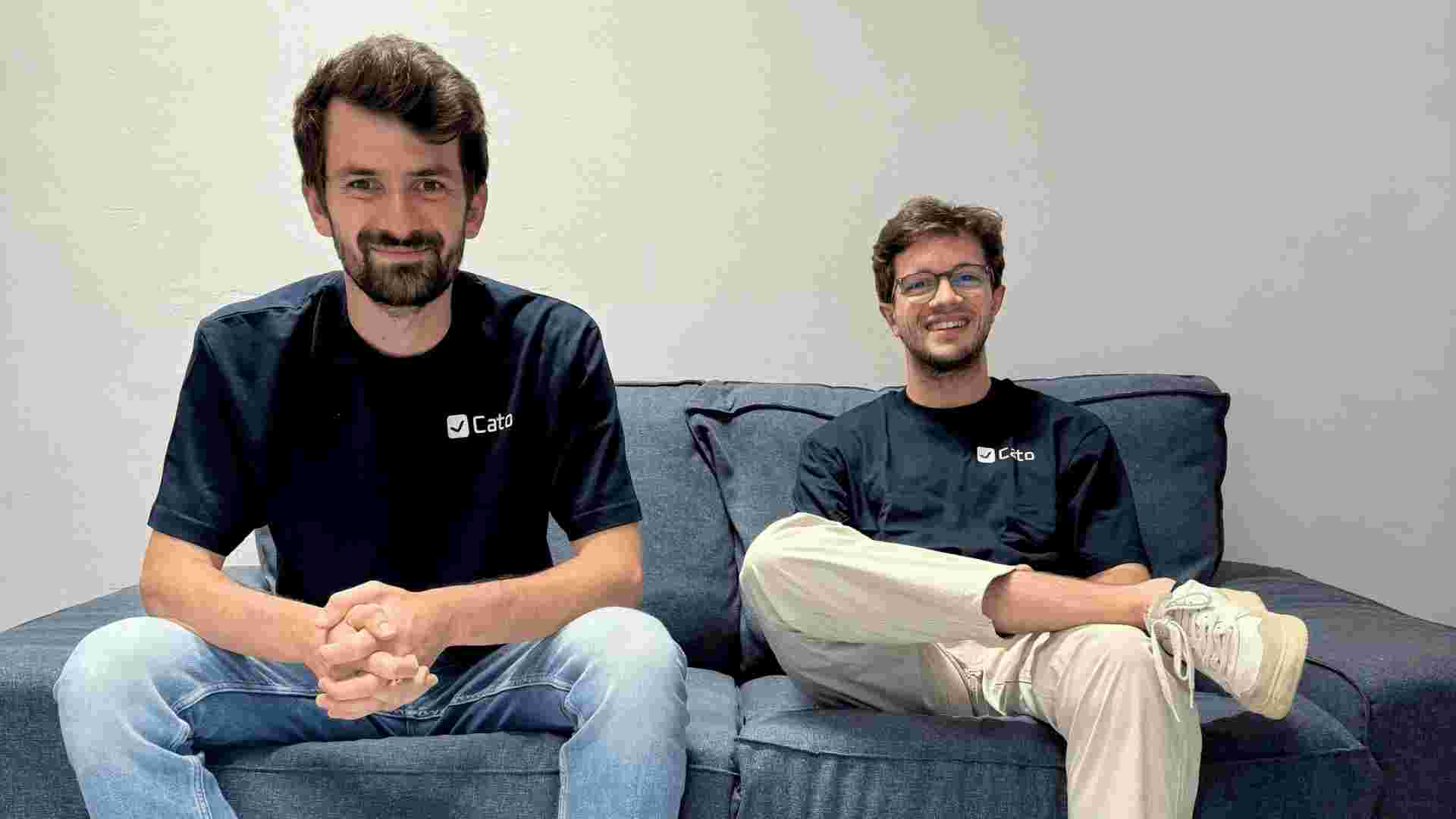
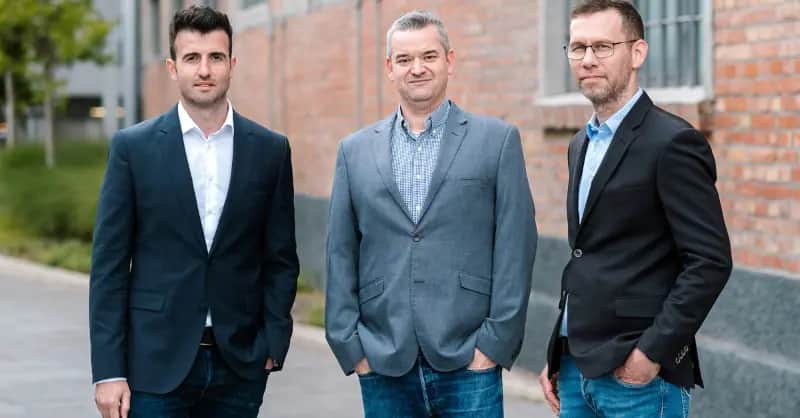
This is the problem Kodesage was founded in 2024 to solve. Its three co‑founders, Gergely Dombi, Miklos Szurdi, and Gyorgy Szilagyi, came to the idea after years delivering software modernisation projects through a large technology consultancy. Dombi and Szurdi previously co‑founded Sonris, a company focused on software analytics and modernisation, giving the founding team direct prior experience with the specific frustrations that Kodesage is now addressing at scale with AI. Their core observation was that modernisation projects were repeatedly delayed not by technical incapability but by three specific failure modes: fragmented or absent documentation, shrinking pools of engineers who understood legacy systems, and the sheer complexity of maintaining ageing code while simultaneously trying to replace it.
What Kodesage Builds and How It Works
Kodesage's platform is described by its founders as a living knowledge layer that extracts everything knowable about a legacy codebase and makes it navigable, understandable, and actionable. The platform performs automated deep discovery of complex codebases, pulling information from source code, databases, documentation, tickets, system configurations, and any available internal wikis. It then generates and continuously maintains living documentation, produces natural language answers to engineering queries through a conversational interface, and creates visual diagrams of system architecture and data flows.
The capabilities that flow from this knowledge layer include context‑aware code conversion to support migration to modern languages, automated test generation, and AI‑powered production support. That last capability points toward the company's stated long‑term vision: self‑healing enterprise applications, systems that can continuously learn, propose, test, and validate fixes, with engineers guiding outcomes rather than diagnosing problems and writing code from scratch.
Dombi put the commercial case plainly: for regulated enterprises whose support teams have been under growing operational pressure for years, and whose systems must remain operational while being incrementally modernised, this is where the deepest value lies.
The Security Architecture That Makes Regulated Enterprises Willing to Adopt It
The most commercially distinctive aspect of Kodesage's product is not what it does but where it runs. The platform operates entirely within the customer's environment, whether deployed on‑premise, in a private cloud, or in fully air‑gapped configurations for the most security‑sensitive deployments. Sensitive code never reaches a public cloud AI service. Every computation, every inference, every knowledge graph update happens inside the enterprise's own security perimeter.
This is not an optional feature. It is the foundational architectural decision that makes the platform viable for its target customers. Banking regulators, insurance regulators, and government technology standards bodies across the US and Europe impose strict requirements on where sensitive code and data can reside and how it can be processed. Many of these institutions cannot use general‑purpose AI coding tools, regardless of their technical capability, because those tools route code through external cloud infrastructure. Kodesage's on‑premise architecture removes that barrier entirely.
The target industries beyond banking and insurance include energy, telecommunications, transportation, and the public sector: all sectors characterised by decades of accumulated legacy infrastructure, regulatory constraints on cloud data processing, and significant operational pressure to modernise without disrupting continuous operations.
The legacy application modernisation market was valued at $29.39 billion in 2026 and is projected to reach $66.21 billion by 2031, growing at a compound annual growth rate of 17.64 percent, according to Mordor Intelligence. Enterprises currently spend an estimated 40 to 60 percent of their total IT budgets on maintaining legacy systems rather than building new capabilities. That maintenance burden, and the strategic cost of the capabilities foregone because budget is consumed by legacy upkeep, is the commercial pressure that will drive adoption of platforms like Kodesage.
The investor mix around the round is itself a form of market signal. VentureFriends brings a track record in European enterprise infrastructure. Christian Szegedy brings deep AI research credibility from his work on neural network architectures at Google and his role in founding xAI. Mario Götze brings a different kind of signal: that a company's story is compelling enough to attract investors with no obligation to participate in enterprise software rounds.
Stay informed
Startup news in your inbox
Get important funding rounds, founder stories, and startup updates.
No spam - only important startup updates.