Metris Raises $5M So AI Agents Can Finally See What's Happening On The Grid

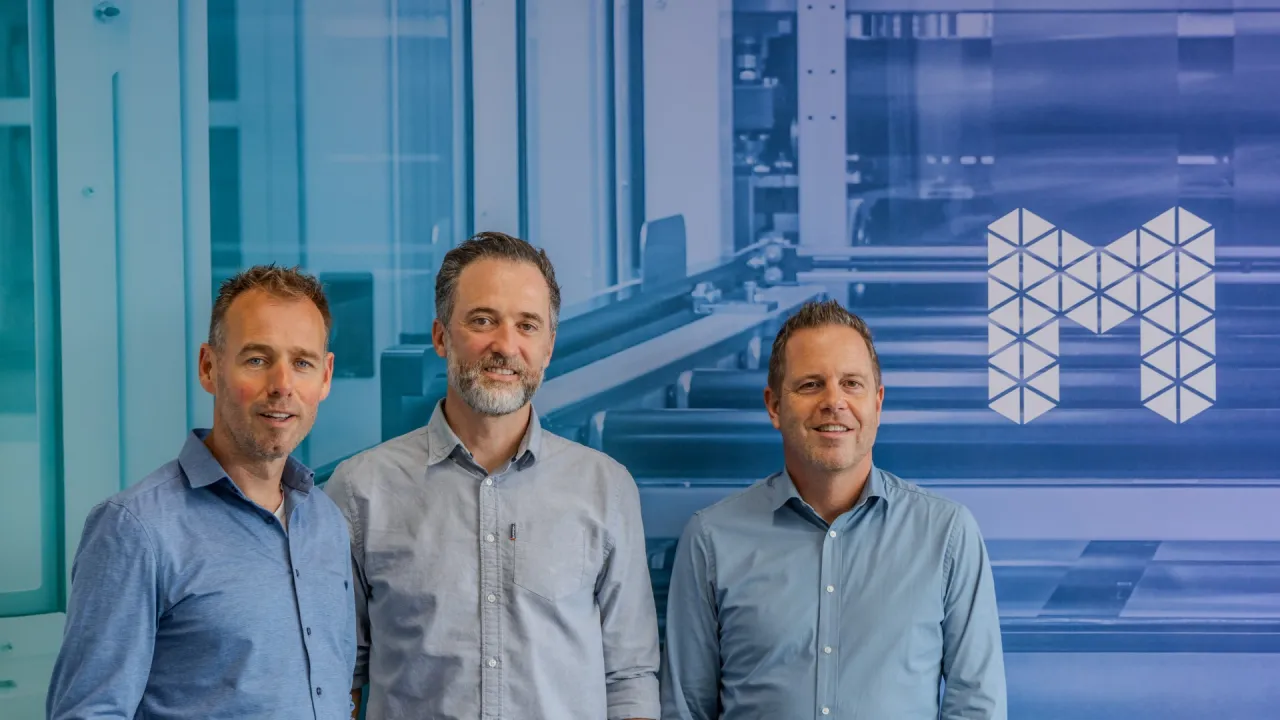
Metris Energy founder Natasha Jones
Image credit: Metris Energy
Metris Energy, a London based AI‑native platform for managing renewable energy assets, has raised a 5 million dollar seed round to build what it calls the missing unified data layer for an industry still largely run on spreadsheets, even as the value flowing through it grows into the trillions.
The round was led by PT1 Ventures, with returning investors Octopus Ventures and AENU joined by new backers Blackfinch Ventures, Plug and Play and Love Ventures. The raise brings Metris's total funding to 7.5 million dollars, following a 2.3 million euro pre‑seed round the company closed in January 2024, before it had fully settled on the broader ambition it is pursuing today.
Metris was founded in 2025 by chief executive Natasha Jones and co‑founder William Whatley, an engineer. Jones spent three years evaluating energy technology founders as an investor at Octopus Ventures before starting the company herself, a decision she has described as the direct result of not being able to find anyone else building what she believed the sector actually needed. After three years of looking for the right team to back, she concluded no one was building it and decided to build it herself instead.
The gap Jones identified sits at the intersection of two trends reshaping the energy sector at once. Global energy transactions total roughly 5 trillion dollars a year, yet most power producers still manage their physical assets using spreadsheets and a patchwork of disconnected systems, including inverters, meters, SCADA monitoring, customer relationship software and separate financial tools that were never designed to talk to each other. At the same time, as electricity grids become more decentralised, new revenue streams are emerging around flexibility services, curtailment management, community energy schemes and corporate power purchase agreements, but the data needed to access, integrate and reconcile those opportunities remains scattered across exactly the same fragmented systems, making it difficult for asset owners to capture value that technically exists but is operationally invisible to them.
Metris's platform addresses that fragmentation by reconciling data from all of those disparate sources into a single, real‑time record of an operator's entire portfolio. On top of that unified record, the company layers automated workflows, natural language querying, a dedicated revenue hub, and AI agents capable of acting on the data directly rather than simply displaying it. Jones has framed the company's founding belief in fairly direct terms, arguing that the winners of the energy transition will not be whoever owns the most kilowatts of installed capacity, but whoever can view, control and monetise that capacity most effectively, and that no unified layer currently exists to let either asset owners or the AI agents increasingly entering this space actually see and act on their own portfolios.
That framing points to a deliberate positioning choice, treating AI agents not as a future feature to bolt onto the platform later but as a category of user the underlying data infrastructure needs to be built for from the outset. As more automated and semi‑autonomous tools begin operating across energy markets, from automated trading systems to demand response platforms, Metris is betting that the operators best able to plug those tools into their own portfolios, safely and with accurate underlying data, will hold a meaningful advantage over those still reconciling their numbers by hand.
The company's traction so far gives some indication of demand for that approach. Metris now manages more than 10,000 solar plants representing 500 megawatts of capacity for power producers, and the company reports eightfold year‑on‑year revenue growth, achieved with a team that has grown to 15 people. Fabian Koenig, a partner at lead investor PT1 Ventures, has pointed to Jones's own background evaluating energy technology companies as an investor as a meaningful factor behind the firm's decision to back her, arguing that the company is building the data infrastructure needed to make energy assets visible in real time, a prerequisite the firm sees as necessary before AI can genuinely transform how the sector operates.
The new funding will go toward two main areas. The first is technical, expanding the platform's agentic capabilities and extending its coverage beyond its original focus on solar into wind and combined heat and power systems, broadening the range of asset types a single operator could theoretically manage through one unified system. The second is geographic, with Metris planning wider expansion across Europe with a particular focus on Germany, which Jones has described as the largest solar market in Europe and the market with the highest proportion of distributed power, a combination that makes the fragmentation problem Metris is built to solve especially acute there.
Metris enters a renewable asset management software market valued at 9.8 billion dollars in 2025 and projected to grow to 23.1 billion dollars by 2032, according to figures from P&S Intelligence, a market that already includes well‑funded competitors such as Boston based Raptor Maps, which has raised more than 60 million dollars building a comparable digital twin platform for solar assets primarily serving customers in the United States. Larger technology companies have also begun moving into the space directly, with IBM recently acquiring Bangalore based Prescinto to fold renewable asset monitoring into its own Maximo platform, a sign that established enterprise software vendors see this data layer as valuable enough to acquire rather than build independently. Whether Metris can scale quickly enough across Europe to establish itself as the default unified layer for renewable operators before either better‑funded specialists or larger platform vendors close the same gap will likely determine how much of the widening decentralised energy opportunity the company is ultimately able to capture.
Topics
Stay informed
Startup news in your inbox
Get important funding rounds, founder stories, and startup updates.
No spam - only important startup updates.