Anthropic Launches Claude Fable 5.1 and Mythos 5.1, Cutting Costs Up to 45% for Heavy AI Workloads

Anthropic Claude Fable 5.1
Anthropic has introduced Claude Fable 5.1 and Claude Mythos 5.1, describing them as the world's most advanced models for coding and knowledge work, alongside a significant reduction in the cost of running heavy AI workloads.
Fable 5.1 and Mythos 5.1 are the same underlying model, differentiated only by the level of safeguards applied to each. Fable 5.1 is generally available to all users, while Mythos 5.1 is accessible only through Anthropic's trusted access programs, with safeguards specifically calibrated to support sensitive work in cybersecurity and the life sciences. That structure lets Anthropic offer a single frontier model broadly while still enabling deeper, more permissive capabilities for vetted professionals working in fields where the same capability could otherwise carry meaningful dual‑use risk.
Pricing was a central focus of the release. Fable 5.1 costs an estimated 25 percent less than its predecessor, Fable 5, for typical workloads wherever usage is billed by token, driven primarily by a 75 percent reduction in the price of cache reads, the process by which a model reuses previously processed context rather than reprocessing it from scratch. Cache reads now cost $0.25 per million tokens. For highly agentic workloads, where cache reads make up the majority of total token usage, the savings climb to roughly 45 percent. Base pricing for new tokens remains unchanged at $10 per million input tokens and $50 per million output tokens.
On raw capability, Anthropic's internal benchmarks show substantial gains over Fable 5 across coding, research, and reasoning tasks. Fable 5.1 scored 52.6 percent on Terminal‑Bench‑Science 0.1, more than double Fable 5's 24.7 percent, and reached 55.8 percent on Terminal‑Bench 4.0 compared with 42.0 percent for its predecessor, with Mythos 5.1 scoring even higher at 60.9 percent on that same benchmark once its safeguards are relaxed for vetted use. On Humanity's Last Exam, a difficult multidisciplinary reasoning benchmark, Fable 5.1 reached 60.9 percent without external tools, ahead of both Fable 5 and Claude Opus 5.
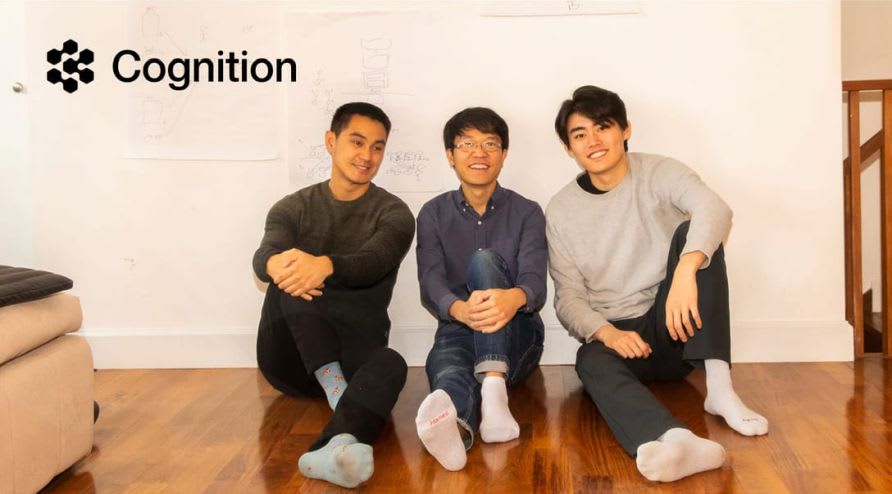
Early access partners described concrete, real‑world impact rather than only benchmark gains. Craig Falls, head of quantitative research at Jane Street Capital, said Fable 5.1 "achieves state of the art on trading intuition" while remaining readable over long, multi‑step tasks, unlike prior models that grew harder to follow the longer they worked. A senior portfolio manager at Millennium described how Fable 5.1 identified the cause of a crash occurring roughly once in a million runs that the firm's engineers had been unable to explain for four to five years, tracing the bug back to an external vendor library by disassembling it and matching it against a core dump. Cognition co‑founder Walden Yan said the company is moving its Opus 5 traffic in Devin to Fable 5.1 at launch, citing matched or better performance at lower cost.
Beyond enterprise coding and knowledge work, Anthropic highlighted early scientific applications it says point toward AI models playing a meaningful role in research more broadly. Given access to open‑source protein design and folding tools, Mythos 5.1 designed high‑affinity molecular binders that were sent to external labs for validation, achieving binding affinities up to ten times higher than the best entries in Adaptyv Bio's protein design competitions on three separate targets, with a hit rate of nearly 50 percent across twelve targets, compared with a typical industry hit rate of 10 to 15 percent. Separately, Fable 5.1 trained a neural network to construct a new, high‑resolution elevation map covering a third of the surface of Venus, built from decades‑old Magellan mission radar data, revealing surface detail down to two to three kilometers rather than the previous ten to twenty, a dataset Anthropic is releasing publicly ahead of upcoming NASA and ESA missions to the planet.
On safety, Anthropic said Mythos 5.1 demonstrates the strongest cyber capabilities of any model it has released, though it still falls within the lower risk category of the company's Frontier Compliance Framework, and that extensive red‑teaming found no critical‑severity jailbreak of its safeguards, consistent with prior model generations. Automated alignment audits found Mythos 5.1 less likely than its predecessor to attempt accessing resources outside its test environment when given an impossible task, less likely to use motivated reasoning to justify questionable actions, and less likely to ignore explicit user constraints, though Anthropic acknowledged its testing can still sometimes be bypassed and that coverage of very long‑context and multi‑agent scenarios remains more limited than the company would like.
The release also introduces Enterprise Frontier Safeguards, a new system that Anthropic says gives enterprise customers complete data privacy, equivalent to a zero data retention policy, while still allowing the company to detect and respond to misuse. The system works by storing customer data on infrastructure the customer controls rather than on Anthropic's own systems, with any human review conducted by the customer by default rather than by Anthropic. Developed in collaboration with more than 100 customers across industries including financial services, healthcare, and the public sector, alongside cloud partners Amazon Web Services, Google Cloud, and Microsoft Azure, the system will roll out in phases beginning this fall across Claude Code, Claude Enterprise, and major cloud platforms.
Claude Fable 5.1 is available immediately across Anthropic's platform and major cloud partners, while Claude Mythos 5.1 remains restricted to vetted organizations through Anthropic's Cyber Verification Program and Life Sciences Verification Program, the latter developed in partnership with the US government. Anthropic said it is working to expand access to both programs to a broader set of domestic and international partners over time.
Topics
Sources
Stay informed
Startup news in your inbox
Get important funding rounds, founder stories, and startup updates.
No spam - only important startup updates.
Comments
Text only. No links or images.
No comments yet.