Meta Launches Muse, Its First Paid AI Product, To Handle Life's Errands
Meta Muse
Meta has launched Muse, a personal AI agent designed to carry out everyday tasks on a user's behalf rather than simply answering questions, marking both the company's most ambitious consumer AI product to date and its first ever paid AI subscription after a business built almost entirely on advertising.
Muse began rolling out to US users on September 8 across iOS, Android and the web at muse.ai, with support for Meta's AI glasses described as coming soon. The product had reportedly been in development for more than a year under the internal codename Hatch, built on Meta's Muse Spark family of foundation models developed under chief AI officer Alexandr Wang. Wang has described Muse as an early step toward Meta's broader goal of what the company calls personal superintelligence, framing the long‑term vision as AI that helps people accomplish their goals, pursue their passions and build things they would never have attempted without the technology.
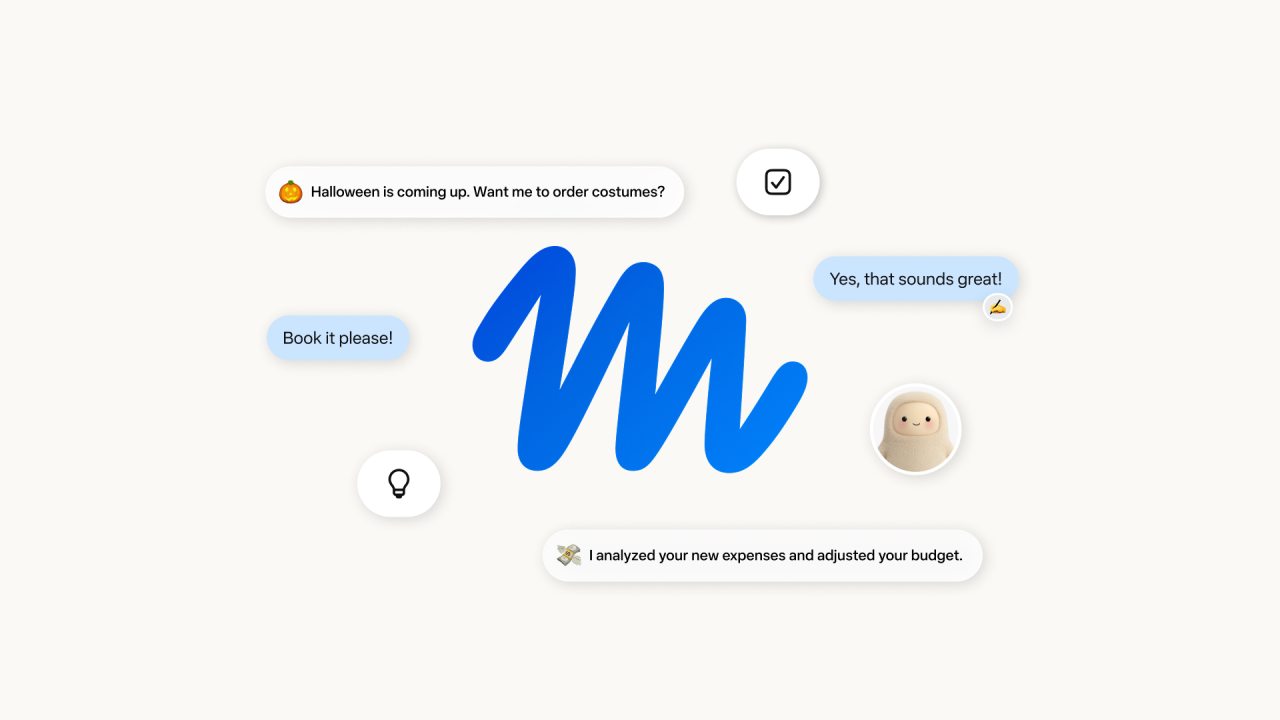
In practice, Muse is built to act rather than merely respond. The agent can book movie tickets, schedule appointments such as tennis lessons, handle online shopping, fill out routine paperwork like a school permission slip, and work through multi‑step tasks that would otherwise require a person to juggle several separate apps themselves. Unlike a conventional chatbot where every message starts a fresh exchange, Muse is designed to be long‑running and conversational, remembering context over time, learning from ongoing interactions, and, according to Meta, becoming more useful to a specific user the longer they use it. People can name their own agent, give it a custom avatar, and adjust how it communicates with them.
That level of persistent access to a person's accounts and personal information sits behind the product's core technical safeguard. Muse runs inside a dedicated Muse Secure VM, a sandboxed virtual machine with its own browser that is visible to the user, letting the agent navigate websites and services on a person's behalf without directly touching their actual personal accounts. Users grant specific permissions rather than blanket access, and the agent operates only within whatever bounds a person sets. Meta has said Muse does not share a user's conversations or the data inside their virtual machine with the company's advertising systems, and that users can instruct the agent to forget specific things it has learned at any time. Later this year, Meta plans to introduce a further option called Muse Confidential VM, where an entire virtual machine, including a person's data and their conversations with the agent, is encrypted with a key only the user holds, a level of protection the company says would prevent even Meta itself from accessing that information.
Meta is offering Muse for free for the vast majority of everyday use, alongside two paid tiers, a 20 dollar a month Power plan and a 100 dollar a month Maximum plan aimed at heavier users. Wang has said most people should be able to do what they need within the free tier alone, a comment that positions the paid tiers as aimed at power users and specific high‑usage cases rather than as the product's primary business model from day one. There is no advertising inside Muse itself, though Wang has indicated Meta is exploring commerce‑related opportunities as an additional path to revenue beyond subscriptions.
The launch lands at a particularly sensitive moment for Meta's relationship with consumer trust. It arrived less than two weeks after the company agreed to an 18 billion dollar multistate settlement over a lawsuit concerning social media's harms to consumers, part of a wider wave of legal pressure that has also included a 942 million dollar judgment in a New Mexico lawsuit over harms to children and numerous still‑pending personal injury and school district cases against major social media companies. Handing an AI agent from Meta meaningful access to email, calendars, payments and other personal services asks users for a substantially deeper level of trust than earlier Meta AI products required, and comes at a moment when public skepticism toward the company's handling of personal data remains elevated.
Reporting from the Financial Times, Reuters and The Information over the months leading up to launch indicates Meta built Muse with an explicit reference point in mind, the open‑source personal agent project OpenClaw, which lets users run agents locally that connect across messaging platforms including WhatsApp, Telegram, Discord and Slack with comparatively little human intervention required. According to that reporting, Meta had initially attempted to recruit OpenClaw's creator, developer Peter Steinberger, before he instead joined OpenAI, after which Meta proceeded to build its own version internally under the Hatch codename, with Zuckerberg reportedly telling colleagues that OpenClaw remained too complicated for most consumers and that Meta wanted to build something closer to mass‑market, a goal he has suggested could eventually reach a billion users.
Muse enters a consumer AI agent category that has grown crowded quickly, competing against products including OpenAI's own agentic tools, Anthropic's Claude, and a wave of well‑funded standalone agent startups such as Instinct, which drew scrutiny in August after early users discovered its terms required a broad, perpetual license over user‑submitted materials, including for AI training purposes. That comparison underscores the specific bet Meta is making with Muse's architecture, that transparent, sandboxed permissioning and a clearly stated no‑ad‑targeting policy can differentiate the product on trust grounds in a category where several competitors have already run into public pushback over exactly those issues. Whether that positioning proves durable as Muse scales beyond its initial US rollout, and whether the promised Confidential VM option arrives on schedule later this year, will likely shape how much of Meta's three billion plus user base is willing to hand a Meta‑built agent the level of account access the product is designed to need.
Topics
Stay informed
Startup news in your inbox
Get important funding rounds, founder stories, and startup updates.
No spam - only important startup updates.