Cognition Doubles to a $48B Valuation in Four Months, and Investors Still Don't Think AI Coding Has a Single Winner

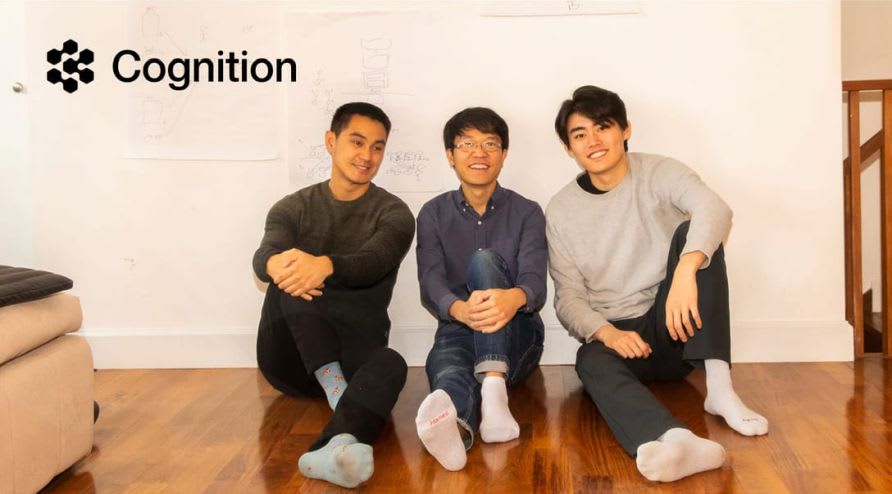
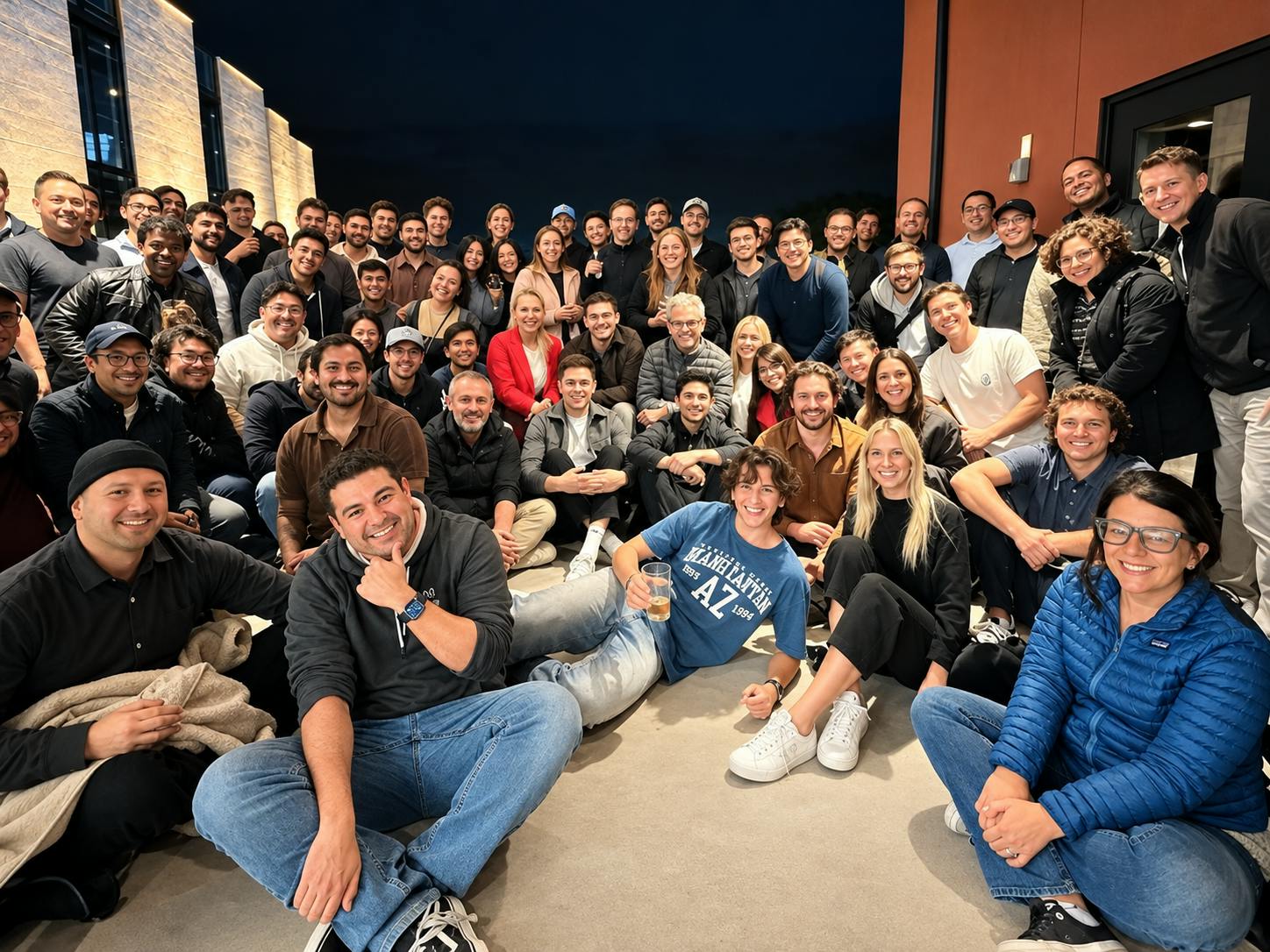
Cognition team
Image credit: Cognition
Cognition, the startup behind AI coding agent Devin, has raised more than 2 billion dollars in a Series E funding round at a 48 billion dollar valuation, according to the company's own announcement, nearly doubling its worth from the 26 billion dollar valuation it set just four months earlier in May.
The round was led by new investors Andreessen Horowitz and Accel, alongside existing backers Founders Fund, General Catalyst, and Avenir. More than 30 additional firms participated, including Benchmark, Bessemer, Kleiner Perkins, Greylock, Lightspeed, Altimeter, Bond Capital, Meritech, Atreides, Valor, T. Rowe Price, Lux, 8VC, D1, 137 Ventures, DST, Positive Sum, HOF, Soma, BoxGroup, Battery, Ribbit, Swish, Stripes, Definition, Hanabi, Journey, Bain Capital Ventures, Layer Global, A Capital, Alpha Wave, Alkeon, Diffusion, and Nvidia.
Cognition said its annualized run‑rate revenue has grown from 492 million dollars at the time of its May round to nearly 900 million dollars now, though the company has not disclosed exactly how it calculates that figure, a metric typically defined as a single month's revenue multiplied by 12. Founded in 2024 by chief executive Scott Wu, Cognition builds AI agents designed to handle software engineering work end to end. Its flagship product, Devin, works from high‑level requirements rather than requiring line‑by‑line prompts, independently planning tasks, writing and testing code, debugging, and pushing deployments inside a sandboxed environment. Cognition positions itself as an independent agent lab capable of choosing and combining whichever underlying models are best suited to a given task, including its own, rather than tying its product to a single model provider the way some competitors do. In its funding announcement, the company wrote that engineers "should operate more like architects and delegate execution to swarms of agents," a framing that captures Devin's broader ambition of shifting software engineering away from direct, manual coding.
The company's rapidly escalating valuation, doubling in roughly four months, arrives against a specific and pointed industry comparison. Cursor, another prominent AI coding assistant, was in talks in April to raise capital at a 50 billion dollar valuation before instead agreeing to sell to SpaceX for 60 billion dollars later that same month. At the time those talks were underway, Cursor's annualized revenue had already surpassed 2 billion dollars, meaning Cognition, at 48 billion dollars against roughly 900 million dollars in run‑rate revenue, now commands a considerably higher revenue multiple than Cursor did in the spring. According to investors familiar with Cursor's financials, that company ultimately sold to SpaceX largely because it had become severely compute‑constrained, unable to scale its infrastructure fast enough to keep pace with demand.
Cognition faces a similar infrastructure challenge of its own. The company leases an Nvidia server cluster reportedly costing hundreds of millions of dollars annually, a cost that could push its total cash burn to as much as 800 million dollars this year, according to The Information. Like Cursor before its acquisition, Cognition is training its own model built on open‑source alternatives, a strategy aimed at gradually reducing its dependence on expensive third‑party models from providers such as OpenAI and Anthropic. Whether Cognition can scale its compute infrastructure quickly enough to avoid Cursor's fate, needing to sell to a larger, better‑capitalized parent simply to secure adequate chip supply, remains an open question the company has not directly addressed.
TechCrunch has framed Cognition's soaring valuation as a signal that venture capitalists still see meaningful room for multiple major players to capture significant share within AI coding, rather than expecting the category to consolidate quickly around a single dominant winner. That reading is reinforced by the fact that a16z, one of Cursor's most prominent backers and a firm that profited substantially from Cursor's sale to SpaceX, has now turned around to lead a funding round for one of Cursor's direct competitors, a decision that would be difficult to square with any belief that AI coding is destined to be winner‑take‑all.
Cognition also owns Windsurf, the AI coding editor it acquired in July 2025 after OpenAI's earlier takeover bid for Windsurf collapsed and Google separately hired away Windsurf's founding team through a technology licensing arrangement, a sequence of events that left Windsurf's remaining business available for Cognition to acquire. The company has continued expanding its physical footprint alongside its valuation, adding six new offices in Washington, Tokyo, Singapore, London, São Paulo, and Madrid, on top of its existing hubs in San Francisco, New York, and Austin. Cognition counts Mercedes‑Benz, NASA, Goldman Sachs, and Citi among its major enterprise customers, a roster spanning both technology‑adjacent and traditionally conservative industries not typically associated with rapid AI tool adoption.
With a war chest now exceeding 2 billion dollars in fresh capital and revenue that has nearly doubled in four months, Cognition's immediate priority will likely be securing enough compute capacity to keep pace with that growth without following Cursor into an acquisition driven primarily by infrastructure constraints. Whether the broader AI coding market genuinely supports multiple companies valued in the tens of billions of dollars simultaneously, or whether consolidation is merely delayed rather than avoided, will likely become clearer as more of these well‑funded coding agents compete directly for the same enterprise engineering budgets over the coming year.
Topics
Stay informed
Startup news in your inbox
Get important funding rounds, founder stories, and startup updates.
No spam - only important startup updates.
Comments
Text only. No links or images.
No comments yet.