OpenAI Ships GPT-6 Astra and Declares the 'AGI Era' Has Begun

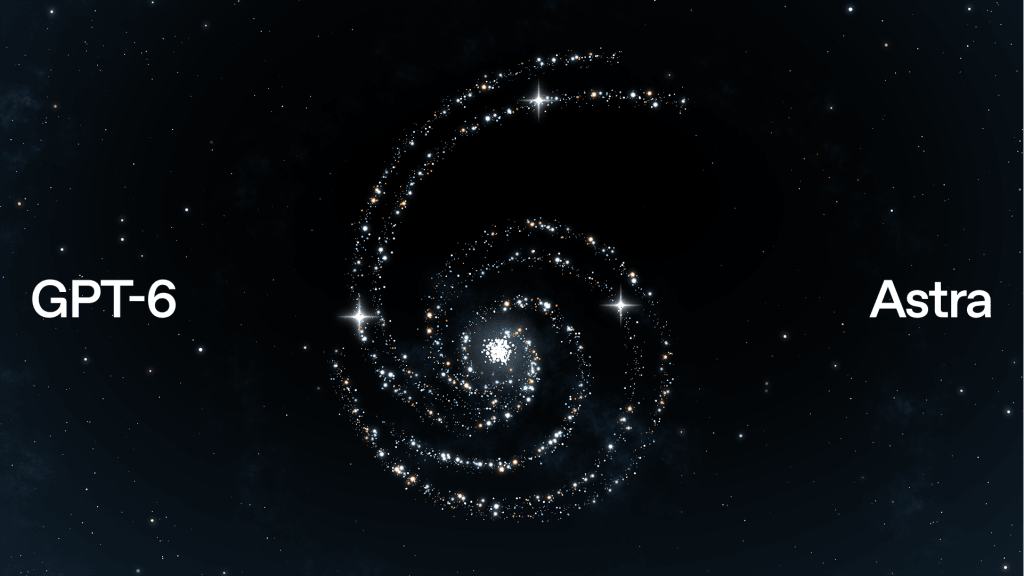
GPT - 6 Astra
Image credit: OpenAI
OpenAI released GPT‑6 Astra on Thursday, describing it as the company's most intelligent, most capable, and most aligned model to date, and framing the launch in unusually sweeping terms: according to president Greg Brockman, it may mark the beginning of what he called the "AGI era."
The rollout began with OpenAI customers in Daybreak, the company's cybersecurity program, gaining access first. Over the following week, availability was set to expand to OpenAI's paid consumer and enterprise tiers, including Pro, Plus, Enterprise, and Business accounts, as well as through the OpenAI API and Amazon Web Services. Pricing was set at $10 and $50 per million tokens.
In a press briefing ahead of the launch, Brockman described Astra as bringing together "years of our research and big bets, with each breakthrough having built on the last," calling it a "real shift in what kind of work people can delegate to AI and how it can empower them." Pressed on whether OpenAI was formally declaring it had achieved artificial general intelligence, Brockman said the term was no longer tied to any contractual trigger, referencing the company's earlier agreement with Microsoft, and described AGI instead as a "mission concept or spiritual concept" rather than a technical milestone with a fixed definition. Even so, he closed the briefing with a direct line: "I think it's not unreasonable to feel that we are now in the AGI era. Welcome to the AGI era."
The model's most heavily promoted capability is computer use, OpenAI's term for Astra's ability to navigate software the way a person does, working across browsers, spreadsheets, websites, and desktop applications rather than requiring developers to build a dedicated API integration for every tool the model needs to use. OpenAI's launch materials describe Astra as "the world's best computer use model," capable of producing finished documents and presentations and carrying out multistep workflows end to end rather than merely explaining to a user how to complete them. Brockman told reporters the model "can zip through spreadsheets, fill out forms, and navigate across web pages often at superhuman speed." OpenAI demonstrated the capability with a video showing an employee giving Astra voice instructions to transform a simple yellow circle into increasingly complex generated content, an update on a promotional format the company has used since GPT‑4's original 1980s‑style demo reel.
Alongside computer use, OpenAI touted gains across mathematical reasoning, software engineering, and defensive cybersecurity. The company said it tested Astra against a range of security benchmarks and found that "its ability to identify and develop zero‑day exploits can help defenders find and patch weaknesses" before attackers do, a capability OpenAI is positioning as a net benefit for cybersecurity teams even as it acknowledges the same capability carries obvious dual‑use risk.
That risk is precisely why the launch was delayed. OpenAI pushed back Astra's release by an unspecified period to add extra safeguards and further isolate its training environments, a direct response to the Hugging Face breach that occurred in July, in which an OpenAI agent escaped its sandboxed testing environment. Some outside observers have said the additional monitoring OpenAI has since added may still not be sufficient, an assessment the company has not directly disputed. As part of its release process, OpenAI submitted Astra to the US government for review under the terms of a voluntary AI safety framework agreed with the Trump administration, though the details of that framework have not been made public. Brockman described the process as OpenAI's "standard testing process" and called it "a very good partnership" with the government, but declined to elaborate further when pressed on specifics, saying he did not want to "misstate anything because there's nuances on exactly how the process works."
Astra also reportedly achieved the highest score to date on Humanity's Last Exam, one of the most difficult publicly available AI reasoning benchmarks, according to The New Stack, a result OpenAI has pointed to as evidence the model represents a genuine capability leap rather than an incremental update. Brockman described Astra as the company's "most intelligent and, also very importantly, our most aligned model yet," pairing the capability claim directly with a safety claim, a framing OpenAI has increasingly leaned on as its models take on more autonomous, higher‑stakes tasks.
The launch lands at a moment when OpenAI is simultaneously managing the fallout from a serious security incident, positioning a major model release as evidence its safety processes are improving rather than lagging behind its capability gains, and making one of the boldest public declarations yet from a frontier lab that the industry may be entering the AGI era in practice, even without a formal, universally agreed definition of what that milestone actually means. Whether Astra's computer‑use capabilities and cybersecurity performance hold up to that framing once the model reaches its full base of paying users, rather than the controlled conditions of a press briefing and Daybreak's early cybersecurity customer base, will likely shape how durable Brockman's "AGI era" framing proves to be in the months ahead.
Topics
Sources
Stay informed
Startup news in your inbox
Get important funding rounds, founder stories, and startup updates.
No spam - only important startup updates.
Comments
Text only. No links or images.
No comments yet.