Anthropic Brings Opus and Sonnet Models to Claude's Voice Mode in Major Upgrade

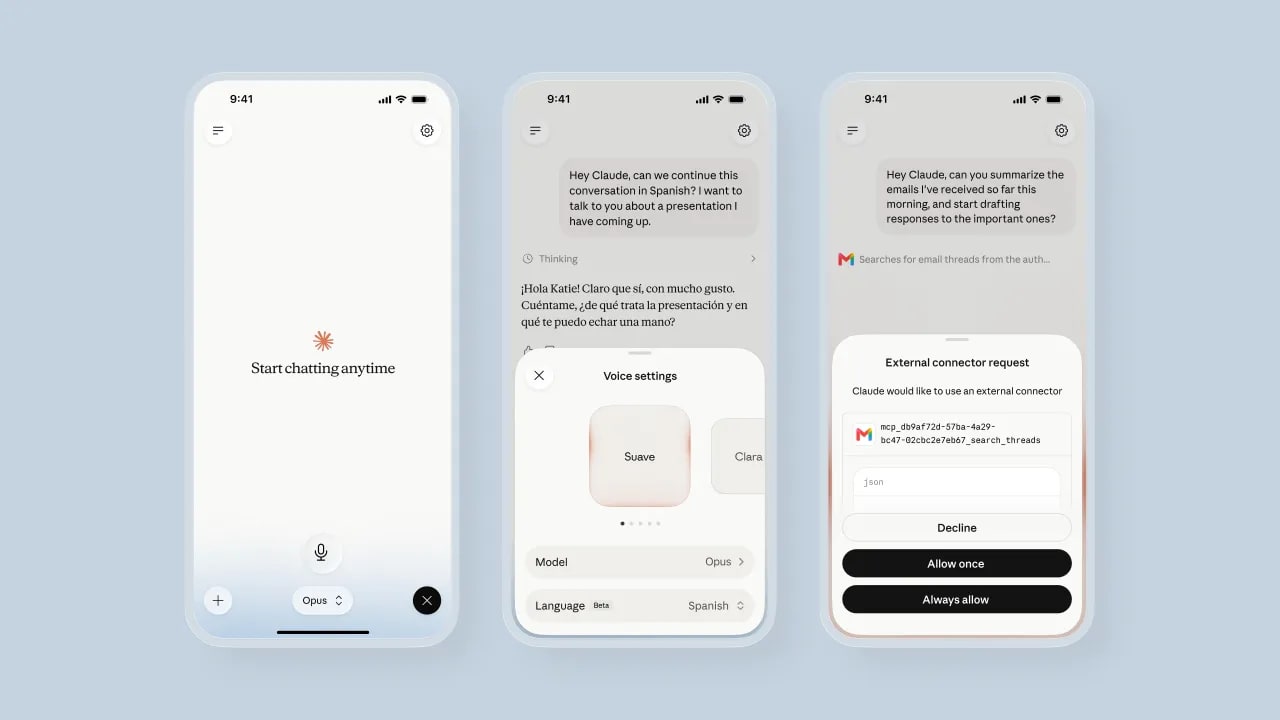
Image credit: Anthropic
Anthropic has updated Claude's voice mode to let paid users run spoken conversations on its more capable Opus and Sonnet models, moving beyond the smaller Haiku model that had powered every voice interaction since the feature launched last year.
The update lands weeks after OpenAI rolled out its own conversational voice upgrade for ChatGPT, positioning Anthropic's release as a direct response within an increasingly competitive race among AI companies to make voice interaction genuinely useful for complex tasks rather than just quick, simple exchanges.
Moving Beyond a Speed‑First Design
When Claude's voice mode first launched, it was built primarily to deliver fast responses to straightforward questions by routing every request through Haiku, Anthropic's smallest and quickest model. That design choice kept latency low but limited how well voice mode could handle more demanding requests, such as detailed analysis, multi‑step reasoning or nuanced feedback.
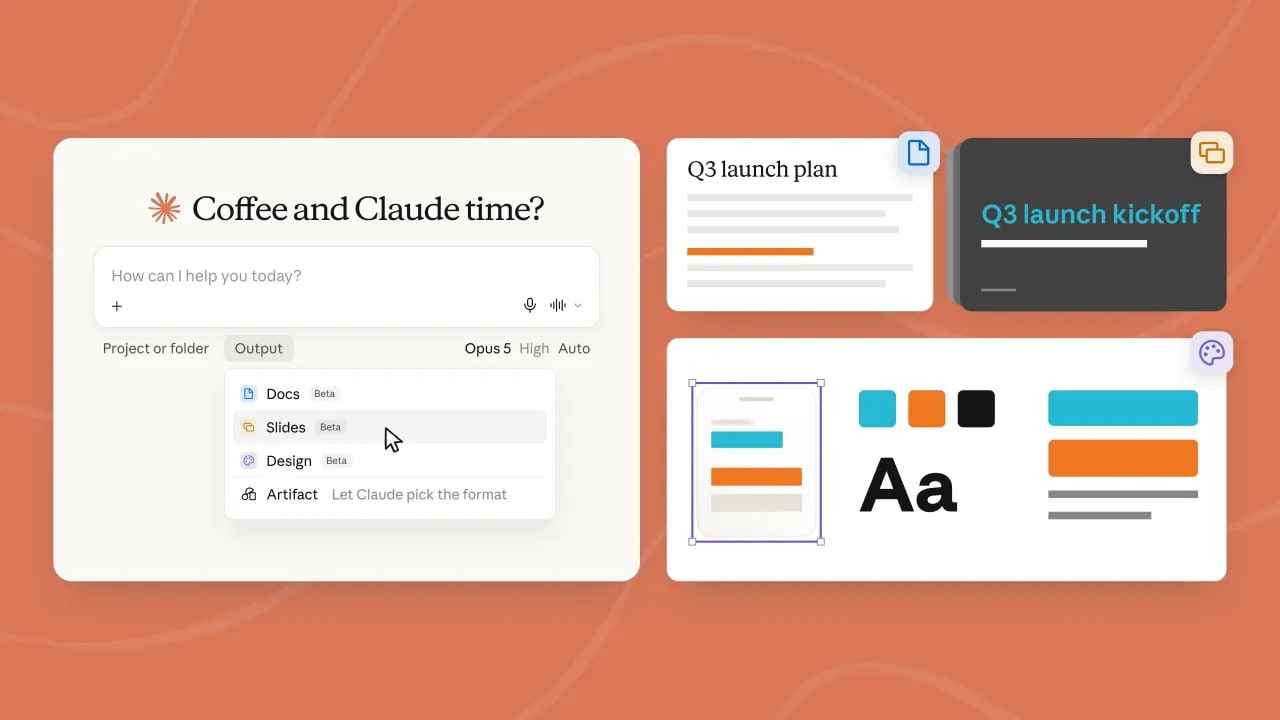
With the new update, voice mode automatically defaults to whichever model a user most recently used in text chat, running its fastest available version so conversations continue to flow smoothly. A model picker built into the voice interface also lets users manually switch between Haiku, Sonnet and Opus mid‑conversation, giving people direct control over the tradeoff between speed and depth depending on what they are working through.
Voice Mode Gains Access to Everyday Work Tools
Alongside the model upgrade, Claude's voice mode can now pull context from a set of connected apps, including Gmail, Google Calendar, Slack, Canva and Notion, provided the user has granted the relevant permissions. That connector access allows a spoken request to draw on real information from a person's actual inbox, calendar or workspace tools rather than operating purely on what is said within the conversation itself.
Anthropic said the expanded capability is intended to support longer, more substantive conversations, such as getting feedback on communication style, talking through an upcoming pitch to a client, or brainstorming go to market ideas, use cases that benefit meaningfully from a more capable underlying model rather than the fastest possible response time alone.
A Turn‑Based Design, Not Full Duplex
Unlike some competing voice assistants that process speech and generate responses simultaneously, Claude's voice mode continues to operate on a turn‑based structure, listening to a full request, pausing briefly to think, and then responding, according to an Anthropic spokesperson. That approach differs from fully duplex systems capable of listening and speaking at the same time, a distinction that may make Claude's voice interactions feel slightly less fluid in casual back and forth exchanges, though Anthropic has said this release was deliberately focused on intelligence and tool access rather than replicating a fully natural, overlapping conversational flow.
The company has indicated that further investment in the voice experience itself is expected later this year, suggesting the current update represents an intermediate step rather than a complete overhaul of how the feature works at a conversational level.
Free and Paid Tiers See Different Experiences
The expanded model access and connector support are limited to paid Claude subscribers. Free tier users remain limited to a single app connection and continue to have their voice requests routed through Haiku regardless of the model picker's presence in the interface. Anthropic has also added support for additional spoken languages as part of the update, including Indonesian, though the system still cannot automatically detect a mid‑conversation language switch, requiring users to either state the change out loud or select a new language manually from voice settings beforehand.
Voice conversations continue to count toward a user's regular usage limits in the same way text conversations do, and transcripts of voice sessions are saved into chat history alongside regular text based conversations.
Where Voice Mode Does and Does Not Reach
The updated voice mode currently applies to Claude's desktop, mobile and web apps, but does not yet extend to Claude Cowork or Claude Code, which continue to support dictation rather than full two‑way spoken conversation. That distinction suggests Anthropic is prioritizing voice as a consumer‑facing conversational tool for now, rather than extending it immediately into its more specialized coding and agentic work surfaces.
Part of a Broader Push Toward Voice‑Native AI Assistants
The upgrade arrives as major AI companies continue investing heavily in voice as an interaction method, with Google's Gemini Live and xAI's Grok Voice Mode representing similar efforts to make spoken interaction with AI assistants feel more natural and capable. Anthropic's decision to prioritize stronger reasoning models and tool access over a fully duplex conversational architecture reflects a somewhat different strategic bet than some competitors, one centered on making voice mode genuinely useful for substantive work rather than optimizing purely for conversational fluidity.
Whether that approach proves to be the right tradeoff will likely become clearer as Anthropic continues to expand voice mode's capabilities later this year, with the company having signaled that this release is an early step in a longer roadmap for how Claude handles spoken interaction going forward.
Topics
Stay informed
Startup news in your inbox
Get important funding rounds, founder stories, and startup updates.
No spam - only important startup updates.
Comments
Text only. No links or images.
No comments yet.