Apple Unveils New Mac Studio With M5 Max and M5 Ultra, Its Most Powerful Mac Ever
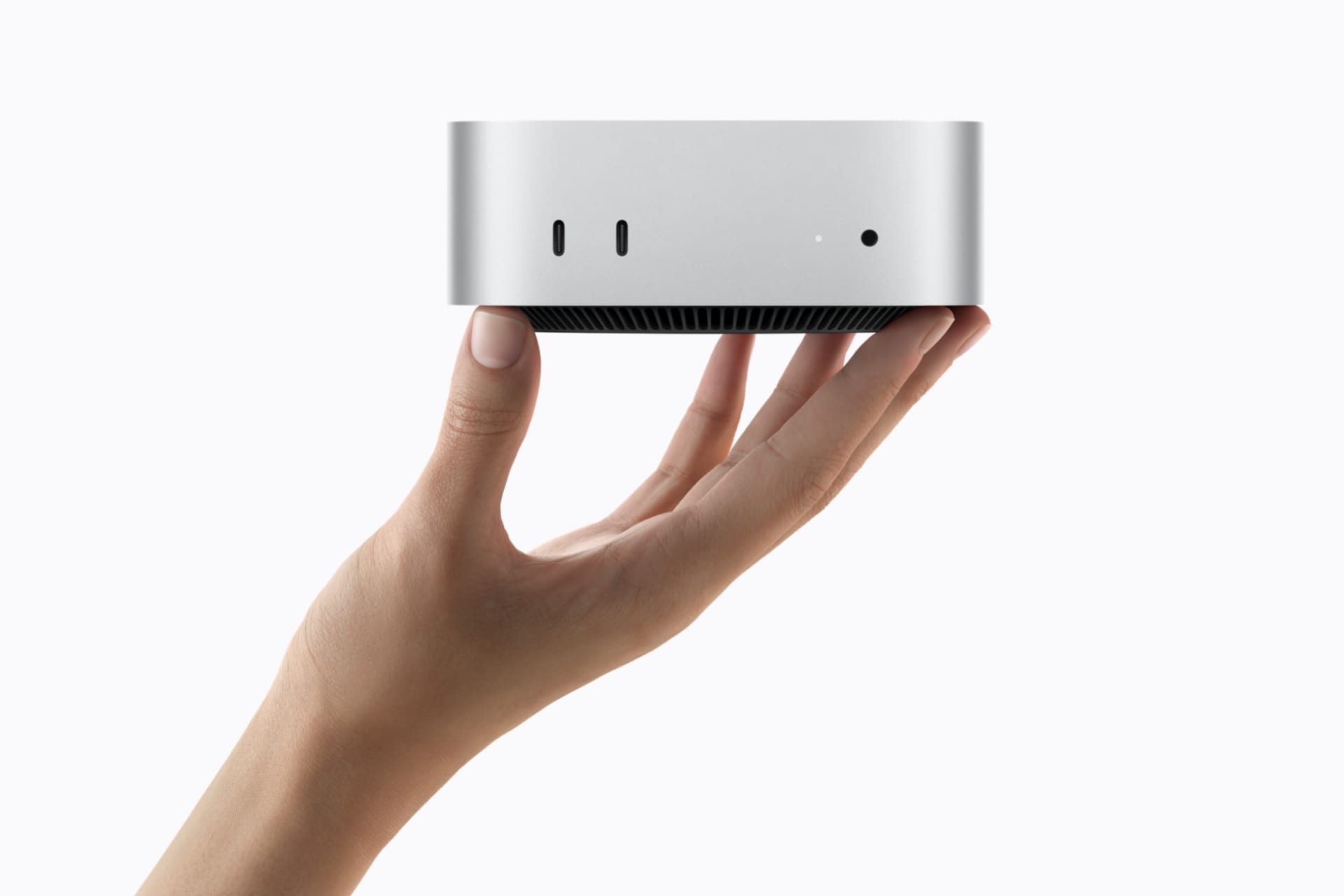
Apple has announced the new Mac Studio, featuring M5 Max and the all‑new M5 Ultra, positioning the desktop as the company's most powerful Mac ever and its primary platform for running large AI models directly on device rather than in the cloud.
The new Mac Studio delivers up to 4.3 times faster AI performance, up to twice as fast storage, up to 1.8 times faster graphics, and up to 1.3 times faster CPU speed compared to the prior generation, according to Apple's own testing conducted in July 2026. Mac Studio with M5 Max features an 18‑core CPU with 6 super cores and 12 performance cores, an up‑to‑40‑core GPU with Neural Accelerators built into every core, and up to 128GB of unified memory. The more powerful M5 Ultra configuration scales further still, reaching a 36‑core CPU with 12 super cores and 24 performance cores, an up‑to‑80‑core GPU described as the most powerful Apple silicon GPU ever built, and a striking 512GB of unified memory, enough to run enormous large language models entirely on the machine itself.
Apple's chief hardware officer Johny Srouji framed the launch around the growing importance of local, on‑device AI processing. "Mac Studio is the ultimate desktop for on‑device AI and the world's most demanding pro workflows, relied on by users for its tremendous performance and extensive pro connectivity, all in a quiet, compact design that sits right on your desk, and today, we're pushing the boundaries even further," Srouji said. "With the powerful M5 Max and the incredible capabilities of M5 Ultra, Mac Studio ushers in a new era of desktop computing, delivering huge performance gains for pro workloads and AI inference with frontier‑class models. By integrating Neural Accelerators directly into the GPU and offering massive amounts of high‑bandwidth unified memory, the new Mac Studio is our most powerful Mac ever."
The centerpiece of the AI‑focused upgrade is the Neural Accelerator architecture built into every GPU core, which Apple says dramatically speeds up the matrix multiplication operations underlying most AI workloads. M5 Max alone delivers up to 3.9 times faster AI performance than the prior generation for tasks like prompt processing, while M5 Ultra reaches up to 4.3 times the peak AI compute performance of the previous M3 Ultra chip, and a striking 9.8 times more than the original M1 Ultra from several generations earlier. Combined with up to 1.2TB per second of memory bandwidth, 50 percent higher than before, Apple says the new Mac Studio lets users run massive AI models entirely on device with complete privacy, without counting tokens or worrying about rising cloud computing costs.
Perhaps the most significant capability for AI researchers and enterprise teams is Mac Studio's new support for clustering multiple systems together. Using Thunderbolt 5 alongside RDMA, or remote direct memory access, users can link several Mac Studio units into a single system with a shared, pooled memory space, allowing them to load some of the largest open‑weight frontier AI models currently available. Apple says a cluster of four Mac Studio systems delivers up to three times faster AI inference than a single machine, giving smaller teams and individual researchers a path to distributed AI infrastructure without building out traditional data center hardware.
Apple is also pairing the hardware upgrade with new software infrastructure aimed squarely at AI developers. Core AI, a newly introduced framework, gives developers an architecture optimized specifically for Apple silicon's unified memory, CPU, GPU, and Neural Engine, allowing them to deploy full‑scale large language models locally and integrate their own custom models directly into their apps. That sits alongside MLX, Apple's existing open‑source machine learning framework, which the company says enables highly efficient training and fine‑tuning of models directly on Mac hardware. Combined with Xcode and the broader ecosystem of third‑party AI tools already available on macOS, Apple is positioning Mac Studio as a complete, end‑to‑end platform spanning experimentation, training, and deployment.
Beyond AI‑specific workloads, the new Mac Studio brings meaningful gains for creative and technical professionals more broadly. Third‑generation hardware‑accelerated ray tracing improves lighting, reflections, and shadows across 3D, visual effects, and design workflows, while an upgraded Media Engine supports hardware‑accelerated decoding for H.264, HEVC, ProRes, and AV1 formats, letting filmmakers color‑grade uncompressed 8K footage and process multiple concurrent video streams. Apple cites concrete performance comparisons for specific professional tools, including up to 5.3 times faster Magic Mask performance in Blackmagic Design's DaVinci Resolve Studio and up to 15.4 times faster CopyCat machine learning training performance in Foundry Nuke, both measured against the original M1‑generation Mac Studio.
Connectivity has also been substantially upgraded. The new Mac Studio introduces Wi‑Fi 7 and Bluetooth 6 for the first time via Apple's own N1 chip, alongside Thunderbolt 5 ports delivering transfer speeds up to 120 gigabits per second, supporting high‑performance peripherals, external storage, and PCIe expansion chassis. The system supports up to eight displays simultaneously, or up to four Studio Display XDR units at full 5K resolution and 120Hz, and now supports genlock over USB‑C for precise synchronization with professional camera equipment including iPhone 17 Pro.
The new Mac Studio arrives alongside macOS 27, which brings Siri AI, a significantly more capable and personal version of Apple's voice assistant, along with broader Apple Intelligence features woven throughout the operating system's everyday apps. Siri AI draws on personal context across messages, emails, and photos, integrates directly into Spotlight and system‑wide context menus, and supports Visual Intelligence queries about on‑screen content through a dedicated keyboard shortcut.
On sustainability, Apple says the new Mac Studio is built with 35 percent recycled content overall, including fully recycled aluminum in its enclosure and fully recycled rare earth elements in all magnets, manufactured using 40 percent renewable energy across its supply chain as part of the company's broader commitment to reach carbon neutrality across its full footprint by 2030.
Pre‑orders for the new Mac Studio opened August 25 across 30 countries and regions, with general availability beginning September 22. The 512GB unified memory configuration will arrive separately in late October. In India, Mac Studio with M5 Max starts at 279,900 rupees, while the M5 Ultra configuration starts at 629,900 rupees, with education pricing available at a discount on both models.
Topics
Sources
Stay informed
Startup news in your inbox
Get important funding rounds, founder stories, and startup updates.
No spam - only important startup updates.
Comments
Text only. No links or images.
No comments yet.