Berlin's Auxxo Closes €33.3M Fund II to Back Female Founders Across Europe
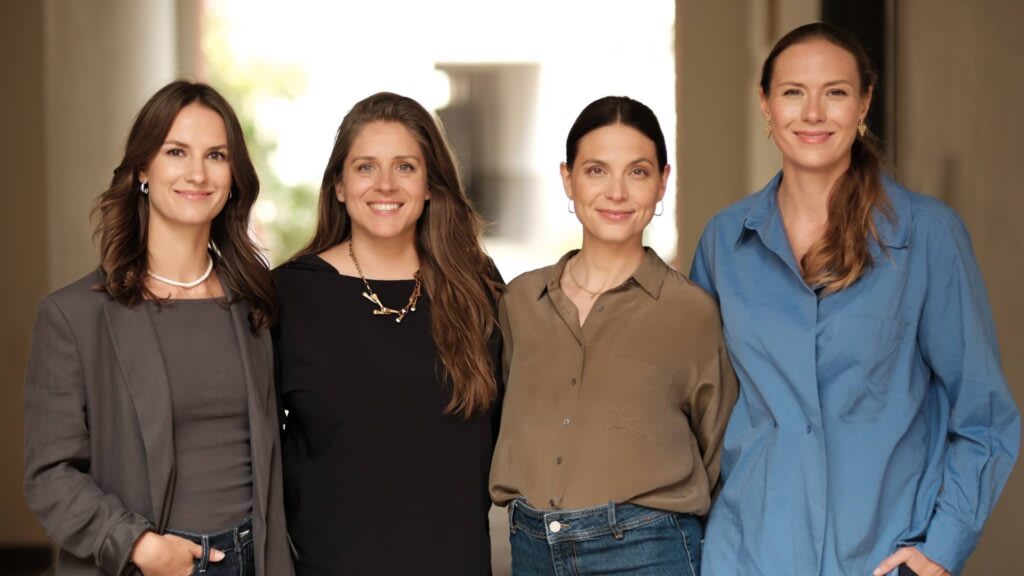
Auxxo founder Bettine Schmitz and Dr. Gesa Miczaika and tean
Image credit: Auxxo
Auxxo, a Berlin based venture capital firm dedicated to backing teams with at least one female founder, has announced the final closing of its Auxxo Female Catalyst Fund II at 33.3 million euros, more than 75 percent larger than its 19 million euro debut fund.
The firm first announced a 26 million euro initial close of Fund II in July 2025, with the European Investment Fund joining as anchor investor. Since that first close, the fund has grown to its final 33.3 million euro size, adding new investors including Aurum Impact, EnBW New Ventures, Cherry Ventures, and Speedinvest, alongside a range of family offices, business angels, and founders from across Europe. More than half of the fund's limited partners are women, a detail Auxxo has repeatedly pointed to as evidence of the broader shift it is trying to help drive within European venture capital.
Auxxo was founded in 2021 by Bettine Schmitz and Dr Gesa Miczaika, building on the earlier Auxxo Beteiligungen GmbH that Schmitz had founded with Fabiola Hochkirchen in 2019. Schmitz previously worked as an investor at the Axel Springer Plug & Play Accelerator, while Miczaika was the first employee at Blacklane and later served as vice president of the board of the German Startup Association. The firm co‑invests at the pre‑seed and seed stages across Europe, specifically in companies where at least one female founder holds a minimum of 20 percent of founder shares, a threshold designed to ensure genuine decision‑making influence rather than token representation.
The motivation behind that focus rests on a funding gap that has proven remarkably persistent across European venture capital. In 2024, female founders raised just 12 percent of total venture capital funding across Europe, a figure that has moved only marginally over the years despite growing evidence that gender‑diverse founding teams tend to outperform those made up entirely of men. Schmitz has pointed to a related structural imbalance underlying that gap: globally, only around 2 percent of venture capital investors are women, a scarcity that Miczaika has argued directly limits how much capital eventually reaches female‑founded companies, since investor networks and pattern‑matching instincts still shape a significant share of early‑stage funding decisions.
Schmitz framed the significance of the new fund's investor base directly. "We are incredibly proud of the trust placed in us by the EIF and our other LPs, investors who understand that diversity drives returns," she said. "Our network is growing not only in size but also in influence and impact. The fact that more than half of our LPs are women shows that the industry is moving towards the future we have always envisioned."
Fund II has already backed 11 companies since its first close, spanning a range of sectors rather than concentrating in any single vertical. The portfolio includes Emidat, a climate data infrastructure provider for the construction industry; Resolutiion, an AI platform that helps identify and reduce losses from commercial disputes; Stanhope.ai, which builds more adaptable and interpretable autonomous systems for robots and drones using a neuroscience‑driven approach; Marble Imaging; Delta Labs; and Radiogenesis, among others. According to Auxxo, two of the fund's portfolio companies have already secured follow‑on financing from other venture capital firms, an early signal of external validation for the fund's initial investment decisions.
Alongside the fund's final close, Auxxo is launching a second initiative: a pan‑European founder matchmaking platform designed to connect potential co‑founders, including female founders, male founders, and prospective collaborators, with a particular emphasis on helping form more gender‑diverse founding teams from the outset rather than trying to correct imbalances after a company is already established. The platform is aimed in part at solo founders looking for a complementary co‑founder, addressing another structural factor that has historically made it harder for women to launch venture‑backed companies: many high‑growth startups form around pre‑existing personal or professional networks that have historically skewed male, particularly in more technical fields.
Auxxo's fund structure typically involves initial investments ranging from 350,000 to 800,000 euros in exchange for a 3 to 8 percent equity stake, with Fund II targeting support for roughly 30 startups across its investment period, an expanded scope compared to the debut fund's initial cohort of six startups spanning sectors from green chemistry to fintech.
The broader significance of Auxxo's second fund closing at a substantially larger size than its first lies less in the fund size itself, modest by the standards of Europe's largest generalist venture firms, and more in what its investor base signals about institutional appetite for gender‑focused investment theses specifically. An anchor commitment from the European Investment Fund, combined with continued participation from established firms like Cherry Ventures and Speedinvest across both fund cycles, suggests Auxxo has moved past being viewed purely as an impact‑oriented niche vehicle and toward being treated as a credible early‑stage investor whose specific focus on female‑founded teams is increasingly seen as a viable, returns‑driven strategy rather than a purely mission‑driven one. Whether that institutional confidence translates into a meaningfully narrower funding gap for female founders across Europe more broadly remains an open question that will likely take several more fund cycles, across Auxxo and its peers, to answer.
Topics
Stay informed
Startup news in your inbox
Get important funding rounds, founder stories, and startup updates.
No spam - only important startup updates.
Comments
Text only. No links or images.
No comments yet.