S-Transistors Raises €2.6M to Build the World's First Quantum Motherboard
Editorial Team
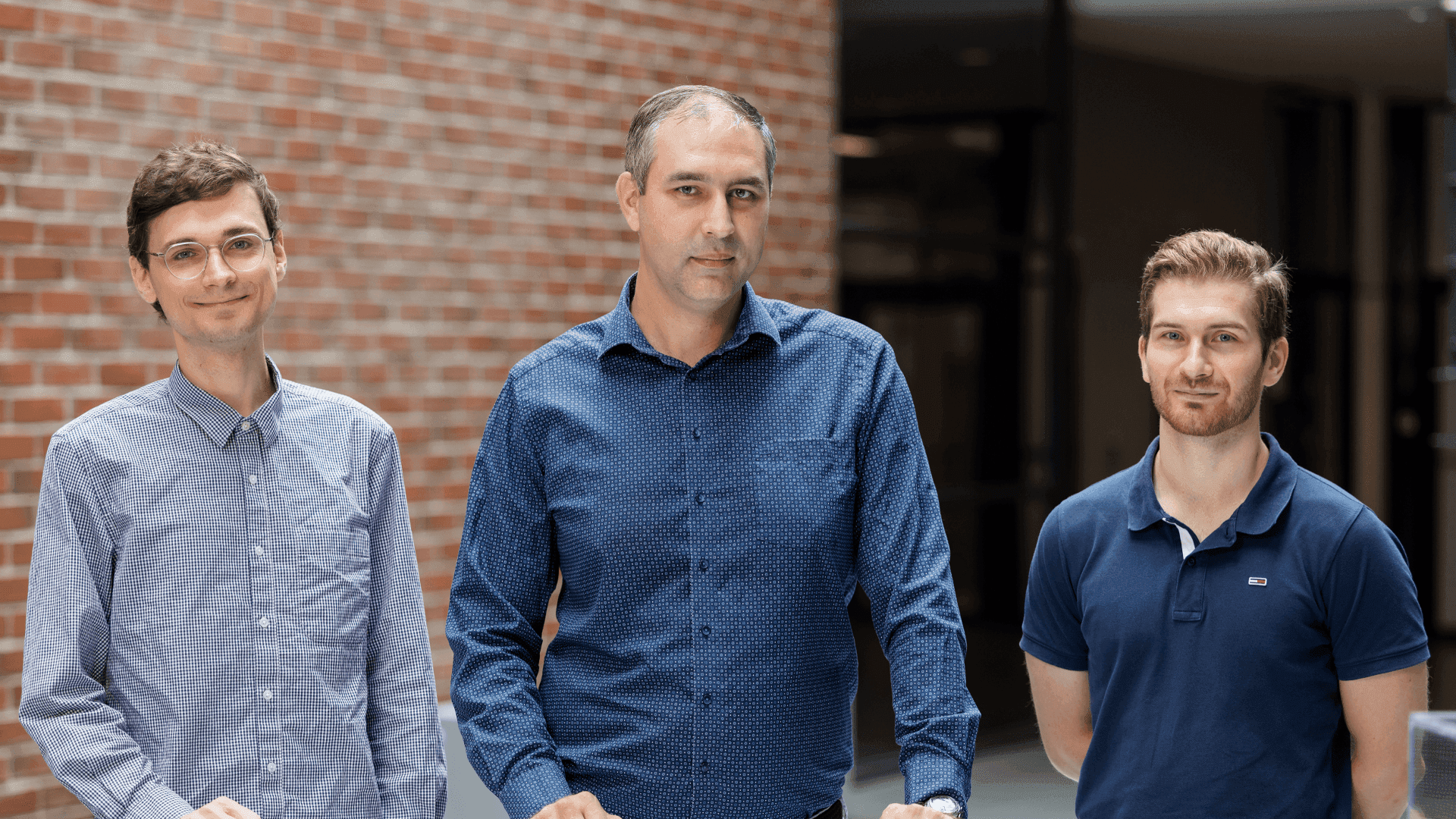
S-Transistors founder Dr. Heorhii Bohuslavskyi, Ph.D. (CEO), Dr. Andrey Generalov (CTO), and Markus Lehtisalo
Image credit: S-Transistors
S‑Transistors, a Finnish quantum technology startup, has raised 2.6 million euros in pre‑seed funding to develop a new class of integrated circuits based on superconducting transistors, aimed initially at solving the control and signal‑routing challenges that limit how large cryogenic quantum computers can scale.
The round was led by Lifeline Ventures, a prominent Nordic early‑stage investor, with participation from an angel investor. S‑Transistors originates from VTT Technical Research Centre of Finland and was founded by chief executive Dr Heorhii Bohuslavskyi and chief technology officer Dr Andrey Generalov.
The problem S‑Transistors is built to solve sits at the heart of one of quantum computing's most stubborn scaling barriers. Today's cryogenically cooled superconducting quantum computers rely on control electronics that mostly operate at room temperature, connected to the quantum processing unit inside the cryostat through multiple dedicated cables per qubit. As the number of qubits in a system grows, that wiring becomes increasingly complex, bulky, and power‑intensive, creating a bottleneck that threatens to cap how far these systems can scale regardless of how good the underlying qubits themselves become.
Bohuslavskyi described the state of the field bluntly. "Today's efforts in scaling cryogenic quantum computers have delivered tremendous progress," he said. "However, further scaling is approaching a hard wall, as it still relies on power‑hungry room‑temperature electronics and separate wiring for each quantum bit, both used to operate the quantum computer and link it to the outside world. The clearest path forward, for superconducting quantum computers in particular, is to bring the classical control and interface hardware down into the cryostat, right next to the quantum processor."
That is precisely where S‑Transistors' core innovation comes in. Moving control electronics physically closer to the quantum processor, inside the same cryogenic environment, could meaningfully improve scalability, but conventional silicon transistors suffer significant performance and power limitations at the extremely low temperatures those systems operate at. S‑Transistors' answer is a superconducting transistor, a device that combines the switching and amplification functionality of a conventional transistor with the ultra‑low power dissipation inherent to superconducting materials, allowing high‑speed signal control to happen directly within the cryostat rather than requiring a round trip to room‑temperature electronics outside it.
Generalov framed the company's near‑term work as a first step toward a considerably larger ambition. "In the near term, this already solves the cryogenic signal routing and delivery problems of the superconducting quantum computer, but the real vision is the quantum motherboard: a completely new platform for scaling quantum computers, operating at millikelvin temperatures, and controlling the operation of qubit‑based quantum processing units," he said. That quantum motherboard concept, providing energy- and cost‑efficient orchestration of cryogenic quantum computers at scale, is the long‑term product the company is ultimately building toward, with its initial superconducting transistor technology serving as the foundation.
S‑Transistors says its core technology is already available at wafer scale, giving the company a manufacturing head start relative to many earlier‑stage deep tech startups still working through fundamental process development. The company's first commercial product will be a superconducting‑transistor‑based multiplexer, a device designed to plug directly into existing cryogenic setups and reduce the amount of dedicated wiring and control hardware needed per qubit, addressing the signal routing bottleneck in a form factor compatible with quantum systems already being built today.
Beyond quantum computing, the underlying superconducting transistor technology, first theorised in the 1980s but never previously brought to reliable, reproducible, wafer‑scale manufacturing, has potential applications spanning energy‑efficient classical computing, artificial intelligence and high‑performance computing hardware, spacecraft electronics, and fundamental particle detectors. S‑Transistors has chosen to focus initially on quantum computing specifically because it represents the application where the combination of extreme cryogenic operation and severe scaling constraints creates the clearest and most urgent need for exactly the kind of solution the company has built.
With the new capital, S‑Transistors plans to develop several product prototypes for cryogenic signal control and handling, establish its own dedicated cryogenic laboratory, build a manufacturing pilot line, and expand its team. Scaling superconducting quantum computers to the hundreds of thousands of qubits many researchers believe will be needed to unlock genuinely useful, fault‑tolerant quantum computation will require exactly the kind of new control and interface technology S‑Transistors is developing, positioning the company at a foundational, infrastructure‑layer point in the quantum computing stack rather than competing directly with the makers of quantum processors themselves. Whether S‑Transistors' superconducting transistor approach becomes a standard component inside next‑generation cryogenic quantum systems will likely depend on how quickly it can move from wafer‑scale demonstration to reliable, high‑volume manufacturing, precisely the transition this pre‑seed round is intended to fund.
Topics
Stay informed
Startup news in your inbox
Get important funding rounds, founder stories, and startup updates.
No spam - only important startup updates.