Castelion Raises Over $1B Series C at $13B Valuation to Mass-Produce Hypersonic Missiles
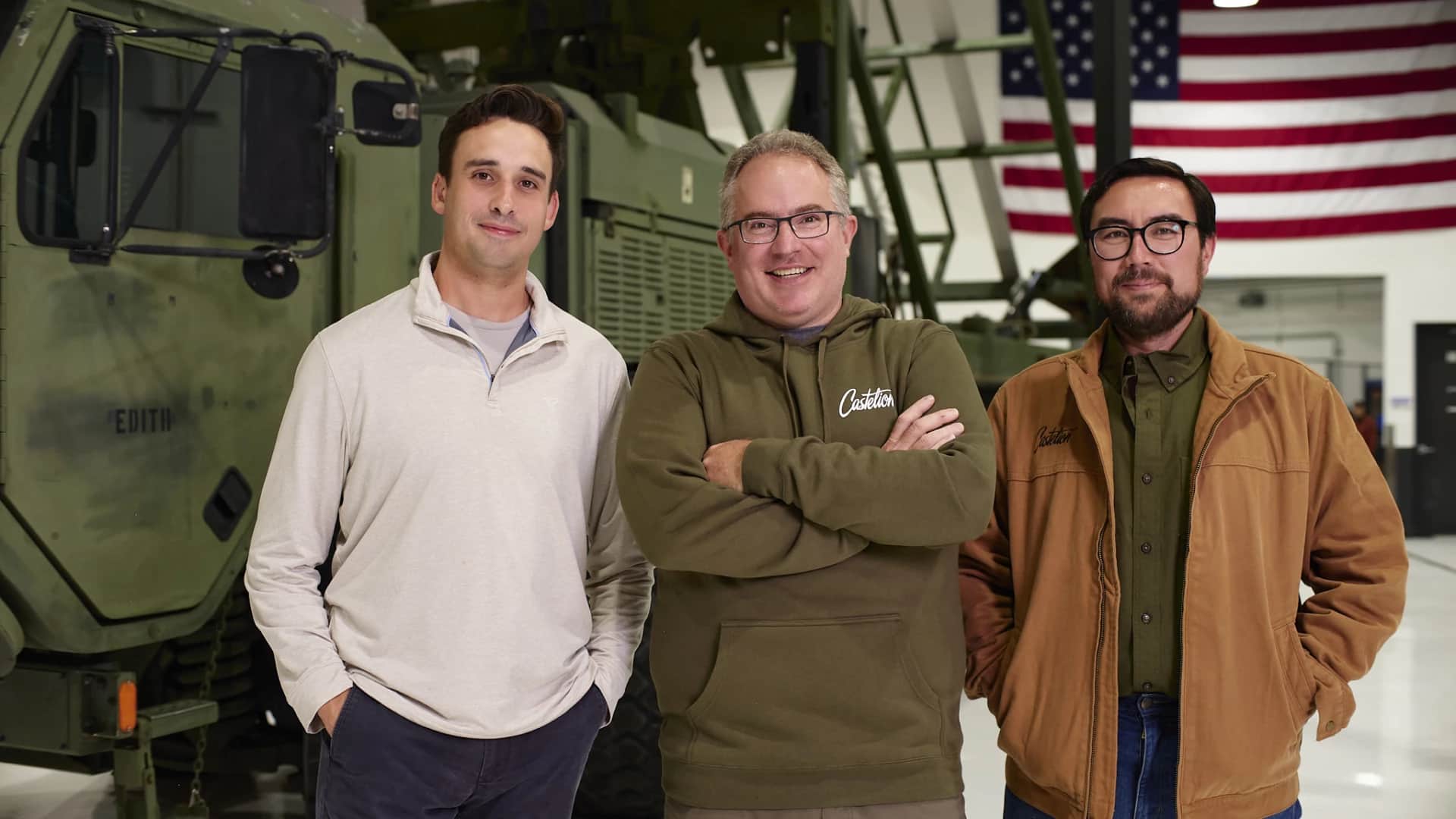
Castelion founder Bryon Hargis, Sean Pitt, and Andrew Kreitz
Image credit: Castelion
Castelion, a Torrance, California based defense technology company building low‑cost hypersonic weapons, has secured more than 1 billion dollars in Series C financing, a round the company says values it at 13 billion dollars, according to its official announcement.
The financing is structured as 800 million dollars in equity combined with a 250 million dollar committed revolving credit facility. The equity portion was co‑led by JPMorganChase's Strategic Investment Group, part of the firm's Security and Resiliency Initiative, alongside Andreessen Horowitz and funds managed by Carlyle. Existing backers Lightspeed Venture Partners, Lavrock Ventures, Altimeter, General Catalyst, and Interlagos all participated again, joined by T. Rowe Price Associates as a first‑time investor in the company.
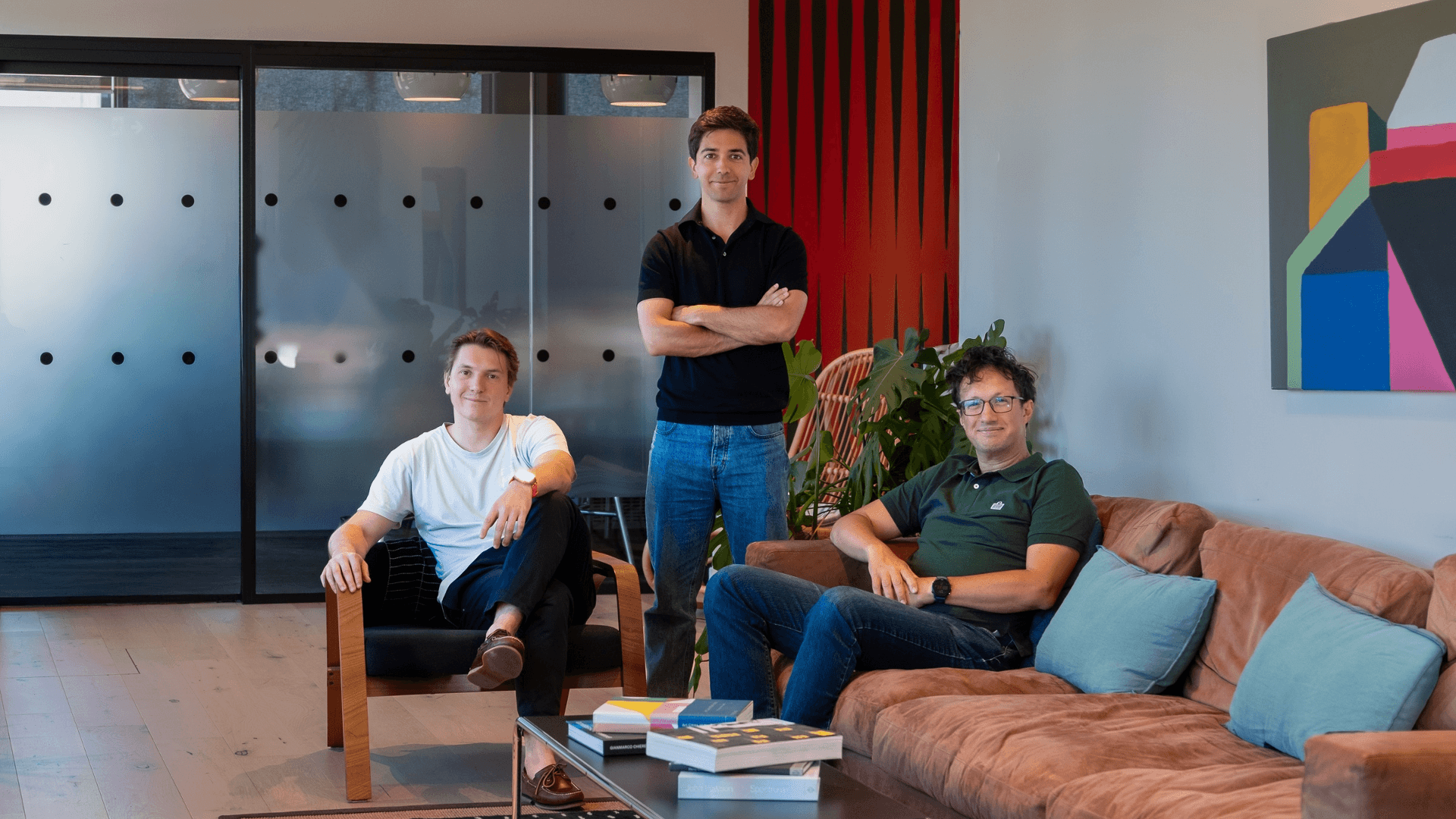
Castelion was founded in 2022 by chief executive Bryon Hargis, Sean Pitt, and chief financial officer Andrew Kreitz, all former SpaceX executives who brought a rapid iteration, hardware‑first manufacturing philosophy from the commercial space industry directly into defense production. That approach has been central to the company's pitch from the outset: build weapons systems using the same iterative testing and high‑rate manufacturing techniques that made SpaceX's rocket program dramatically cheaper and faster than legacy aerospace contractors, then apply the same playbook to hypersonic missiles.
The Series C caps a rapid succession of funding rounds. Castelion closed a 350 million dollar Series B in December 2025, led by Altimeter Capital and Lightspeed Venture Partners with participation from Lavrock Ventures, Andreessen Horowitz, General Catalyst, First In, Space VC, Cantos, BlueYard, Avenir, Champion Hill, and Interlagos. That round came roughly six weeks after Castelion broke ground on Project Ranger in January 2026, a 1,000‑acre hypersonic manufacturing campus in Sandoval County, New Mexico, originally announced as a more than 220 million dollar investment expected to create over 300 high‑paying jobs and generate more than 650 million dollars in economic impact for the state. According to Lavrock Ventures partner Alex Poulin, the firm backed Castelion at pre‑seed "when this was still just an idea," calling the company's move from a clean sheet design to a formal program of record in under four years "one of the fastest ramps in the sector."
Castelion co‑founder and chief executive Bryon Hargis framed the raise around the company's broader mission of restoring American deterrence through domestic manufacturing scale. "Deterrence depends on unapologetic American strength; highly capable weapon systems that adversaries fear produced in quantities they can't imagine at a price taxpayers can afford," Hargis said in the company's announcement. "There's a manufacturing renaissance underway and this round turbocharges American production of Blackbeard. Designed in California, built in New Mexico, supplied from small and large businesses across the United States; Blackbeard is an example of what America can do when private capital and Government work together."
Todd Combs, head of the Strategic Investment Group for JPMorganChase's Security and Resiliency Initiative, framed the firm's investment around that same dynamic. "Castelion is helping to address a critical national security challenge by bringing greater speed, agility and manufacturing capacity to the development of next‑generation defense technologies," Combs said. Andreessen Horowitz general partner Katherine Boyle, whose firm has backed the company since its earliest days, put the shift in blunter terms: "We backed Castelion when it was a small team that wanted to build what the department of War most needed faster and cheaper than the experts thought possible." Lightspeed Venture Partners co‑founder Ravi Mhatre, who led Castelion's Series A before the company had flown a complete system, pointed to the pace of the company's progress since: "Three rounds later the company is mixing its own propellant in New Mexico and shipping hardware to the services. Very few teams convert capital into physical capability at that ratio, which is why we have invested in every round since."
The new capital will primarily fund expanded manufacturing capacity at Castelion's roughly 1,000‑acre Project Ranger campus in New Mexico, where the company says it has already committed more than 250 million dollars in private infrastructure investment and plans to commit hundreds of millions more to scale up production. That expanded capacity is aimed squarely at ramping output of Blackbeard, Castelion's first hypersonic strike missile, which the company describes as its low‑cost, mass‑producible answer to a defense industry that has historically built exquisite, expensive weapons systems in relatively small quantities. Castelion is targeting initial military fielding of Blackbeard in 2027, with a per‑unit price target below 400,000 dollars, a figure well below what comparable hypersonic systems have historically cost to produce.
Beyond Blackbeard, Castelion is using the funding to accelerate development of a longer‑range precision strike weapon that has been in development internally for several years, leveraging core technologies, components, and manufacturing techniques originally built for Blackbeard. The goal, according to the company, is to complement large, exquisite existing weapons systems with a dramatically lower‑cost alternative that can be produced at much higher rates, making long‑range hypersonic strike a capability that can realistically be fielded in meaningful quantities rather than remaining scarce and expensive. Castelion is separately developing defensive systems built on the same technologies and rapid iteration manufacturing model, aimed at bringing lower cost, higher production rates, and greater magazine depth to air and missile defense missions.
Castelion said the 13 billion dollar valuation reflects the company's progress from early development through repeated flight testing, operational integration, and demonstrated high‑rate production capability, alongside more than 500 million dollars in US military contracts secured over the past 18 months. That contract volume, achieved by a four‑year‑old company, has positioned Castelion among a small group of venture‑backed defense startups that have moved unusually quickly from founding to meaningful government revenue.
The round also arrived on a day that offered a notable contrast between private and public market appetite for defense technology. Newly listed defense contractor Lyntris fell 11.4 percent on its NYSE debut the same day, after pricing below its initial range and shrinking the size of its offering, according to Tech Startups' venture capital roundup. That divergence suggests private investors remain willing to pay a significant premium for perceived scarcity, proprietary technology, and future procurement leverage in defense‑tech specifically, even as public market investors continue applying a more conservative test built around near‑term earnings and valuation discipline. Whether Castelion's rapid ascent to a 13 billion dollar valuation proves durable will likely depend on how reliably Blackbeard moves from flight testing to fielded, high‑rate production over the next two years, precisely the transition the company's new capital is intended to fund.
Topics
Sources
Stay informed
Startup news in your inbox
Get important funding rounds, founder stories, and startup updates.
No spam - only important startup updates.