Etched Raises $700M at $21B Valuation, Doubling Its Worth in Under a Month
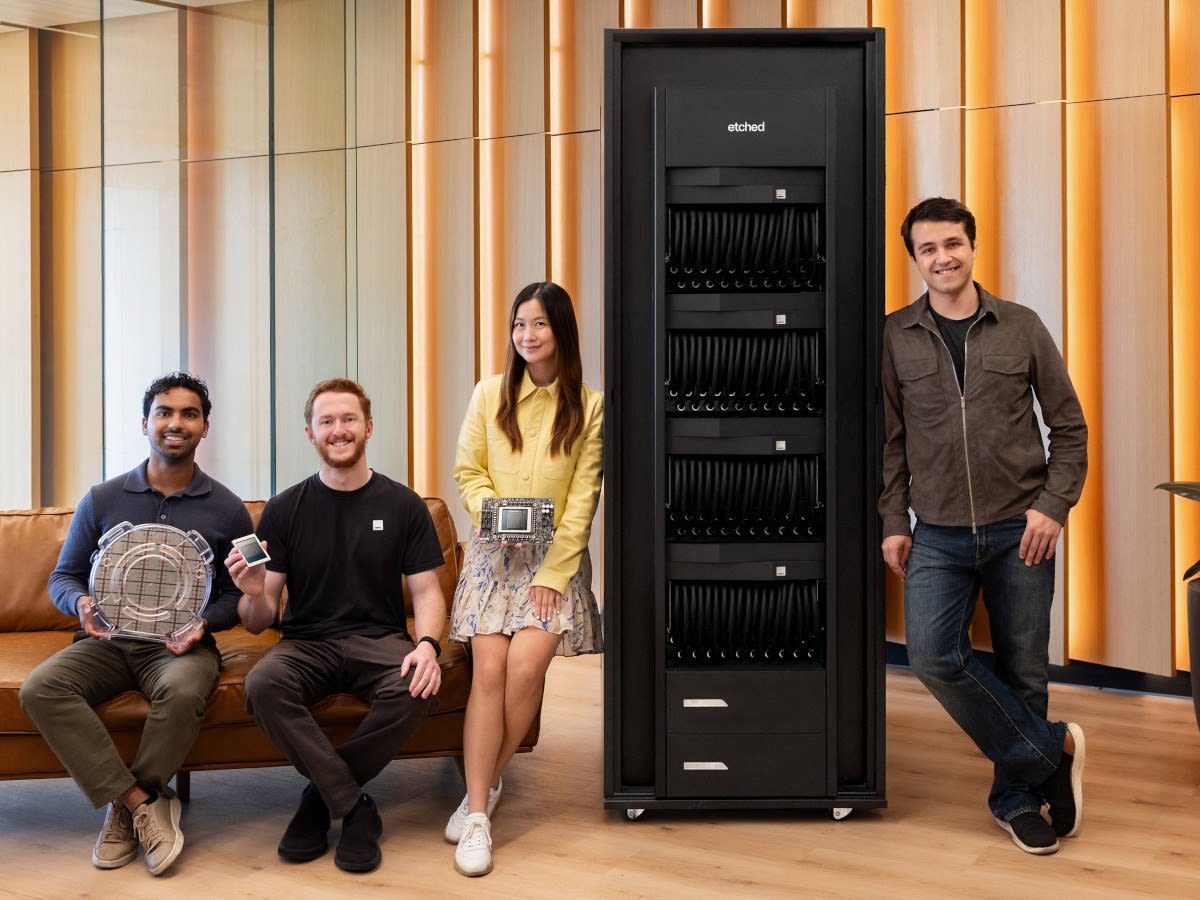
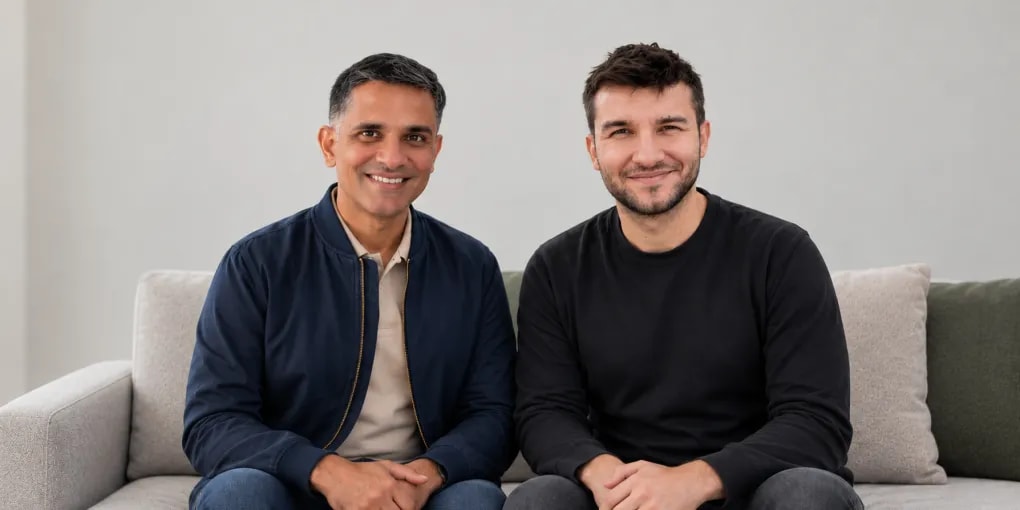
Abishek Malani, Sequoia; Robert Wachen, Etched; Sonya Huang, Sequoia; and Gavin Uberti, Etched.
Image credit: Etched
Etched, the AI chip startup building hardware optimized for inference, has raised 700 million dollars in a Series D round led by quantitative trading firm Jane Street, valuing the San Jose based company at 21 billion dollars.
The round marks an extraordinarily fast escalation in Etched's valuation. The company closed a 300 million dollar Series C on July 23 at a 10.3 billion dollar valuation, itself already described as the highest valuation ever achieved in a Sequoia‑led funding round at the time. Before that, Etched was valued at just 5 billion dollars in December. The new 21 billion dollar figure more than doubles the company's worth in roughly 26 days, and represents close to a fourfold increase over an eight month span, a pace of revaluation that stands out even within an AI funding market that has already produced several similarly rapid step‑ups this year.
What sets this round apart from a typical valuation surge is the relationship behind it. Jane Street, the round's lead investor, was not a new arrival to Etched's story. The trading firm had already been counted among Etched's backers since the company emerged from stealth in June, alongside other quantitative trading firms including Hudson River Trading, Jump Trading, and Two Sigma. Over the past month, Jane Street tested Etched's hardware, took delivery of the company's first shipped customer rack, and became its first paying customer, all before agreeing to lead the new financing round itself. "We tested the chip and are pleased with the early results," Jane Street said in a statement announcing the deal.
Etched's technology centers on what the company calls frontier inference clusters, full AI systems built specifically to speed up inference, the computing stage that occurs after a user submits a prompt and the model generates its response. Co‑founder and chief operating officer Robert Wachen has pointed to two components the company designed entirely from scratch as central to investor enthusiasm: a low‑voltage prefill chip that packs in more transistors without the heat problems typical of other high‑end AI chips, and a new interconnect and memory architecture the company calls cluster‑scale memory, which allows many chips to connect to a shared memory pool at very low latency. The combination, according to Wachen, delivers both higher processing speeds and lower operating costs compared with existing inference hardware.
The company has also shifted meaningfully from its original premise. Etched was founded on the idea of etching a single AI model architecture directly into silicon, but its systems now run large mixture‑of‑experts models, including architectures like DeepSeek and Qwen, as well as non‑transformer designs such as Mamba, a broadening that reflects how quickly the underlying AI model landscape has continued to diversify since the company's earliest technical bets.
Alongside Jane Street, the new round drew participation from an unusually dense cross‑section of AI focused capital, including Kleiner Perkins, Sequoia Capital, Andreessen Horowitz, Tiger Global, Bain Capital Ventures, Neo, Primary, Stripes, Positive Sum, Diffusion, Argo, and Blackstone. Kleiner Perkins managing partner Mamoon Hamid, whose firm has also backed Anthropic and Databricks, framed the broader opportunity in terms of efficiency rather than raw capability. "The winners will be measured by tokens per dollar and per watt," Hamid said in a statement.
Etched says it has now secured more than 1 billion dollars in customer contracts spanning both public and private frontier AI companies and cloud providers, alongside the more than 1 billion dollars in orders it had already disclosed booking as of June, when the company confirmed it had successfully manufactured its own chips on TSMC's N4P process on the first attempt, a technical milestone that is uncommon in chip development. Total capital raised across Etched's history now stands at approximately 1.9 billion dollars, with a backer list that includes Sequoia, Andreessen Horowitz, Jane Street, SK Hynix, and Peter Thiel, among others. The company reached first‑pass silicon success in under three years from its original seed round.
Etched has framed the new capital specifically around accelerating production rather than further research, pointing to plans for new factories, expanded global supply chains, fleet management software, and what it describes as self‑improving kernel agents as it works toward what the company calls gigawatt scale deployment. That framing places Etched squarely within a broader wave of capital moving into the physical layer of AI infrastructure, chips, memory, and complete hardware systems, rather than concentrating solely on the foundation models running on top of them. Not every observer is convinced the current pace of valuation growth reflects durable underlying demand rather than momentum among a concentrated group of well capitalized investors, and with competitors including London based Olix recently tripling its own valuation to 3.3 billion dollars, the coming months are likely to test whether Etched's commercial contracts and early customer deployments can keep scaling at anything close to the speed of its funding.
Topics
Stay informed
Startup news in your inbox
Get important funding rounds, founder stories, and startup updates.
No spam - only important startup updates.
Comments
Text only. No links or images.
No comments yet.