
Harvard Law Dropout Raises $6M for Blue Voice, a 'Harvey for Police Officers'

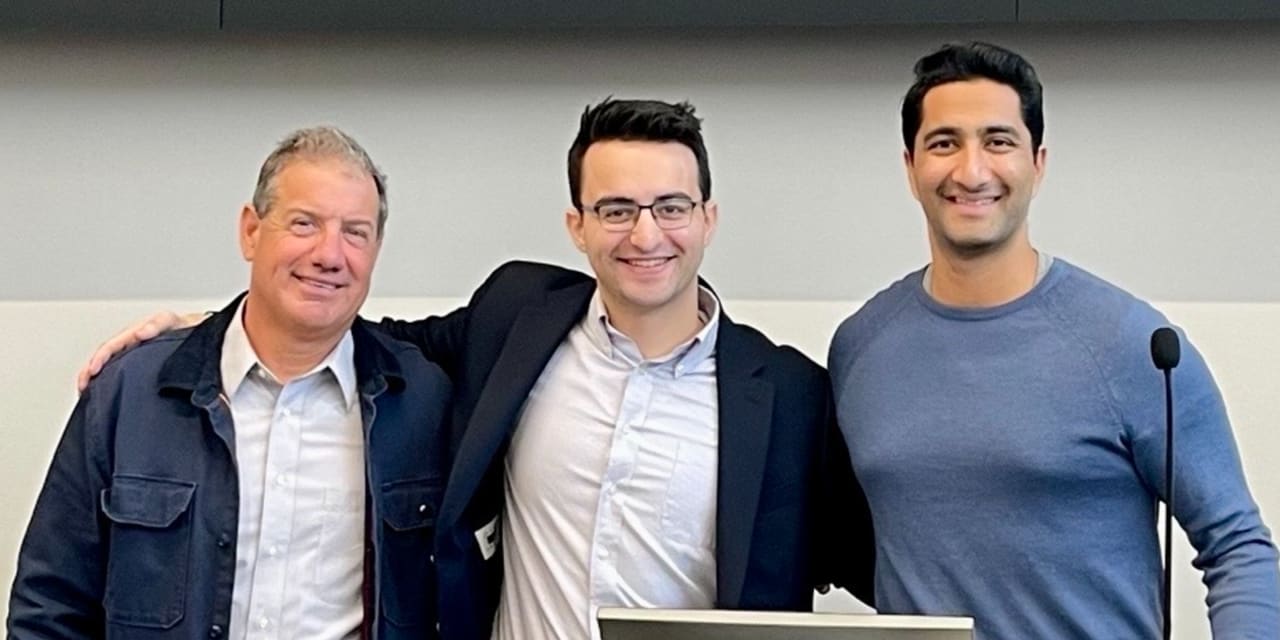
Blue Voice founders David Roosevelt Lawrence, Amit Patankar, Michael Gropman
Image credit: Blue Voice
Blue Voice, a Boston based startup that gives police officers real‑time, AI‑powered access to department policies and legal regulations, has emerged from stealth with 6 million dollars in seed funding led by SignalFire and Las Olas VC.
The company's origin traces back to a specific moment on the Harvard campus. Founder David Lawrence was a Harvard Law student when an on‑campus shooting involving a police officer ignited intense controversy over police conduct. Digging into what had gone wrong, Lawrence arrived at a conclusion that reframed how he thought about the problem: many policing errors do not stem from officers acting maliciously or carelessly, but from officers lacking instant access to the specific department rules that should govern a split‑second decision, rules that are often buried across thousands of pages of manuals, updated policies, and local ordinances that no human can reasonably memorize in full. Lawrence dropped out of law school to build a solution to that gap.
He recruited two co‑founders whose backgrounds map directly onto the problem Blue Voice set out to solve. Amit Patankar, a Harvard MBA and former Google engineer, brought the technical and product experience needed to build the platform, while Michael Gropman, a retired Boston police deputy chief, brought decades of firsthand law enforcement experience and credibility inside the departments Blue Voice would eventually need to win over as customers.
Three years after that initial insight, Blue Voice has built a platform trained on laws, local ordinances, internal department protocols, and agency‑specific guidance, designed to help officers quickly locate the exact rule relevant to a situation in front of them, rather than searching through lengthy manuals, calling a supervisor in the middle of the night, or turning to general‑purpose AI chatbots that Lawrence says can produce incorrect answers in up to 30 percent of cases when asked about specific legal or procedural questions. Lawrence has described the platform's positioning using two comparisons that have become common shorthand across professional AI tools: Harvey, the AI system widely used by lawyers, and OpenEvidence, a similar tool built for doctors. Blue Voice, in Lawrence's framing, is attempting to do the same thing for police officers that those two platforms have done for their respective professions, grounding AI responses in verified, domain‑specific source material rather than general‑purpose model output.
The company has offered concrete examples of the platform's real‑world impact. In one case Lawrence has described publicly, a young officer noticed a man attempting to persuade a girl to get into his car. After checking Blue Voice, the app indicated that the situation met the legal criteria for child enticement, an attempt to lure a minor with intent to commit a crime against them, giving the officer clear legal grounds to intervene, a determination Lawrence says helped prevent an abduction. In a separate case, the platform reminded an agency head that an independent mental health evaluation was required before an officer could return to duty following an officer‑involved shooting, a compliance requirement that could easily be missed amid the many other administrative and emotional demands following such an incident.
That kind of grounded, verifiable guidance appears to be resonating with law enforcement agencies at meaningful scale even before this funding announcement. According to the company, 225 county agencies across 25 states now rely on Blue Voice daily, with officers collectively asking the platform a question roughly once every minute. That level of usage, achieved during a three‑year stealth period without the marketing visibility a funding announcement typically brings, suggests the platform has spread through law enforcement agencies largely on the strength of word‑of‑mouth and direct department‑to‑department referrals.
The timing of Blue Voice's public launch arrives amid an increasingly active and closely watched debate over how AI should be deployed within policing, an area where the stakes of an incorrect or poorly grounded AI response are considerably higher than in most commercial AI applications. Blue Voice's specific approach, grounding its outputs in verified regulations, department‑specific policy documents, and agency guidance rather than open‑ended generative responses, positions the company as an attempt at a more conservative and auditable model for AI in law enforcement, one built around retrieving and surfacing existing rules rather than generating new judgments or recommendations from scratch.
With its new funding, Blue Voice plans to expand beyond its current base of 225 agencies, though the company will still need to prove it can scale that growth while maintaining trust among both the officers using the platform daily and the broader communities those officers serve, a balance that will likely draw continued scrutiny as adoption grows. Lawrence's own path, leaving Harvard Law over a single galvanizing incident and building toward a platform now used by hundreds of agencies nationwide, gives Blue Voice an origin story that is likely to feature prominently in how the company continues to position itself as it moves from stealth into a more public, and more closely watched, next phase of growth.
Topics
Stay informed
Startup news in your inbox
Get important funding rounds, founder stories, and startup updates.
No spam - only important startup updates.
Comments
Text only. No links or images.
No comments yet.