BAE Systems Spinout Nuclear Turbines Raises 15 Million Pounds to Replace Steam With Jet Engine Technology in Nuclear Plants

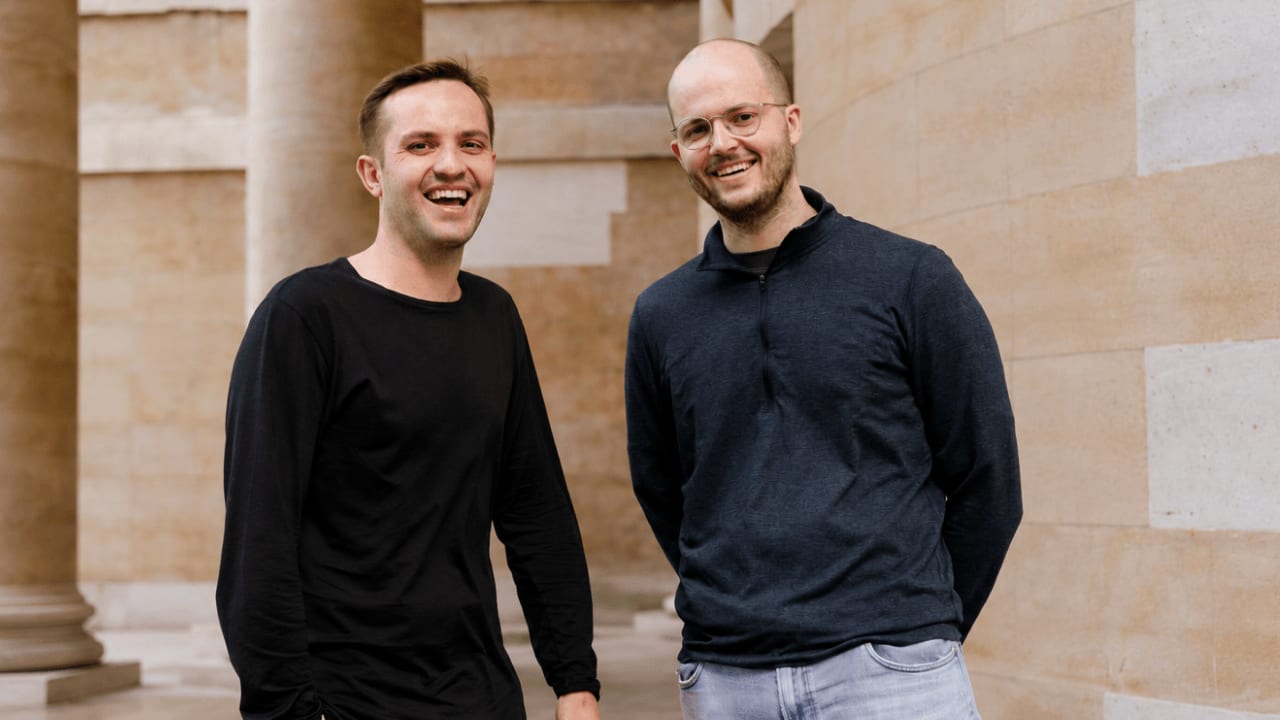
Nuclear Turbines team founders Jeremy Owston and Tom Abram
Image credit: Nuclear Turbines
Manchester‑based Nuclear Turbines has emerged from stealth with a 15 million pound funding round to develop a fundamentally different approach to generating electricity from nuclear reactors, replacing conventional steam turbine systems with high‑temperature turbine technology more commonly found in jet engines and gas‑fired power plants.
The round was led by IQ Capital, with participation from Rhapsody Venture Partners, Zero Carbon Capital and Empirical Ventures. Nuclear Turbines was spun out of defense and aerospace group BAE Systems through the company's Launchpad program, which is designed to move technologies developed inside BAE's core business into independent, high‑growth startups.
Rethinking a Design That Has Not Changed in Decades
Nuclear Turbines was co‑founded by Jeremy Owston, a former BAE Systems principal engineer who spent years designing feedwater systems for nuclear submarines, working alongside internationally recognized nuclear engineer Professor Tim Abram. Owston has said that submarine feedwater systems still function much the same way they did in the 1950s, an observation that pushed him to question why the broader nuclear industry continues to rely so heavily on steam infrastructure that adds substantial cost and complexity to every reactor project.
The company's core insight inverts the typical order of nuclear engineering. Rather than designing a reactor first and figuring out afterward how to convert its heat into electricity, Nuclear Turbines started with the cheapest available method of generating power and then designed a reactor system built specifically to work with it. By removing the steam turbine infrastructure that conventional nuclear plants depend on, the company says its technology can be made compact enough to deploy directly on industrial sites, operating behind the meter for facilities such as manufacturing plants and data centers rather than requiring connection to a large centralized grid.
Built With a Venture Studio From Day One
Nuclear Turbines was developed in close partnership with Empirical Ventures' venture studio model, in which the studio works alongside deep tech founders from the earliest stages of a company's formation rather than investing only after a business has already taken shape independently. That structure gave Owston and Abram operational and commercial support from the outset, an approach increasingly common among capital‑intensive deep tech startups that require significant technical validation before they can attract traditional early stage venture funding.
The new capital will be used to build large‑scale test rigs for the company's turbine technology and to grow its team as it works toward commercial validation. High‑temperature turbine systems of the kind Nuclear Turbines is developing require extensive physical testing to prove they can operate reliably at the temperatures and pressures involved in nuclear power generation, making test infrastructure one of the most capital‑intensive steps in bringing the technology to market.
Addressing the UK's Persistently High Electricity Costs
The funding arrives at a moment when UK electricity prices remain among the highest in Europe, adding urgency to efforts aimed at developing cheaper domestic power generation technology. Nuclear Turbines has positioned its approach directly against that backdrop, arguing that any serious effort to reindustrialize the UK economy while meeting climate commitments requires energy that is both clean and genuinely cost competitive, rather than one or the other.
BAE Systems' head of technology commercialization, David Ewing, described the launch and funding of Nuclear Turbines as a demonstration of how the company's Launchpad initiative can turn internally developed engineering expertise into independent, high‑growth businesses addressing challenges well beyond BAE's traditional defense focus. That framing positions Nuclear Turbines as part of a broader push within the UK's advanced engineering base to spin proprietary technical capability out into commercially independent companies, rather than keeping it locked exclusively within a single large defense contractor.
Part of a Broader UK Push Toward Energy Independence
Nuclear Turbines' emergence reflects a wider pattern of UK deep tech investment aimed at building sovereign, cost‑competitive energy infrastructure at a time when both electricity prices and demand for domestic AI computing capacity are climbing simultaneously. Investors backing the round have pointed to the UK's deep engineering and nuclear heritage as a genuine competitive advantage in this specific area, arguing that a country with decades of submarine and civil nuclear engineering experience is well positioned to develop next‑generation reactor technology, provided that experience can be redirected toward commercially viable, cost‑driven designs rather than the legacy approaches the industry has relied on for decades.
With fresh capital now in place, Nuclear Turbines faces the more difficult task of proving its high‑temperature turbine technology at scale, a process that will likely take years of physical testing before the company can demonstrate it is genuinely capable of powering industrial sites and data centers more cheaply than the steam‑based nuclear infrastructure it is trying to replace.
Stay informed
Startup news in your inbox
Get important funding rounds, founder stories, and startup updates.
No spam - only important startup updates.
Comments
Text only. No links or images.
No comments yet.