Autentic AI Raises 1.5 Million Euros To Make Weekly Customer Research Affordable
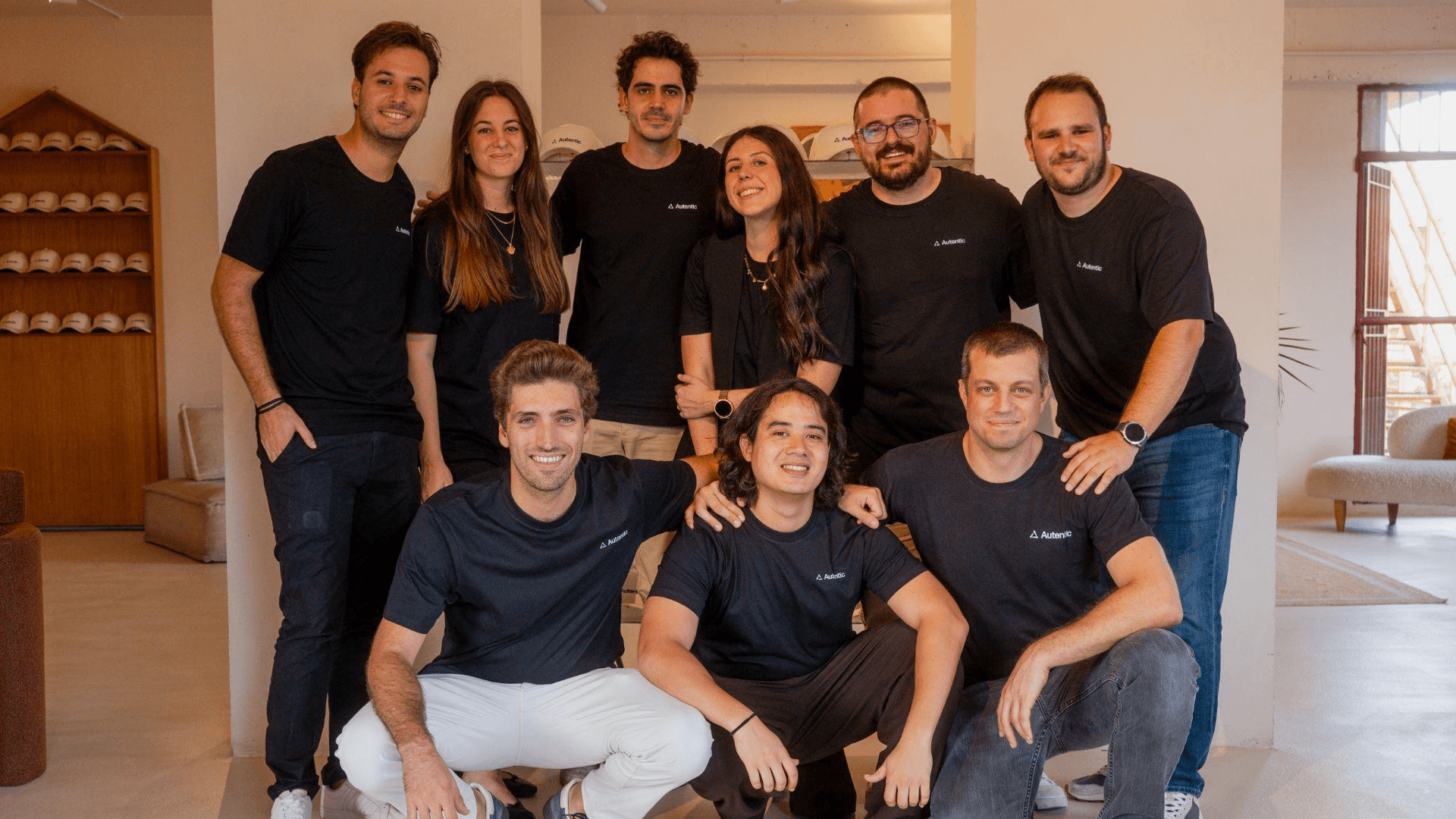
Dani Diestre Tomas, Aniol Carreras, and Jacob Bamio Cordero
Image credit: Autentic AI
Autentic AI, a Spanish startup that uses artificial intelligence to run customer and expert interviews at scale, has raised 1.5 million euros in pre‑seed funding to automate more of its research process and build its own network of verified participants.
The round was backed by venture firms Baobab Ventures, Lanai Ventures, Acurio Ventures and Masia VC. Autentic AI was founded in 2026 by Dani Diestre, who serves as co‑founder and co‑chief executive, together with Aniol Carreras and Jacob Bamio. The company is therefore less than a year old, which makes the size of the round a sign of early investor interest in the market research category rather than a verdict on a mature business.
Diestre has framed the problem in terms of cost and timing. When a single study costs 100,000 euros and takes three months, he argues, companies cannot commission one every time they need an answer, and by the time findings arrive the market may already have moved. In his view, the real expense is making important decisions without hearing from customers. Autentic's stated ambition is to turn research into something a company can do every week rather than once a year.
The platform works by handing the interviewing itself to AI. Conversational agents speak with hundreds of consumers and experts simultaneously, in voice or video, which the company says reduces the time needed for a study from weeks or months to days. Humans stay in the loop at the other end of the process: the company combines AI led interviews and data analysis with human researchers who interpret the findings and add context. Diestre has described the split plainly, saying AI conducts the interviews and researchers decide what the answers mean.
Trust in the output is a recurring concern with automated research, and Autentic addresses it in two ways. It works with verified participants who are paid for their time, and each finding is linked to video evidence from the interviews, so a client can watch the responses behind a conclusion instead of relying on a summary alone. The platform also analyses conversations for patterns and connections, with results that can be segmented by factors such as age, region or product usage.
Early volume gives some indication of traction. Autentic AI currently completes around 1,000 interviews per day and expects to pass 400,000 by the end of 2026, figures reported by the company that have not been independently verified. Its work spans four main sectors: fast moving consumer goods, retail, pharmaceuticals and cosmetics, and strategy consulting and private equity. The last group is notable because consultants and investors often need quick, defensible evidence from customers and industry experts during due diligence, where weeks of delay can cost a deal.
The funding will go toward two priorities. The first is further automation of the research workflow, meaning less manual effort between a client's brief and the finished insight. The second is building a proprietary network of verified consumers and industry experts. At present, research platforms commonly depend on third party panels to find respondents, which can limit control over who answers and how carefully they do so. Owning the participant pool would give Autentic more say over quality and reduce that dependence, though recruiting and retaining a pool across many countries and professions is a demanding task in its own right.
Autentic enters a field that is filling quickly. Belgium's Conveo raised 5 million euros in early 2025 for AI moderated video interviews and counts large brands such as Unilever and Google among its clients. Australia's Heatseeker AI raised 1.5 million dollars in pre‑seed funding the same year to replace traditional research with behavioural experiments. Both show the same belief that legacy research methods are too slow and expensive for how companies now make decisions.
Autentic's distinguishing bets are the combination of human interpretation with AI interviewing and the plan to own its participant network. Those choices appeal to buyers who worry about accuracy but also add operating complexity, since human analysts do not scale as cheaply as software.
The central test ahead is whether large clients will accept AI led interviews as a routine substitute for moderated studies, and whether quality holds as volume climbs toward hundreds of thousands of conversations. The pre‑seed round gives the team time to answer both questions while it builds the participant network that could become its main defence against better funded rivals.
Topics
Stay informed
Startup news in your inbox
Get important funding rounds, founder stories, and startup updates.
No spam - only important startup updates.