Finches Raises 2 Million Euros To Warn Food Makers About Crop Failures Before Shelves Run Empty
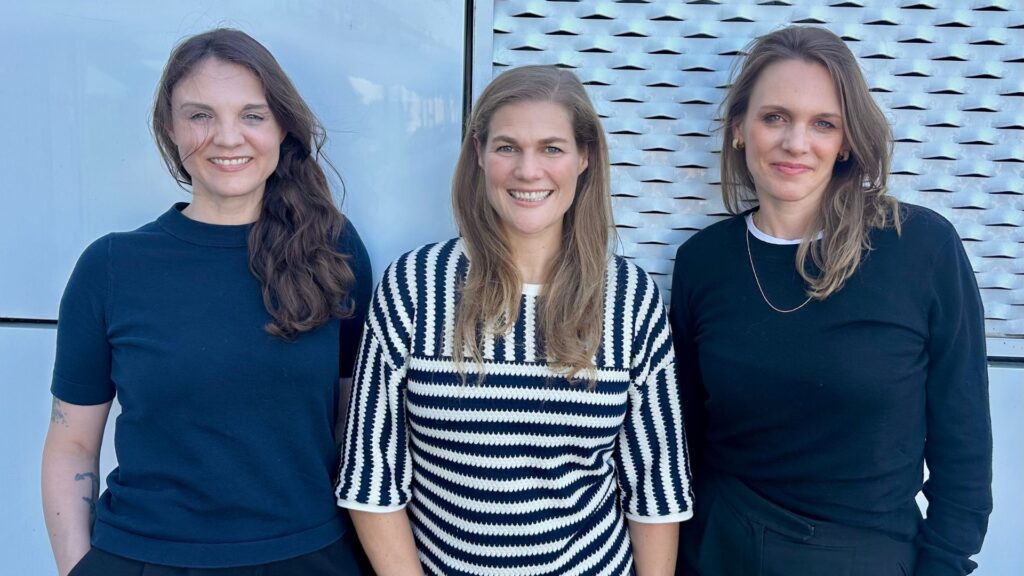
Catharina van Delden (CEO) and Alexandra Vázquez Bea, LL.M. (CFO/COO)
Image credit: Finches
Finches, a Bavaria based startup building AI for agricultural procurement, has raised 2 million euros in pre‑seed funding to help food manufacturers see crop and sourcing problems early enough to act on them.
The round was co led by High‑Tech Gruenderfonds, known as HTGF, and Vanagon Ventures. Bayern Kapital joined as a new investor, while existing backer UnternehmerTUM Funding for Innovators and a group of strategic industry and technology angels also took part. The company says the money will go toward accelerating product development and expanding its sales operations.
Finches was founded in 2025 near Munich by chief executive Catharina van Delden and chief technology officer Dr. Stefanie Glenn, with Alexandra Vazquez Bea as co founder and chief financial and operating officer. Van Delden previously founded innosabi and built it into a European innovation management platform that Questel acquired in 2021. Glenn holds a PhD in genetics from Cambridge and spent years working on enterprise AI at Google and BMW, a combination of agricultural science and applied machine learning that sits at the core of the product.
The problem Finches is built around is one of timing. Climate change, extreme weather and geopolitical shocks have made agricultural supply less predictable, and trouble in the field often surfaces months before it shows up as a shortage or a price spike further down the chain. Van Delden has argued that last summer's drought made the exposure plain, saying European food producers can no longer count on receiving the volumes and quality of raw materials they need every season. In her words, risk signals usually emerge weeks ahead of time, but procurement teams rarely see them in time to respond.
Finches tries to close that gap by pulling together information that normally sits in separate places. The platform combines procurement records with weather data, satellite observations and field level reports across growing regions and supplier networks, then merges them into one database. According to the company, each signal is checked against a customer's own recipes and product requirements, so a buyer can see which specific products might be affected by a problem in a particular region rather than receiving a generic crop warning.
The intended outcome is practical. With earlier notice, a sourcing team can line up backup suppliers, buy ahead of a price move, or reschedule production while options still exist. Finches aims to prevent a share of the roughly 184 billion euros that it estimates is lost each year across global supply chains to factors such as drought, pests and geopolitical friction, a figure that comes from the company and its backers rather than from an independent study.
Finches Intelligence, the company's first commercial product, went live in September 2026, so the business is only weeks into selling. It has already signed two named categories of customer: a leading organic baby food manufacturer and a North American Fortune 500 food conglomerate. The target market is broader than packaged food, covering manufacturers that buy agricultural raw materials for food and beverages, pharmaceuticals, herbal medicine and cosmetics. Alexandra Vazquez Bea has described the shift in plain terms, noting that the days of predictable crop yields and stable costs are well behind the industry.
The longer ambition is to establish what Finches calls risk based, agent driven procurement as a standard way of buying agricultural inputs. Rather than a buyer reacting after a harvest disappoints, software agents would watch conditions continuously and flag the decisions a human should take. That idea fits a wider trend in which AI tools are moving from describing supply chain data to recommending or taking action on it.
Finches enters a field that already includes supply chain risk monitoring tools and agricultural analytics providers, so differentiation will rest on data quality at the farm level and on how well alerts match the way each customer actually buys. The company has not disclosed a valuation or revenue, and two early enterprise customers are a promising start rather than proof of a repeatable sales motion. A fair test of the product will come over a full growing cycle, including years in which crops perform normally, when buyers will judge whether the alerts still earn their place in a procurement workflow.
For now, the funding gives the team room to build out the platform and recruit sales staff while the first customers put it through real seasonal swings.
Topics
Stay informed
Startup news in your inbox
Get important funding rounds, founder stories, and startup updates.
No spam - only important startup updates.