Kazimi Raises €2.2M to Prove Which Mobile App Signals Are Actually Human
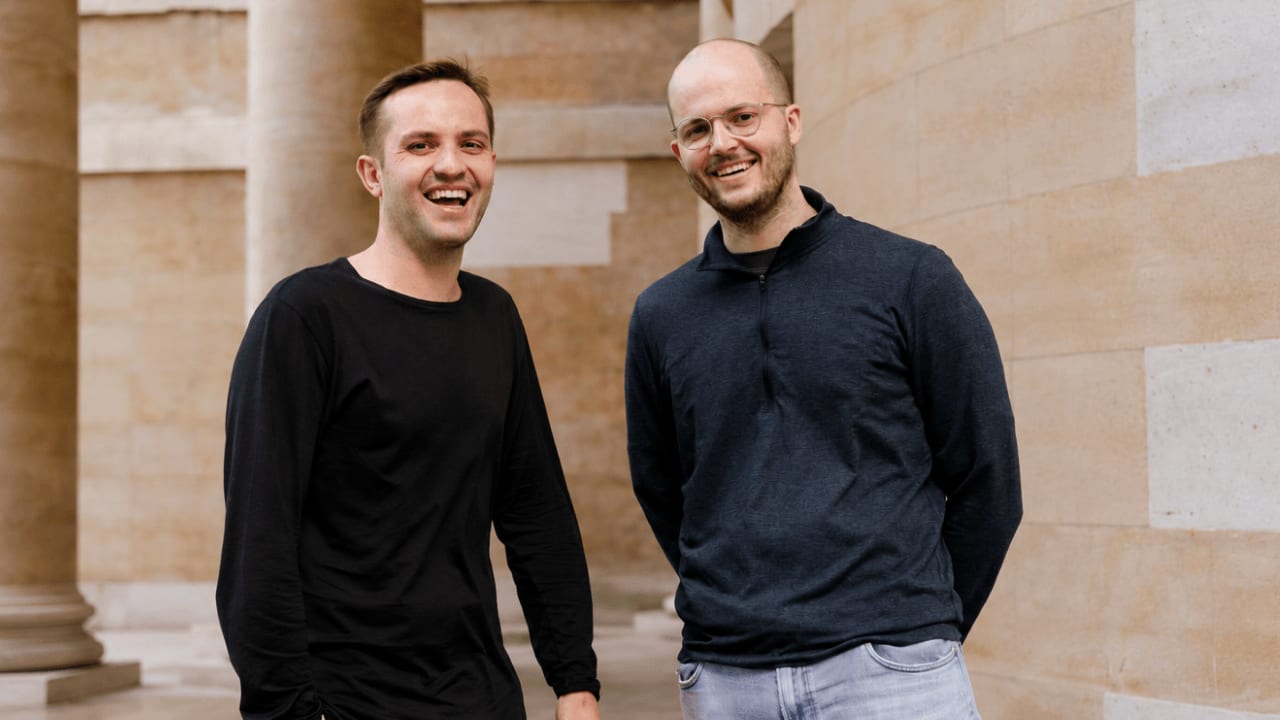
Kazimi founder Chase Gummer (CEO) and Andreas Naumann (CPO)
Image credit: Kazimi
Kazimi, a Berlin based mobile cybersecurity startup, has raised 2.2 million euros in an oversubscribed pre‑seed funding round to help app developers detect bot activity and protect the first‑party data feeding their marketing, analytics, and AI systems.
The round was led by Market One Capital, with participation from IBB Ventures and several mobile and gaming industry executives, including former Rovio chief technology officer Petri Hyökyranta, former Supercell data scientist Janne Peltola, and Erik Massmann, former chief financial officer of both the Birkenstock Group and Sportradar.
Kazimi was founded by chief executive Chase Gummer and chief product officer Andreas Naumann, both veterans of mobile measurement company Adjust, where they worked on security and fraud detection systems before the company's acquisition. That background shaped Kazimi's central premise directly: despite years of investment in mobile attribution and analytics infrastructure, app developers have had no reliable way to verify which of the signals flowing into their systems actually originate from real users and which come from automated bots. Naumann put the gap in blunt terms. "Until now it has been technically impossible for app developers to have true visibility on which signals originate from real users and which signals come from bots," he said. "With our advanced security solution, we are closing the loop and enabling app developers to protect their most important resource, their first party data."
The scale of that problem is what drew Massmann to the round as an investor. "The bot crisis in mobile marketing is the elephant in the room. Everyone knows mobile channels are intransparent and lack trust across many industries," he said. "The ability to understand what's real and what's not real has never been more important, both for utilising AI effectively and getting rid of fraud."
Rather than collecting personally identifiable information to make that determination, Kazimi secures the communication signals passing between an app and its backend directly, using privacy‑preserving cryptographic proofs and zero‑knowledge proofs to validate whether a given interaction was genuinely produced by a human. That approach lets the company distinguish authentic user actions from automated traffic in real time while remaining compliant with data protection requirements such as GDPR, and without needing to build a profile of the underlying user to do it. The technology supports all major mobile platforms, app frameworks, game engines, and business intelligence systems, and Kazimi's current customer base spans mobile gaming studios, rewards platforms, and fintech applications.
The problem Kazimi is targeting has grown more consequential as more of the decisions built on top of mobile app data have themselves become automated. Fraudulent or bot‑generated user activity does not simply waste advertising spend when it slips through undetected, it actively corrupts the data pipeline feeding into it. Fake users generate fake events, those events flow into attribution and business intelligence systems, and from there they influence campaign optimization decisions and, increasingly, serve as training inputs for the AI models marketing teams now rely on to make those decisions automatically. Bad data entering that pipeline compounds rather than stays contained, making the underlying integrity of first‑party data a more urgent problem than it was when marketing decisions were made primarily by humans reviewing dashboards.
Market One Capital partner Jacek Lubinski, who led the investment, framed Kazimi's ambition in broader infrastructure terms. "In the AI era, we believe Kazimi can become the fundamental security layer for the global app economy that enables secure and accurate first‑party data at scale, while remaining 100% privacy‑preserving," Lubinski said.
With the new capital, Kazimi plans to scale its security technology across the global mobile advertising market, deepening its work with existing gaming and fintech customers while expanding into new verticals where the same underlying trust problem exists between app developers and the data their own systems produce. The company's positioning sits at the intersection of two trends reshaping mobile marketing simultaneously: growing regulatory pressure around data privacy that makes collecting less personal information increasingly necessary, and the rapid adoption of AI systems that are only as reliable as the data used to train and operate them. Whether Kazimi can establish itself as the default verification layer across an app economy already crowded with attribution, analytics, and fraud prevention vendors will likely depend on how quickly it can prove its cryptographic approach scales cleanly across the very large, high‑volume mobile gaming and fintech environments it has chosen to start with.
Topics
Stay informed
Startup news in your inbox
Get important funding rounds, founder stories, and startup updates.
No spam - only important startup updates.
Comments
Text only. No links or images.
No comments yet.