
Ronnie Screwvala Backs Navana.ai's ₹40 Cr Bet on Sovereign Voice AI for Indian Banks

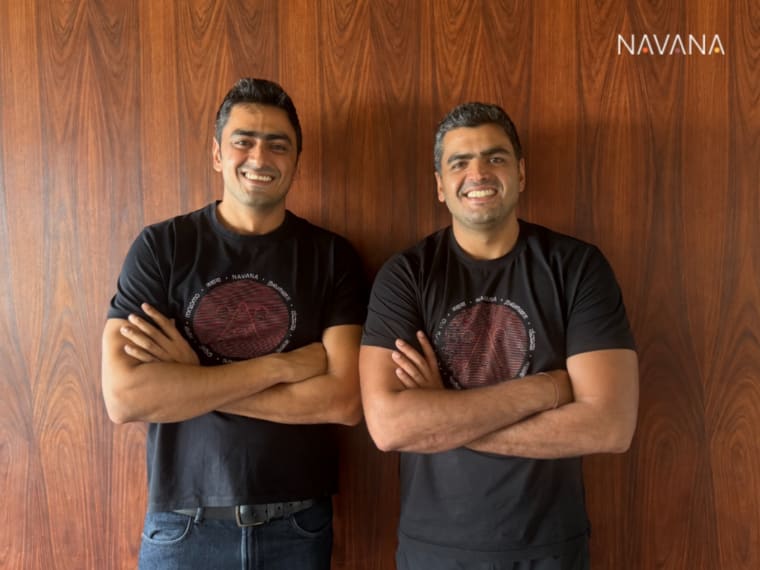
Navana.ai founder Raoul Nanavati (CEO) and Jai Nanavati
Image credit: Navana.ai
Navana.ai, a voice AI startup building what it describes as a sovereign, full‑stack platform for regulated enterprises, has raised 40 crore rupees, roughly 4.2 million dollars, in a Series A funding round led by upGrad co‑founder and entrepreneur Ronnie Screwvala, an existing investor in the company.
The round also drew participation from Antler India, Neysa.ai founder Sharad Sanghi, WestBridge Capital managing partner Sandeep Singhal, and angel investor Paula Mariwala. The raise follows an earlier pre‑Series A round of 7 crore rupees that Navana.ai closed in July 2025, led by Antler India with participation from Ajay Agarwal, Screwvala, and Singhal, which had taken the company's total funding to 13.2 crore rupees at the time.
Navana.ai was founded in 2018 by brothers Raoul Nanavati and Jai Nanavati, and has built its platform specifically around the challenge of deploying voice AI reliably across India's enormous linguistic diversity. The company's proprietary Bodhi speech models support 12 Indian languages and 45 dialects, designed to handle the accents and noisy, real‑world call conditions typical of phone‑based customer interactions across the country, rather than the cleaner, more controlled audio conditions many voice AI systems are originally trained and benchmarked against.
The company has concentrated its commercial efforts specifically within the banking, financial services, and insurance sector, or BFSI, a segment where regulatory compliance, data privacy, and auditability requirements are considerably stricter than in most other industries deploying conversational AI. Navana.ai says it has processed more than 100 million voice AI minutes for BFSI clients including Bajaj Finserv, Protean, Ujjivan Small Finance Bank, Jana Small Finance Bank, and Grihum Housing Finance, automating call center functions spanning sales, collections, compliance, and customer support. The company positions its emphasis on data localisation and on‑premise deployment options as a direct answer to the regulatory and data sovereignty concerns that have made many Indian financial institutions cautious about adopting voice AI systems built and hosted primarily on infrastructure controlled by providers outside India.
Screwvala framed his continued investment around the scale of India's underlying voice AI opportunity and the specific gap Navana.ai is positioned to close. He pegged India's voice AI market at approximately 9,500 crore rupees, while pointing to data localisation and regulatory compliance as key considerations still shaping how enterprises approach voice AI deployment. "Navana.ai addresses exactly this, proving to be a reliable voice AI partner for India's enterprises," Screwvala said, framing the investment around Navana.ai's ability to navigate compliance requirements that many general‑purpose or foreign‑hosted voice AI platforms are not built to satisfy.
The raise arrives at a moment when Indian startups are increasingly building voice‑based AI systems specifically to extend digital services beyond English‑speaking, digitally literate urban populations toward a much broader base of users more comfortable communicating in regional languages and dialects. That shift has turned voice AI into an increasingly active and closely watched category within the broader Indian startup ecosystem, with regulated sectors like BFSI, where phone‑based customer interaction remains central to how many institutions serve customers who may not use digital banking apps directly, emerging as one of the clearest near‑term commercial opportunities for the technology.
With the new capital, Navana.ai plans to scale its voice AI platform deployment across the BFSI sector, continue strengthening its speech models for additional Indian languages and dialects, and accelerate development of its AI Contact Centre and automated evaluation platform, tools designed to help enterprises monitor and improve the quality and compliance of AI‑driven voice interactions at scale. As voice AI adoption accelerates across India's regulated industries, Navana.ai's bet is that deep, India‑specific language coverage combined with data sovereignty guarantees gives it a more durable position with BFSI customers than general‑purpose voice AI platforms built primarily for English‑language markets and later adapted for Indian use cases, a positioning the company will continue to test as it works to expand its footprint across additional regulated sectors beyond banking and finance.
Topics
Stay informed
Startup news in your inbox
Get important funding rounds, founder stories, and startup updates.
No spam - only important startup updates.
Comments
Text only. No links or images.
No comments yet.