
Perceptual Robotics Secures More Than 4 Million Pounds to Scale Its AI Drones for Wind Turbine Blade Inspection
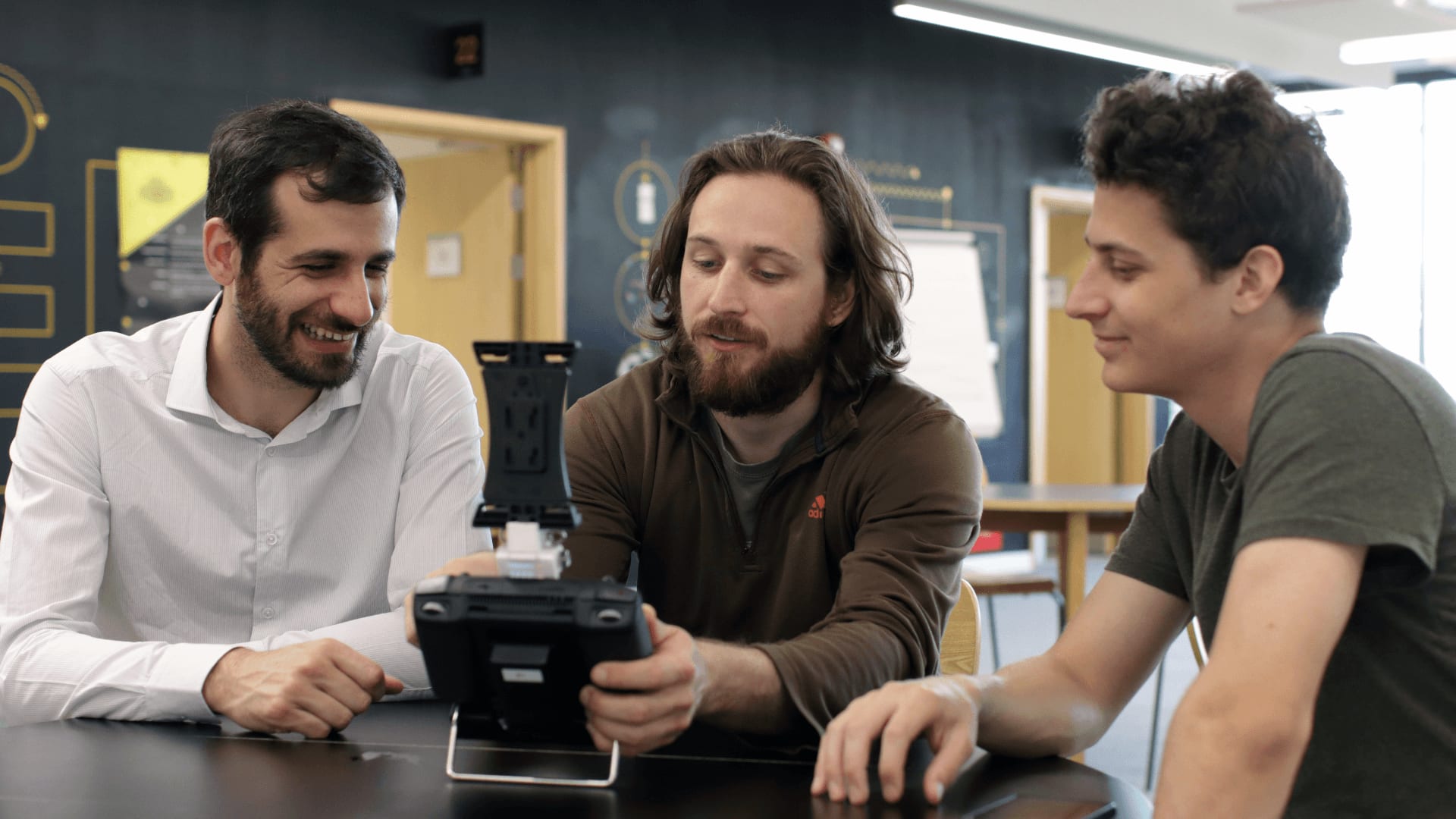
Founder of Perceptual Robotics Kostas Karachalios (CEO), Dimitris Nikolaidis, and Kevin Driscoll-Lind,
Image credit: Perceptual Robotics
Perceptual Robotics, a Bristol‑based wind turbine inspection and maintenance technology company, has secured more than 4 million pounds in funding so far in 2026 to expand its autonomous drone platform, strengthen its offshore inspection capabilities and grow its presence across existing and new international markets.
The funding combines investment from new and returning shareholders, including Investing for Purpose, Loggerhead Ventures and One Planet Capital, alongside grant co‑funding from Innovate UK, part of UK Research and Innovation. Investing for Purpose, a Greek impact fund backed by the European Investment Fund through its EquiFund II program, joins as a new investor, while Loggerhead Ventures and One Planet Capital return as backers from the company's previous funding round.
Catching Minor Damage Before It Becomes a Major Repair Bill
Perceptual Robotics builds autonomous drones and AI software designed to inspect wind turbine blades and identify damage before small, inexpensive problems escalate into expensive failures. According to the company, a minor defect that might cost around 5,000 euros to repair if caught early can escalate to more than 500,000 euros in repair costs if it goes undetected, a gap driven largely by how infrequently traditional wind turbine inspections tend to happen. The company says roughly 65 percent of wind turbine repairs currently occur on an unscheduled, reactive basis, a direct consequence of inspection cycles that are too costly and too infrequent to catch developing damage early.
The company's technology is delivered through two core products: its Dhalion DOT autonomous inspection system and its EVE mini‑drone, both built around an AI‑driven image processing pipeline that captures high‑resolution blade imagery, classifies the severity of any detected damage, and delivers a repair‑ready report to operators within 48 hours of an inspection. That speed matters in an industry where inspection delays translate directly into turbines either operating with undetected damage or sitting offline longer than necessary while operators wait for manual assessment results.
A Platform That Has Already Processed Over a Million Images
Since its founding, Perceptual Robotics says its AI stack has processed more than one million turbine blade images and completed thousands of individual turbine inspections, giving the company a substantial dataset to continue refining its damage classification models. The company now operates in more than 18 countries, with its drones inspecting turbines across a notably wide range of environments, from forests in northern Sweden to Caribbean coastlines, and its fleet capable of covering some of the largest wind turbines currently in commercial operation.
According to the company, its automated inspection approach delivers up to a 30 percent reduction in overall wind turbine maintenance costs and up to a 50 percent reduction in inspection costs specifically, while also enabling more genuinely predictive maintenance scheduling rather than the largely reactive repair cycles that have historically defined the industry. The technology also reduces the need for high‑risk manual blade inspections, which typically require technicians to work at height on live turbine structures, improving safety outcomes for maintenance crews alongside the direct cost savings.
Feedback‑Driven Development Shaped by Industry Practitioners
Perceptual Robotics has said its product roadmap has been shaped directly by ongoing conversations with wind farm operators, service providers and blade repair specialists about the practical challenges they face day to day, whether that involves inspection speed, prioritizing which damage to repair first, or managing inspection schedules across increasingly large turbine fleets. That feedback loop has driven the development of features including the company's autonomous inspection systems, AI‑assisted damage detection, a prioritization tool the company calls the Repair Now Ratio, and a range of platform integrations released over recent years.
Since its previous investment round, the company has expanded its customer base across Europe, North America and Latin America, extending its service coverage into new geographic markets while continuing to deepen its presence in regions where wind energy capacity continues to grow.
What the New Funding Will Support
Perceptual Robotics plans to use its new capital to expand what it offers to wind industry customers more broadly, increase its presence across both existing and new markets, strengthen its offshore inspection capabilities specifically, and continue scaling the products its existing customer base already relies on daily. Offshore wind assets present a particular inspection challenge as turbines move farther from shore, making autonomous, drone‑based inspection increasingly valuable compared with the logistical complexity and cost of manual offshore inspection visits.
Chief executive and co‑founder Kostas Karachalios has framed the funding as validation of the team's work over recent years, with the company aiming to become what it describes as the leading solution for wind farm owners and service providers looking to take direct control of their own inspection processes using their own teams, rather than depending entirely on third‑party inspection contractors.
Part of a Broader Push to Make Wind Energy Maintenance More Predictable
Perceptual Robotics' continued fundraising reflects growing investor interest in technology that can extend the operational lifespan of wind turbines and reduce the overall cost of energy production, a priority that has taken on added importance as the broader energy transition demands increasingly efficient and resilient infrastructure. As wind capacity continues to expand globally, particularly offshore, the ability to catch blade damage early through frequent, low‑cost, AI‑driven inspection is likely to become an increasingly important factor in keeping turbines generating power reliably over their full expected service life, rather than experiencing costly, avoidable downtime driven by damage that could have been caught months earlier.
Topics
Stay informed
Startup news in your inbox
Get important funding rounds, founder stories, and startup updates.
No spam - only important startup updates.
Comments
Text only. No links or images.
No comments yet.