SpaceX Acquires Cursor for $60 Billion in All-Stock Deal, Making It the Largest AI Acquisition in History

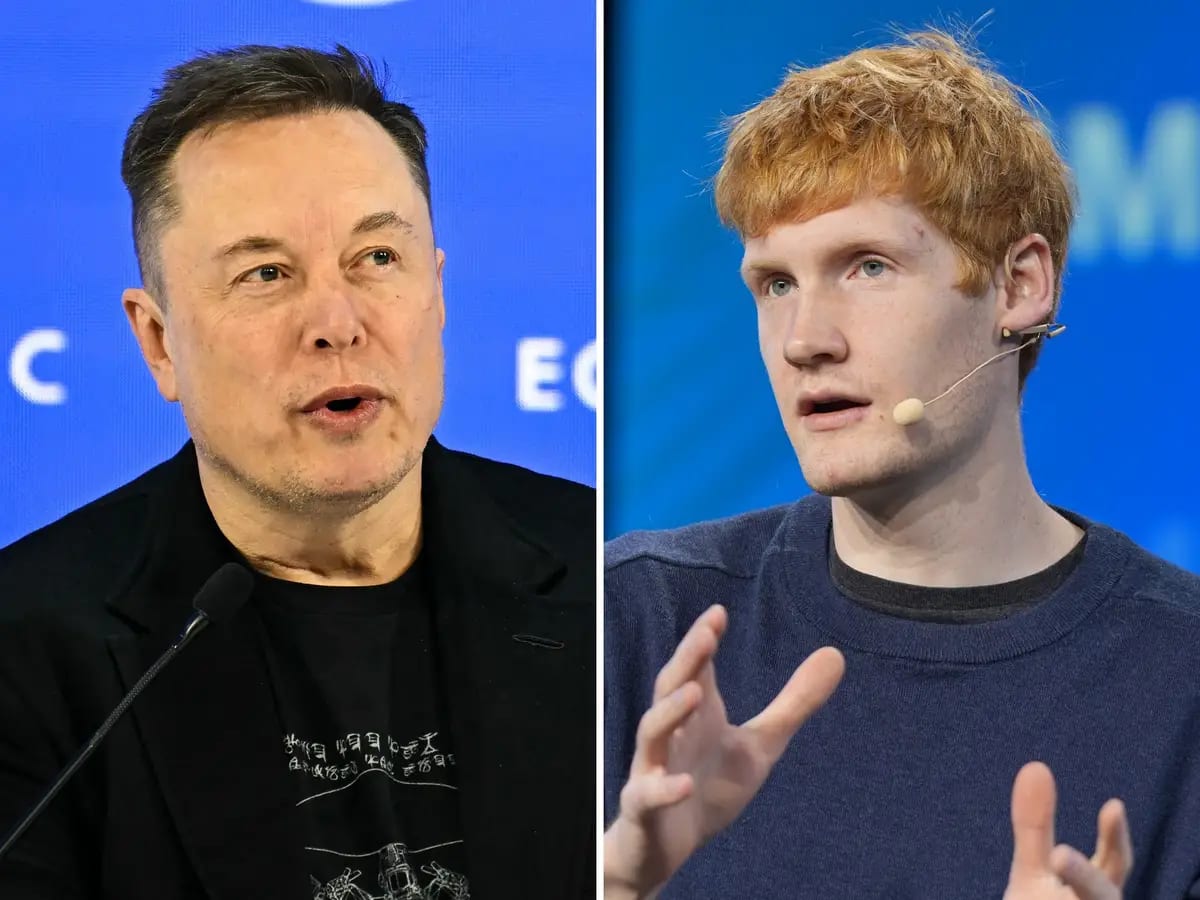
SpaceX formally confirmed on June 16, 2026 that it is acquiring Anysphere, the San Francisco‑based startup behind AI coding assistant Cursor, in an all‑stock transaction valued at $60 billion. The deal was disclosed through an 8‑K regulatory filing and is expected to close in the third quarter of 2026, pending regulatory approval. Upon completion, Cursor will become a wholly owned subsidiary of SpaceX, the most audacious acquisition in the history of artificial intelligence and one of the largest corporate transactions in US technology history.
The announcement comes just days after SpaceX completed the largest initial public offering ever recorded, raising $75 billion on the Nasdaq under the ticker SPCX. SpaceX shares closed at $192.50 on Tuesday following the news, gaining roughly 16 percent on the day, briefly surpassing Amazon and Microsoft by market capitalisation and making SpaceX the fourth most valuable company in the United States. The $60 billion in SpaceX Class A common stock that the deal transfers to Cursor's shareholders represents a dilution of approximately 3.4 percent at SpaceX's IPO valuation.
From Option to Acquisition: The Deal's Structure and History
The formal merger agreement formalises a relationship that has been building since April 2026, when SpaceX first announced an option structure giving it the right to acquire Cursor for $60 billion or to pay $10 billion for continued collaboration without completing the acquisition. At the time, SpaceX framed the arrangement as an opportunity to work closely together to create the world's best coding and knowledge work AI, citing its Colossus supercomputer, described as having one million H100‑equivalent GPU capacity, as the compute infrastructure that would supercharge Cursor's model development.
The formal Agreement and Plan of Merger was signed on June 16, 2026. At closing, each Cursor share will automatically convert into SpaceX Class A common stock at a rate based on an implied equity value of $60 billion and a price equal to the volume‑weighted average closing price of SPCX over a specified pre‑closing period. The structure is entirely stock‑based. No cash changes hands.
What Cursor Is and How Fast It Grew
Cursor was founded in 2022 by Michael Truell, Sualeh Asif, Arvid Lunnemark, and Aman Sanger, four classmates from MIT. The product is an AI‑assisted integrated development environment built as a fork of Visual Studio Code with deeply embedded AI capabilities. Where traditional IDEs require developers to write code and then separately consult AI tools for assistance, Cursor embedded AI into the core editing loop, allowing developers to generate, edit, explain, and review code through natural language within a single interface.
The company helped define and popularise what the technology world now calls vibe coding, a term for the practice of directing AI agents to produce functional software through high‑level instructions rather than line‑by‑line programming. As large language models improved, Cursor's product improved with them, and the combination of an excellent interface and access to the best available underlying models drove adoption at a pace that few developer tools had previously achieved.
By November 2025, Cursor had crossed $1 billion in annualised revenue. In the same month, the company raised a $2.3 billion Series D at a $29.3 billion valuation, co‑led by Thrive Capital and Coatue Management with participation from Andreessen Horowitz, Nvidia, and OpenAI. By June 2026, annualised business‑to‑business revenue was approximately $2.6 billion. The company was ranked 37th on the CNBC 2026 Disruptor 50 list.
That trajectory, from founding in 2022 to $2.6 billion in annualised revenue and a $60 billion acquisition in under four years, is one of the fastest value creation stories in enterprise software history.
Why Cursor's Market Position Was Shifting
Despite the revenue scale, the competitive picture for Cursor had become more complicated by mid‑2026. The company's share of AI coding tool spending, as tracked by corporate card data from Ramp, had declined from 41 percent in June 2025 to approximately 26 percent in May 2026. Anthropic, which offers Claude Code as its native coding agent built on the same Claude models that power many developer tools, now controls approximately half of the AI coding market by spending share.
The erosion was not dramatic enough to threaten Cursor's existence at its revenue scale, but it was directionally significant. As frontier AI labs pushed their own developer‑facing products more aggressively, Cursor faced the structural challenge that confronts every developer tool built on top of models it does not own: it is possible for the model provider to build the same interface and distribute it with lower friction and lower cost. Anthropic's Claude Code, OpenAI's Codex and coding‑focused Claude model integrations, and GitHub Copilot's continued evolution are all competing for the same developer budget that Cursor captures.
SpaceX's acquisition changes that equation entirely. With access to the Colossus supercomputer's one million H100‑equivalent capacity, Cursor would gain compute infrastructure at a scale no independent startup could match and train models that are genuinely its own, rather than relying on third‑party API calls to Anthropic or OpenAI.
What SpaceX Gets and What Elon Musk Wants
For SpaceX, which merged earlier this year with Elon Musk's AI startup xAI, this acquisition is the clearest signal yet of a strategic transformation that is already underway. Rockets remain SpaceX's core business. Starlink is its largest revenue driver. But the company's centre of gravity is shifting toward AI, and the Cursor deal commits more capital to a single transaction than SpaceX has spent on all of its launch vehicles combined.
The strategic logic runs in two directions. First, Cursor gives SpaceX a dominant position in the AI coding category at precisely the moment when software engineering is being transformed by AI agents. Every major technology company in the world is trying to accelerate its software development cycles using AI. The company that owns the best coding tool for professional software engineers controls a distribution channel of significant strategic value. Second, the combination of Cursor's model capabilities and xAI's research organisation, supported by Colossus‑scale compute, gives Musk a credible path to competing with Anthropic and OpenAI in the foundation model race, using coding as the technical domain where he concentrates development resources.
Cursor CEO Michael Truell, announcing the deal, described it as a meaningful step on the path to build the best place to code with AI, and expressed enthusiasm about partnering with SpaceX to scale Composer, Cursor's proprietary AI model. Two of Cursor's product engineering leads had already moved to SpaceX and xAI in March 2026 to contribute to lunar projects, a collaboration that predated the formal merger and suggests the integration planning is well advanced.
The Regulatory Question
The deal requires regulatory approval before closing. At $60 billion, the transaction is large enough to attract scrutiny from the Department of Justice and potentially from the Federal Trade Commission, both of which have been active on technology merger reviews. The deal also involves Elon Musk, a figure who has become one of the most closely watched subjects of antitrust and regulatory analysis given his simultaneous ownership of SpaceX, xAI, Tesla, and a controlling stake in X. Whether regulators view a SpaceX acquisition of an AI coding startup as competitively problematic, given the absence of an existing SpaceX competitor in the developer tools market, remains to be determined.
SpaceX expects the transaction to close by the end of September 2026. The company has not commented publicly on the status of its existing agreements to rent data centre capacity to other customers, and whether those arrangements are affected by the acquisition remains an open question.
Key facts as of June 16, 2026:
- Deal value: $60 billion, all‑stock, SpaceX Class A common shares
- Agreement signed: June 16, 2026, Agreement and Plan of Merger
- Expected close: Q3 2026, pending regulatory approval
- Cursor parent company: Anysphere, Inc.
- Founded: 2022, by Michael Truell, Sualeh Asif, Arvid Lunnemark, Aman Sanger
- Last private valuation: $29.3 billion (November 2025, Series D)
- Current annualised B2B revenue: approximately $2.6 billion
- SpaceX IPO: June 2026, Nasdaq (SPCX), raising $75 billion
- SpaceX share price move: plus 16% on announcement day
- Dilution to SpaceX shareholders: approximately 3.4%
The $60 billion price tag is enormous by any historical measure. Microsoft's acquisition of LinkedIn in 2016 was $26 billion. Microsoft's acquisition of Activision Blizzard in 2023 was $69 billion, the largest gaming deal in history. A $60 billion all‑stock deal for a four‑year‑old startup with $2.6 billion in annualised revenue is a multiple that reflects not what Cursor is worth today but what SpaceX believes the AI coding category will be worth at scale, and how central owning the leading developer tool will be to that future. Whether the regulators agree to let the deal proceed, and whether the Colossus compute advantage turns the competitive tide against Anthropic and OpenAI, are the two questions that will define the story from here.
Stay informed
Startup news in your inbox
Get important funding rounds, founder stories, and startup updates.
No spam - only important startup updates.
Comments
Text only. No links or images.
No comments yet.