
DocPharma Raises $2M to Build the Licensed Dark Store Backbone Behind India's Medicine Delivery Boom
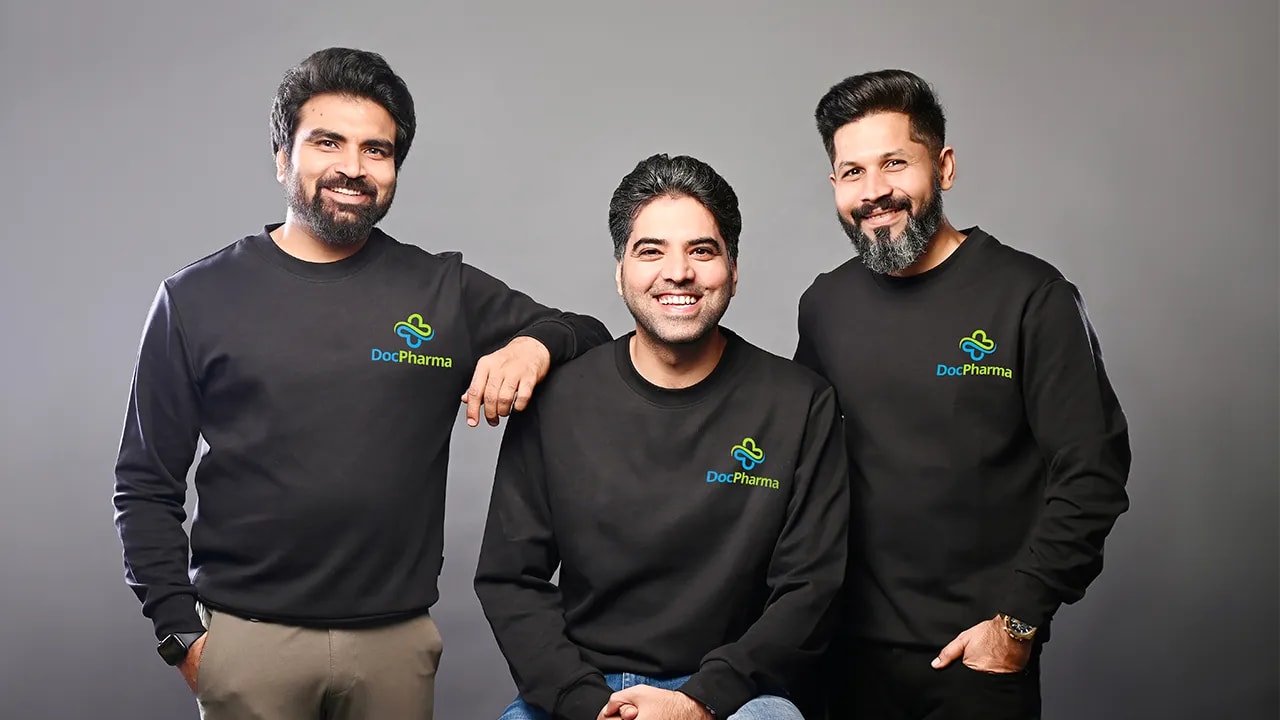
DocPharma founder Saquib Ali, Shashank Rai, and Sagar Chauhan
Image credit: DocPharma
DocPharma, a Bengaluru based healthcare supply chain startup, has raised 2 million dollars, roughly 19 crore rupees, in a Pre‑Series A funding round led by Equentis, with participation from existing investor 100Unicorns, angel investment network Vinners, and a group of strategic angel investors.
The company was founded in 2024 by Saquib Ali, Shashank Rai, and Sagar Chauhan, and operates as backend supply chain infrastructure specifically for healthcare and wellness businesses, rather than selling directly to end consumers. DocPharma's core insight is that medicine delivery cannot simply borrow the playbook that has worked for general quick commerce, since medicines require correct prescriptions, proper regulated storage, verified supply chains, and licensed fulfilment centres, requirements that add substantial complexity compared with delivering groceries or everyday retail goods. The company positions itself as a B2B2C platform, helping e‑pharmacies, hospitals, insurers, wellness brands, doctors, and other healthcare platforms deliver medicines and health products faster without each of those businesses needing to build and operate their own fulfilment infrastructure from scratch.
At the center of that offering is DocPharma One, a proprietary SaaS platform that brings warehouse management, inventory intelligence, order management, and fulfilment into a single system. The platform gives partner businesses real‑time inventory visibility, supports prescription‑compliant order processing, and routes orders to the nearest available fulfilment point, addressing a specific failure mode common in medicine delivery: an order failing or being delayed after a customer has already paid or uploaded a prescription, a problem that carries meaningfully higher stakes in healthcare than in general retail or food delivery.
Equentis founder‑director Manish Goel pointed to the fragmentation of India's healthcare supply chain as the core opportunity DocPharma is addressing. "Healthcare is one of India's fastest‑growing sectors, but the supply chain supporting it has remained fragmented," Goel said. "DocPharma has built a platform combining licensed infrastructure, AI‑powered technology and operational expertise into a scalable healthcare supply chain."
DocPharma has already built meaningful commercial traction ahead of this round. The company currently operates a network of dark stores, partnered pharmacies, and diagnostic partners across more than 12 cities, supporting more than 30 health and wellness platforms nationally. It claims to have fulfilled more than 8 lakh orders to date, with a fulfilment rate exceeding 95 percent, figures that suggest the company has moved well beyond early pilot deployments into meaningful production scale for a company still at the Pre‑Series A stage.
With the new capital, DocPharma plans to build 100 new compliant, licensed dark stores, expanding its network from its current footprint of more than 12 cities to more than 50 cities across India. That expansion reflects the company's broader thesis: that an infrastructure‑led approach, in which healthcare platforms plug into DocPharma's existing licensed dark store network rather than each building separate warehouses, inventory systems, and fulfilment operations of their own, can help the broader healthcare delivery ecosystem scale faster and more cost‑effectively than if every individual player had to solve fulfilment independently.
The raise arrives amid a broader wave of investor interest in India's healthcare and pharma quick commerce segment. Bengaluru based pharmacy‑first quick commerce startup Plazza raised 15 million dollars in a Series A round in July, led by Accel and Elevation Capital, to strengthen its own technology platform and deepen its AI‑led inventory and assortment capabilities. That parallel activity underscores a segment where investors appear increasingly convinced that fast, reliable medicine delivery represents a durable category distinct from general quick commerce, precisely because the regulatory and operational complexity involved creates a genuine moat for companies that can execute it well, rather than a feature that generalist quick commerce players can easily bolt on.
DocPharma's specific bet is that it does not need to compete directly for the end consumer relationship at all, positioning itself instead as the licensed, compliant infrastructure layer that lets a much larger number of healthcare and wellness businesses compete for that consumer relationship on top of DocPharma's network. Whether that infrastructure‑first approach can scale efficiently across 50‑plus cities, each with its own regulatory and logistical considerations for licensed pharmaceutical storage and delivery, will be the central test of the company's model as it moves from its current base into a considerably larger national footprint over the coming months.
Topics
Stay informed
Startup news in your inbox
Get important funding rounds, founder stories, and startup updates.
No spam - only important startup updates.
Comments
Text only. No links or images.
No comments yet.