Female-Led Prodlane Raises €4 Million to Scale Its AI Assistant for Technical and Industrial Teams

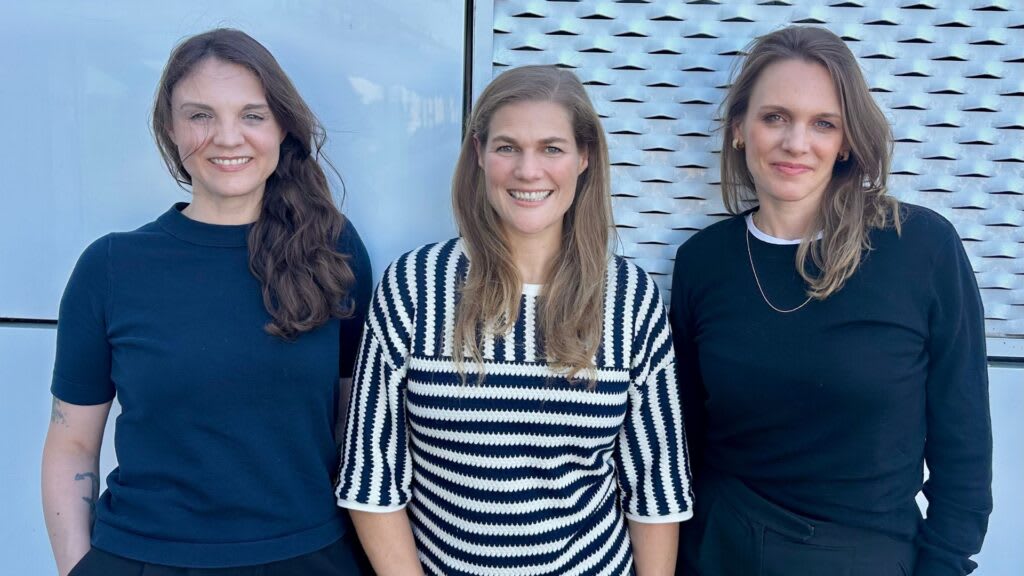
Prodlane Co-founder Carolin Maier and Mathias Jakob
Image credit: Prodlane
Leipzig‑based startup Prodlane has closed a €4 million funding round to expand MAIA, an AI assistant built specifically to help industrial and technical teams search, analyze and act on scattered company knowledge that traditionally sits buried across manuals, drawings and legacy systems.
The round was led once again by TGFS Technologiegründerfonds Sachsen, a fund backing technology startups in the German state of Saxony. For the first time, SBG, or Sächsische Beteiligungsgesellschaft, joined through its Innovation Capital Saxony program, alongside continued support from business angels and a Swiss family office that has backed the company since earlier rounds.
Solving a Knowledge Problem Buried in Manufacturing Companies
Prodlane was founded in 2021 and is led by chief executive Carolin Maier alongside chief technology officer Mathias Jakob, making it one of a relatively small number of female‑led AI startups to raise a round of this size in Germany's industrial technology sector.
The company's core product, MAIA, short for Mittelstand AI Assistant, was built to address a problem that mid‑sized industrial firms deal with constantly: technical knowledge accumulated over years of operation tends to live scattered across product manuals, test reports, design documents, engineering standards, drawings and disconnected IT systems, making it difficult for employees to find what they need when they need it.
MAIA works by processing that unstructured data and making it searchable and analyzable through a simple chat interface, similar in feel to consumer AI tools but built around the specific documentation and compliance requirements of manufacturing, medical technology and energy companies. According to the company, employees in industrial settings can lose up to two hours a day simply searching for information, a gap MAIA is designed to close.
Built With RAG and Agent Systems, Not Just a Chatbot Wrapper
Underneath the chat interface, MAIA relies on retrieval‑augmented generation techniques combined with AI agent systems to automate what would otherwise be a manual and time‑consuming search process. The platform is also built with GDPR compliance in mind from the ground up, a requirement for any tool handling proprietary engineering data across European industrial clients.
The company's customer base already spans mid‑sized mechanical engineering firms, medical technology companies, energy sector businesses and consulting firms across German‑speaking markets, giving it a foothold in an industry segment often underserved by AI tooling built primarily for software companies rather than manufacturers.
What the New Funding Will Support
Prodlane plans to use the fresh capital to expand its development, sales and marketing teams, while accelerating its push across the DACH region, which covers Germany, Austria and Switzerland. The company has steadily built up its funding history through a series of smaller rounds, moving from an early pre‑seed raise to a seven‑figure seed round in late 2024 before securing this latest four million euro round.
That trajectory reflects a broader pattern among enterprise AI startups targeting traditional industries: rather than raising a single mega‑round, many are building credibility and customer traction through smaller, staged rounds tied to specific product and market milestones.
Part of a Broader Push Into Industrial AI
Prodlane's growth comes as investors increasingly look toward AI applications built for traditional, document‑heavy industries rather than software‑first sectors that already had strong digital tooling in place. Industrial companies face growing pressure to modernize amid complex product portfolios, evolving safety regulations and a wave of retirements taking decades of institutional knowledge with them, a combination that has made knowledge management tools like MAIA increasingly relevant.
The company emerged from Leipzig's SpinLab accelerator program, having started in the program's Summer School for Diverse Startups before advancing through the HHL Digital Space incubator. That regional startup ecosystem, centered around Saxony's public and private funding institutions, has continued to back Prodlane through multiple funding stages.
With this latest round, Prodlane is positioning MAIA as a foundational AI layer for mid‑sized manufacturers looking to modernize how their teams access decades of accumulated technical knowledge, betting that the same document‑heavy complexity that has historically slowed these companies down can now become a competitive advantage once that knowledge is finally searchable.
Topics
Stay informed
Startup news in your inbox
Get important funding rounds, founder stories, and startup updates.
No spam - only important startup updates.
Comments
Text only. No links or images.
No comments yet.