Medly AI Raises $8M Seed to Put an AI Tutor Behind Every UK Exam Student
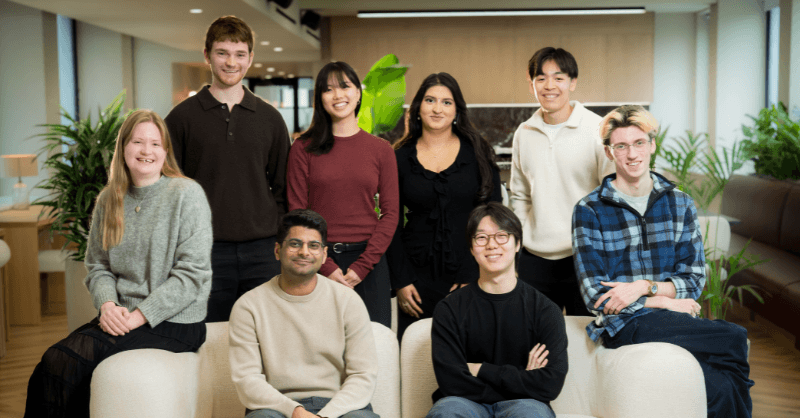
Medly AI founder Dr Paul Jung (CEO) and Dr Kavi Samra
Image credit: Medly AI
Medly AI, a London based exam preparation platform built by two former NHS doctors, has raised an 8 million dollar seed round led by Felix Capital, with existing backers Eka Ventures and Ada Ventures returning to participate alongside a group of angel investors. The round brings Medly's total disclosed funding to roughly 12 million dollars.
The company was founded by chief executive Dr Paul Jung and co‑founder Dr Kavi Samra, both of whom left careers in medicine to build a platform aimed at closing gaps in access to quality exam preparation. Jung has framed the company's mission around the scale of private tutoring's advantage in the UK, noting that almost a third of pupils aged 11 to 16 receive some form of private tutoring. "For those who can afford it, it's a powerful advantage," Jung said. "For those who can't, it's an equally powerful reinforcer of the status quo."
Medly's platform replaces static worksheets and generic practice materials with an interactive, conversational AI tutor that marks full mock exams and pinpoints precisely where a student lost points, rather than simply flagging a final score. The system is built on a proprietary combination of seven specialized large language models working alongside tablet handwriting recognition, allowing it to mark handwritten responses in technical subjects such as mathematics and chemistry, where answers often depend on shown working rather than a single correct final figure. That specialization is central to the company's competitive positioning, particularly as general purpose foundation models continue growing cheaper and more capable, a trend that puts pressure on startups whose product amounts to little more than a conversational wrapper around someone else's model.
Since scaling its user base, Medly has grown from roughly 100,000 to more than 400,000 users, largely through word of mouth rather than heavy paid acquisition, spanning the GCSE, A‑Level, and International Baccalaureate curriculums in the UK. The company has also begun building an evidence base for its marking accuracy, with members of its team publishing a preprint benchmarking the platform against more than 32,500 double marked GCSE responses, alongside a completed but not yet published randomized controlled trial involving more than 1,000 pupils in lower attaining schools.
That research and traction helped Medly secure a notable government endorsement earlier this year. In June, the company was selected as one of eight suppliers chosen from 53 bids for the AI Tutoring Tools Pioneers Programme, run by the Department for Science, Innovation and Technology with the Department for Education acting as delivery partner. Each supplier selected for the programme receives 300,000 pounds, excluding VAT, for research contracts running through March 2027, with the programme's stated goal of raising academic attainment among disadvantaged pupils across England.
Angela Chou, the Felix Capital investor who led the new round, pointed to the founders' personal backgrounds and the speed of the company's growth as key factors behind the firm's decision to invest. Returning investor Ada Ventures, whose Inclusive Alpha fund backed Medly's earlier pre‑seed round, has stayed invested in the company, as has Eka Ventures, whose founder Jon Coker said the firm had been struck by the pace of Medly's progress since its previous round.
Both Jung and Samra grew up in low income households and have spoken about how that experience shaped Medly's founding mission. Samra grew up on a council estate in Slough, where passing the 11‑plus exam secured him a grammar school place that ultimately led him to study medicine at University College London. Jung grew up in Northolt as the child of first generation immigrants, often serving as a translator and navigator of complex systems for his parents from a young age, an experience he has credited with instilling both resilience and a firsthand understanding of the barriers many families face in accessing support.
With the new capital, Medly plans to grow its community of students within the UK while accelerating international expansion, building directly on a recent rollout into the United States focused on SAT preparation, with AP and ACT specific tools planned to launch later this year. The company's broader ambition is to extend its curriculum specific approach, built around specialized marking models, subject specific pedagogy, and handwriting recognition, into new markets where the same core problem exists: private tutoring remains an advantage available primarily to families who can afford it, and Medly is betting that AI can meaningfully close that gap at scale rather than merely digitizing it for those who already have access.
Topics
Stay informed
Startup news in your inbox
Get important funding rounds, founder stories, and startup updates.
No spam - only important startup updates.