Zepto Files DRHP for Rs 10,000 Crore IPO as Revenue Doubles to Rs 22,624 Crore in FY26
Editorial Team
Mumbai‑founded quick commerce platform Zepto has filed its updated draft red herring prospectus with the Securities and Exchange Board of India, formally setting the stage for what is expected to be India's first pure‑play quick commerce listing. The IPO is expected to raise approximately Rs 10,000 crore in a fresh issue of shares, with the filing disclosed on June 9, 2026. The prospectus reveals a business growing at a pace that has few parallels in Indian consumer technology, alongside losses that continue to widen as the company invests aggressively in scale, dark store expansion, and customer acquisition.
Revenue That Doubles in a Year
The headline number from the DRHP is a 103.6 percent increase in revenue from operations, from Rs 11,110 crore in FY25 to Rs 22,624 crore in FY26. Over three years, the growth trajectory is steeper still: from Rs 4,454 crore in FY24 to Rs 22,624 crore in FY26, the company has grown its operating revenue by more than five times.
Product sales remain the largest contributor, accounting for approximately 78 percent of total operating revenue. This segment grew 92 percent year‑on‑year to Rs 17,588 crore. Warehousing, packaging, and last‑mile delivery fee income doubled to Rs 2,780 crore. Advertising revenue, which reflects income from brands paying for placement within the Zepto app, grew 2.5 times to Rs 1,636 crore, a sign that the platform's ad monetisation capability is maturing rapidly alongside its order volumes. Platform fee collections reached Rs 564 crore.
In Q4 FY26 alone, the company handled 210 million total orders, equivalent to approximately 2.3 million orders per day. That compares to around 166.9 million orders in Q3 FY26 and reflects the sequential acceleration that has characterised Zepto's growth over the past year. Revenue in the March quarter jumped 75 percent year‑on‑year to Rs 7,498 crore.
The Loss Picture
The revenue acceleration comes at a cost. Net losses widened by 25.6 percent to Rs 5,905 crore in FY26, up from Rs 4,700 crore in FY25. Total expenses grew 79 percent to Rs 29,027 crore. Delivery and handling costs surged more than 90 percent to Rs 3,046 crore as the company scaled its dark store network and fulfilled a growing volume of orders with zero handling fees at minimum spend thresholds. Advertising and promotional expenditure reached Rs 1,389 crore, reflecting the competitive intensity of the quick commerce category in which Zepto is fighting for market share against well‑capitalised rivals.
The widening losses are being watched carefully, but the unit economics narrative embedded in the DRHP is more nuanced than the headline loss figure suggests. Adjusted EBITDA per order improved from negative Rs 136.15 in FY25 to negative Rs 78.75 in FY26, a substantial improvement in per‑transaction economics even as absolute losses grew because of the sharp expansion in order volumes. The company spent Rs 1.28 to generate every rupee of operating revenue in FY26, compared with Rs 1.46 in FY25. In the March quarter specifically, the quarterly net loss narrowed to Rs 1,539 crore from Rs 1,832 crore in Q4 FY25, suggesting the path toward profitability is becoming more visible as the network matures.
The Business Behind the Numbers
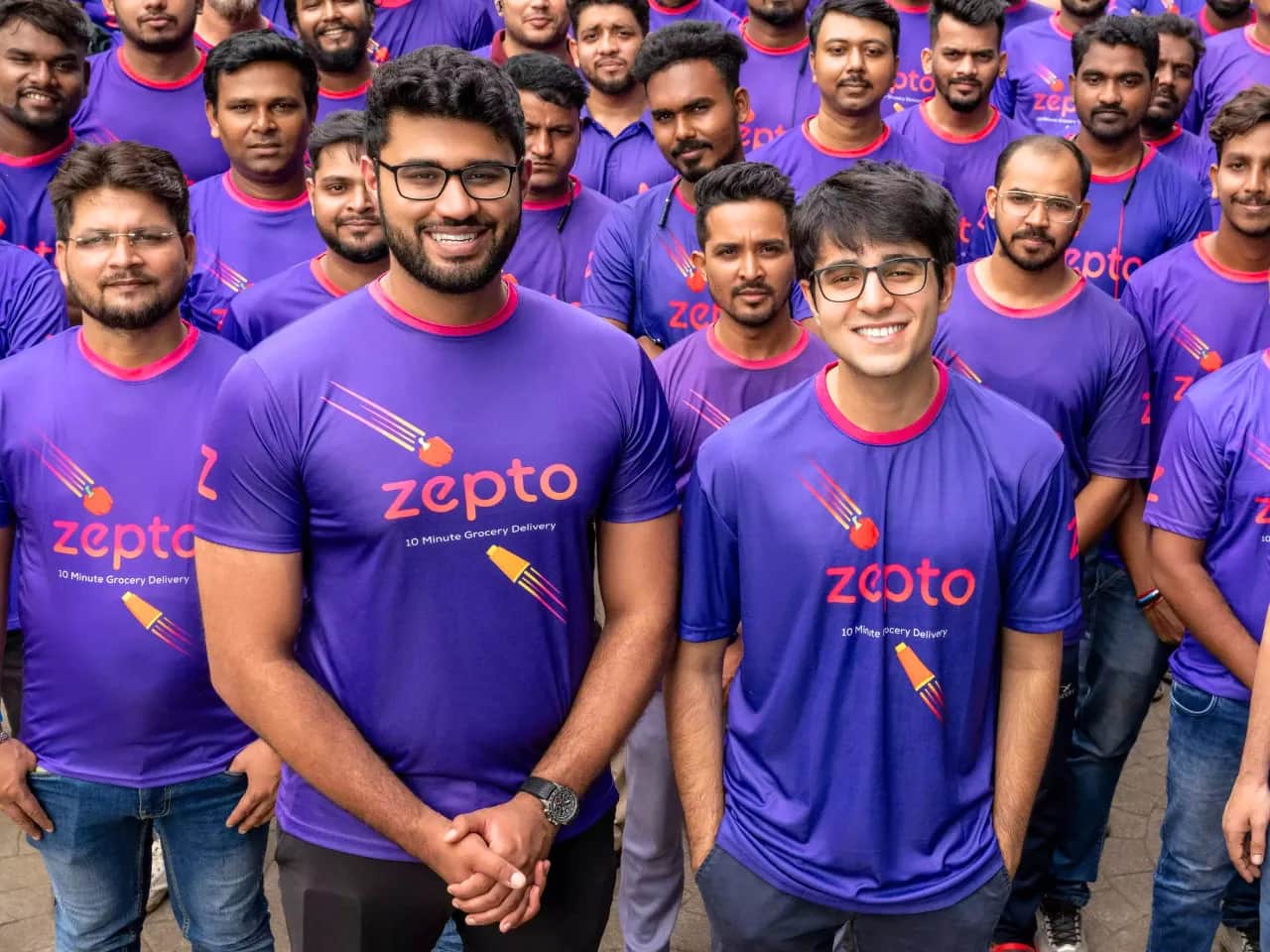
Zepto was founded in 2021 by Aadit Palicha and Kaivalya Vohra, two Stanford dropouts who launched the company initially as KiranaKart before pivoting to the 10‑minute delivery model that became its defining identity. The company headquartered itself in Singapore initially before shifting its domicile to India in early 2025 to align with domestic listing requirements and support its domestic investor base target of over 50 percent ownership ahead of the IPO.
The operational infrastructure supporting these numbers is substantial. Zepto operates 1,139 dark stores across India as of the filing date, having grown that count significantly over the past two years. Annual transacting users reached 47.9 million by the close of FY26. Orders per store per day stood at 2,140, up sharply from 1,425 the previous year, a metric that reflects improving utilisation of existing infrastructure as the dark store network matures.
The company's Net Receivables Value, its measure of total platform gross merchandise value including net discounts, user fees, subscription income, and advertising, grew from Rs 5,231.7 crore in FY24 to Rs 24,815.5 crore in FY26.
The IPO Structure and Regulatory Backdrop
The IPO is expected to raise approximately Rs 10,000 crore through a fresh issue, making Zepto the first quick‑commerce‑only company to list on Indian exchanges. A portion of the proceeds will be invested in Zepto's subsidiary, Zepto Marketplace Private Limited, for marketing and business promotion. The filing follows a previous DRHP submission and represents an update incorporating the FY26 financial data.
The listing comes against a backdrop that includes some complexity. The Enforcement Directorate has summoned founders Palicha and Kaivalya Vohra in connection with a separate inquiry, a development that adds a layer of regulatory uncertainty to an otherwise strong business story. The company has not disclosed detailed information about the ED inquiry in public statements, and the matter does not appear in the DRHP's risk disclosures as a material adverse event, though market observers are watching it.
Key metrics from the FY26 DRHP filing:
- Revenue from operations: Rs 22,624 crore (FY26), up from Rs 11,110 crore (FY25)
- Net loss: Rs 5,905 crore (FY26), widened from Rs 4,700 crore (FY25)
- Q4 FY26 orders: 210 million, approximately 2.3 million per day
- Dark stores: 1,139
- Annual transacting users: 47.9 million
- IPO size: approximately Rs 10,000 crore
- Adjusted EBITDA per order: negative Rs 78.75 (FY26) vs negative Rs 136.15 (FY25)
Whether public market investors will look through the widening absolute losses to the improving unit economics and explosive revenue trajectory will be the central question when Zepto's IPO roadshow begins. As the first quick commerce pure‑play to seek a listing in India, the company has no direct comparable on public markets. That novelty is both a risk and an opportunity, a blank page on which Zepto and its bankers will need to write a compelling valuation story.
Stay informed
Startup news in your inbox
Get important funding rounds, founder stories, and startup updates.
No spam - only important startup updates.