THEKER Raises €73 Million in Europe's Largest-Ever Robotics Series A
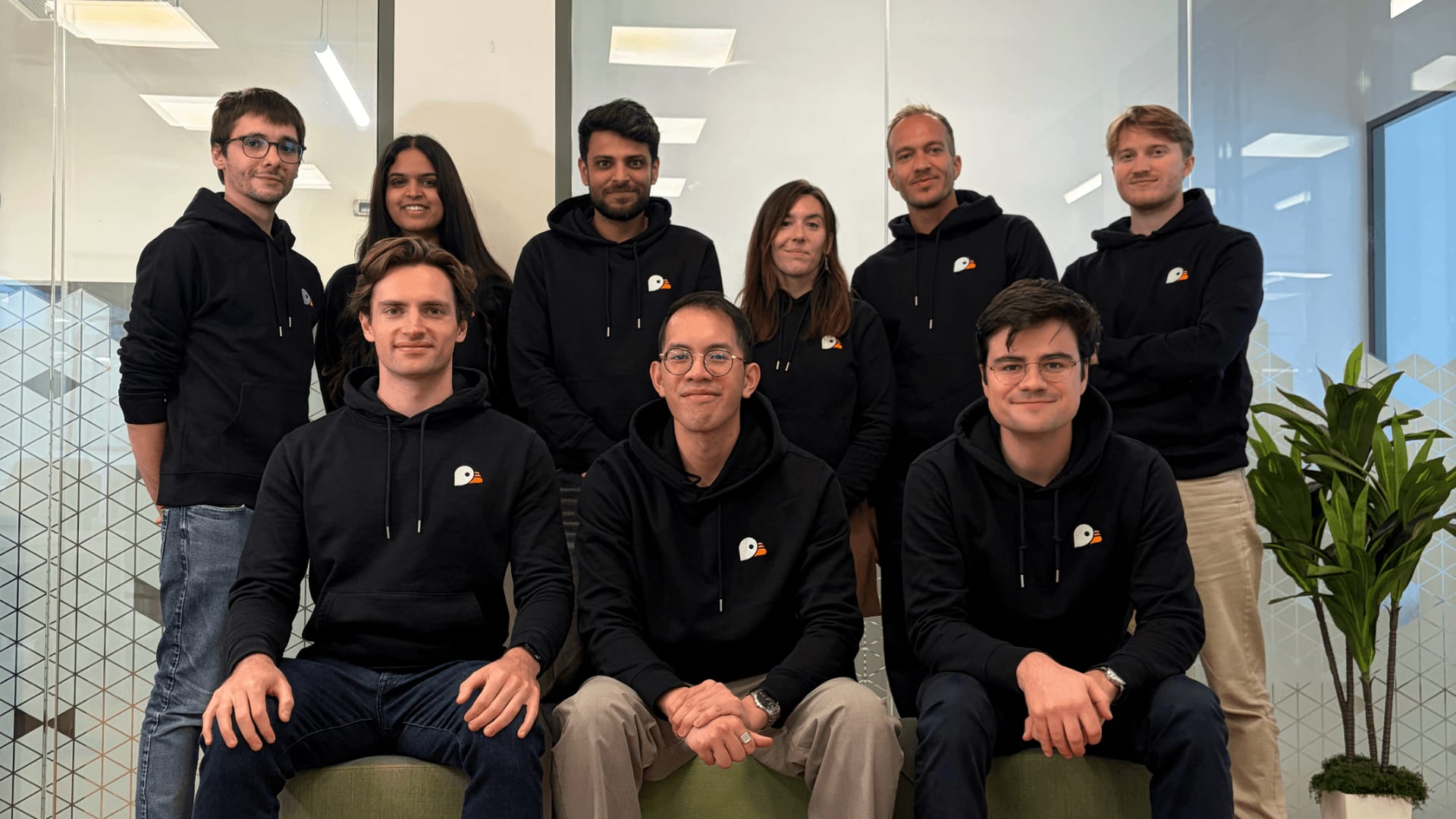
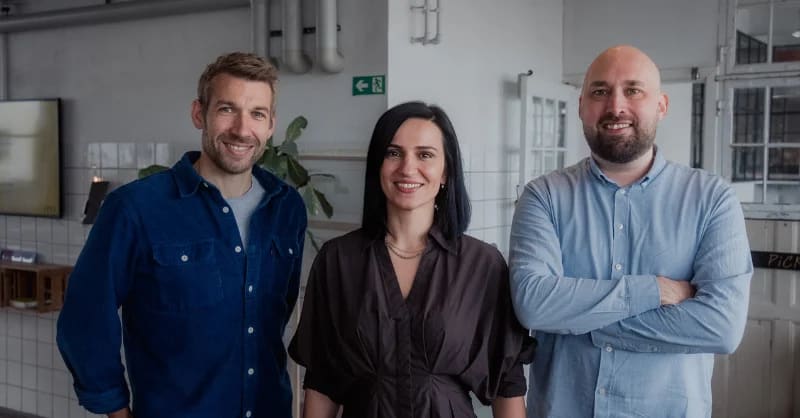
Barcelona‑based AI robotics company THEKER has raised €73 million ($85 million) in what it says is the largest robotics Series A ever raised in Europe. The round was led by US venture firm CRV, with participation from Samsung, LVMH, Cathay Innovation, 20VC, Henkel Ventures, Korelya, and Bright Pixel Capital. Existing investors Inditex, Kibo Ventures, Kfund, Itnig, and Mission also returned, alongside angels including Carles Reina of ElevenLabs. The announcement came on June 11, 2026.
The round carries symbolic weight beyond its size. It marks CRV's first investment in Spain, Samsung's first‑ever investment in a Spanish company, and LVMH's first bet on the Spanish startup ecosystem. That three of those firsts came in a single robotics round reflects how quickly THEKER has established itself as a credible European contender in a market that has historically been dominated by US and Asian hardware companies.
The financing comes less than a year after THEKER closed Spain's largest‑ever seed round at €18 million in July 2025, a timeline that reflects the pace at which the company has moved from lab technology to live production deployments.
Who Built THEKER and Why
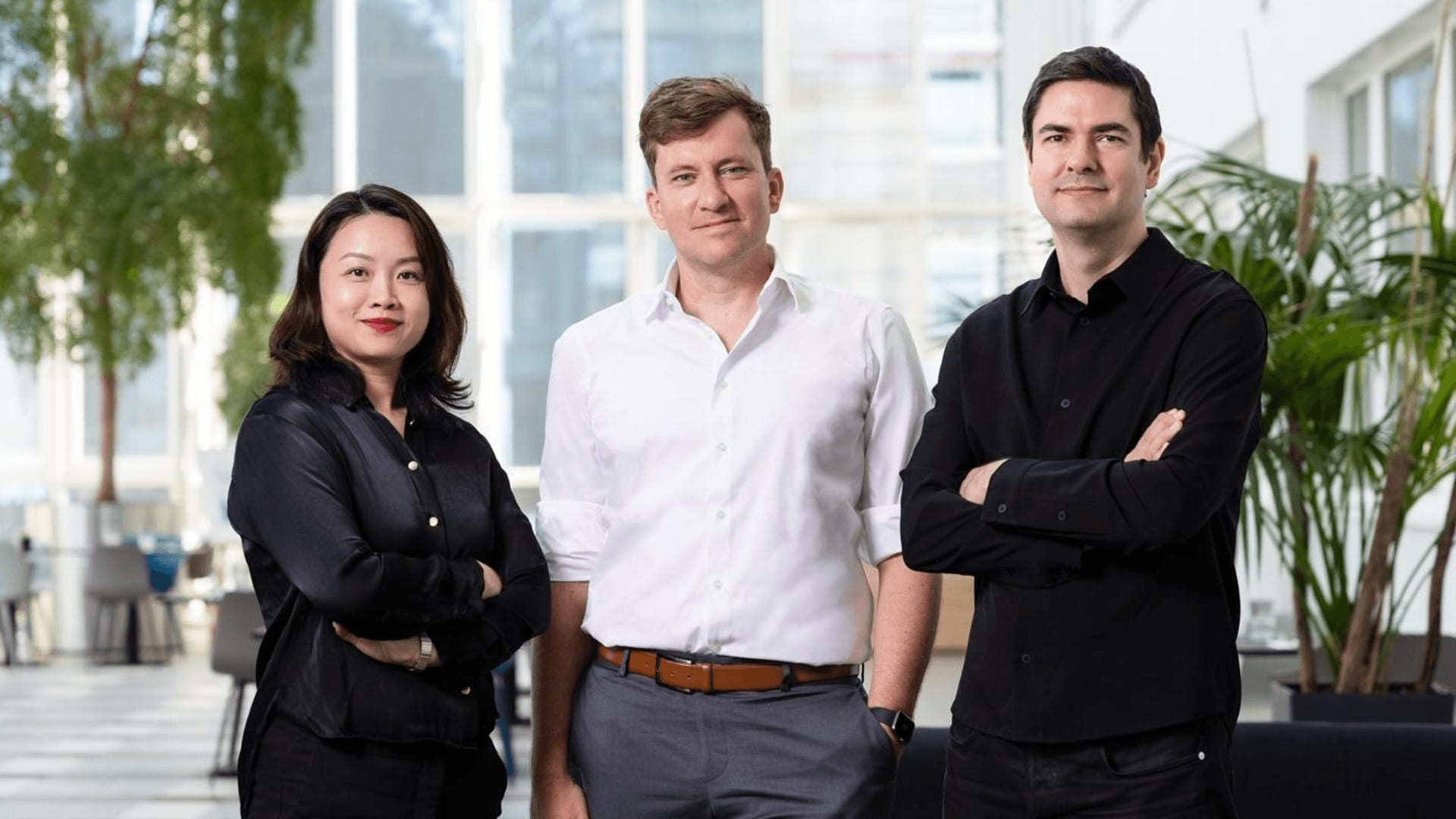
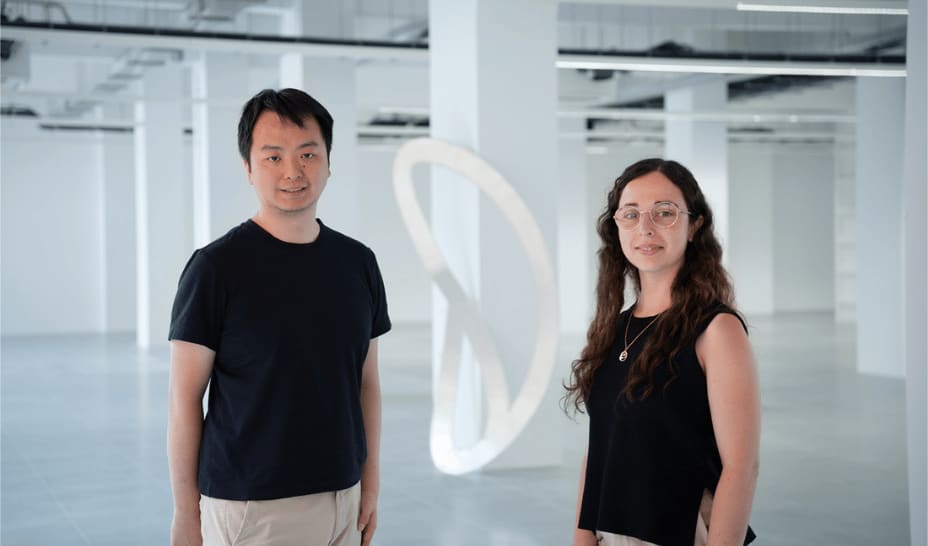
THEKER was founded in 2022 by engineers Jiaqiang Ye Zhu and Carla Gómez Cano. Both come from technical research and engineering backgrounds rather than the typical startup founder profile, and they built the company from the ground up around a specific frustration with how industrial robotics had developed over the preceding decades.
Traditional industrial robots are extraordinarily precise but extraordinarily rigid. They are programmed for a specific task in a specific environment, and they require weeks of integration work, reconfiguration, and programming before they can operate reliably. When the production line changes, or when the product changes, or when the supplier changes the dimensions of a component by a few millimetres, the robot frequently needs to be reprogrammed from scratch. This is not a software problem that can be patched. It is an architectural one. The robots were not designed to learn, adapt, or generalise. They were designed to repeat.
Gómez Cano has been direct about the company's founding premise. THEKER was not built to run pilots. It was built to ship robots that work the day they arrive and continue improving every day after. That sentence is the company's entire competitive claim in one line.
What the Robots Actually Do
THEKER develops full‑stack, AI‑native generalist robots designed to operate in complex, unstructured industrial environments without reprogramming. The robots combine advanced computer vision, control systems, and learned AI models to perceive, interpret, and act on their environment in real time. A THEKER robot encountering a new product variant, a shifted conveyor position, or an unexpected object in its workspace does not stop and wait for a programmer. It reasons about what it is seeing and adapts.
The full‑stack nature of the approach is significant. Many robotics companies are software‑only, providing AI layers that sit on top of third‑party hardware. Others build hardware without the AI software to make it genuinely autonomous. THEKER controls the entire stack, from the mechanical structure and electronics to the AI models and deployment software. That vertical integration is what allows the company to make claims about deployment speed, adaptation, and continuous improvement that third‑party integration approaches cannot replicate.
THEKER robots are already deployed in live production environments across Europe. Inditex, the global fashion group behind Zara and Massimo Dutti, has been working with THEKER to automate factory operations that have historically been difficult to mechanise due to the variability of garments, materials, and logistics flows in apparel manufacturing. That a production partner of Inditex's scale and operational complexity has committed to deploying THEKER's robots in a live environment, not a pilot, is the anchor commercial proof point that the Series A investors were underwriting.
The Industrial Context
The funding arrives as European manufacturing faces a convergence of structural pressures. Labour costs are rising. Skilled workers for repetitive industrial tasks are harder to find. Supply chains are being regionalised in response to geopolitical risk, which means European factories are being asked to produce more, at higher quality, with less predictability in what they are being asked to make. Generalist robots that can be redeployed quickly across changing production requirements are not a nice‑to‑have in this environment. They are an operational necessity for manufacturers who want to remain competitive.
The European robotics investment landscape in 2026 reflects this urgency. Germany's RobCo closed €100 million for modular AI‑driven manufacturing systems. Stuttgart‑based Sereact raised €93 million in April to scale its physical AI platform into the US. Norway and US‑based Trener Robotics secured €26 million for its industrial AI automation platform. THEKER's round is the largest of the Series A cohort and sits alongside a broader recognition that European robotics is no longer a supporting act to the US and Asia but is producing companies capable of competing for the same tier‑one customers globally.
What sets THEKER apart from this peer group is its combination of commercial deployment evidence, strategic investor quality, and full‑stack ownership of its technology. Samsung and LVMH are not writing cheques because they believe the technology is impressive in a lab. They are writing cheques because they intend to use it.
Use of Proceeds
The €73 million will be deployed across three priorities. First, accelerating deployments with tier‑one industrial operators, which means the people, process, and logistics infrastructure needed to take THEKER from early adopters to a repeatable enterprise sales and deployment machine. Second, deepening the proprietary AI and robotics stack, continuing the research and engineering investment that underpins the generalist performance claim. Third, expanding the team across software, electronics, mechanical engineering, and deployment functions.
Key facts about the round and company:
- Series A: €73 million ($85 million), announced June 11, 2026
- Lead investor: CRV
- Strategic investors: Samsung (first Spanish investment), LVMH (first Spanish investment)
- Other investors: Cathay Innovation, 20VC, Henkel Ventures, Korelya, Bright Pixel Capital
- Returning investors: Inditex, Kibo Ventures, Kfund, Itnig, Mission
- Founded: 2022, by Jiaqiang Ye Zhu and Carla Gómez Cano
- Previous round: €18 million seed (Spain's largest‑ever), July 2025
- Active deployments: live production environments across Europe
Whether THEKER can scale its deployment model from a handful of reference customers to dozens of industrial operators across Europe and beyond is the question the €73 million is now designed to answer. The investors backing the round have bet that the gap from great technology in production to repeatable global deployment is one the company can close. The commercial partners already on the floor suggest the technology is ready. The test now is the company's ability to scale the organisation around it.
Stay informed
Startup news in your inbox
Get important funding rounds, founder stories, and startup updates.
No spam - only important startup updates.
Comments
Text only. No links or images.
No comments yet.